

Your backstage pass
A Brief History of the Window and a Preview of Its Future!
What is the purpose of the window? The answer seems obvious: to let in light. […]
View, Inc.
A Brief History of the Window and a Preview of Its Future!
What is the purpose of the window? The answer seems obvious: to let in light.
Let’s try an exercise: assuming it is daytime – look out of your nearest window. What do you see? If you are in most work spaces – there is a 60% + chance you will see blinds or shades blocking your view. Not a window with a view, and most definitely not natural light or the view to the outdoors.
The first recorded windows date back to the 13th century BC and were openings in the roof of dwellings to allow in natural light. Over time, these openings had coverings – many opaque, such as shutters. Yet as you look through history, materials such as paper, parchment, animal skin, and finally glass, were used to get the benefit of an open window without exposure to the elements. Humans are wired to be connected to the outdoors – even when the natural elements are not-so-friendly, such as cold, rain, heat, and glaring sun.
Humans not only want natural light, we need it for our health and wellness. Yet in modern times, we spend 90% of our time indoors – and often barricade ourselves from natural light and views of the outdoors with closed blinds. Workplace research shows the optimal amount of natural light that is free from glare reduces eyestrain by 51%, headaches by 63%, and drowsiness by 56%. It should come as no surprise that employees want more natural light – making it the top requested work perk. To take this a step further, 68% of employees say they would feel more valued if their employer considered providing the optimal amount of natural light in the workspace as a core amenity.
Going back to our history lesson – historically glass windows were not easy to create. In Alexandria, Egypt, the first recorded evidence of glass windows dated from 100 AD. Yet they had poor visibility and research showed they were nothing more than blown glass that was rapidly flattened out to make a window. It took another thousand years for glass windows to move forward in any significant way.
Strikingly, hundreds of years more would go by until the next great advance of the window. Meanwhile people continue to suffer through all the imperfections of the humble window – adding blinds, shades and all kinds of workarounds to make up for its shortcomings.
View took a Silicon Valley approach to challenge the way we think about the window. Why couldn’t they be smarter?
View Dynamic Glass windows let in the optimal amount of natural light and preserve views, while blocking unwanted glare and heat, which also improves the energy efficiency of buildings up to 20%.
A smart window is only as smart as its control system. For maximum occupant comfort, windows always need to be at the right tint without requiring manual intervention. That is why View invented the first and only predictive control system for dynamic glass, View Intelligence®. With Intelligence, your windows respond predictively with no occupant intervention, meaning occupants enjoy the views and daylight without lifting a finger.
With a recent major upgrade to Intelligence, our focus on occupant delight has never been so clear. Providing better predictive intelligence and increasing user control and customization makes a delightful space even more delightful.
The next big thing in building occupant experience is here - no blinds or shades required!
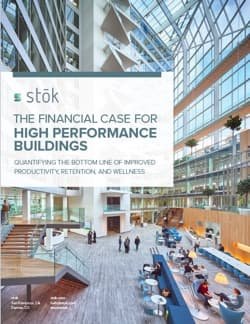
New Report on the Financial Case for High Performance Buildings -- Why It Matters
The decision to occupy a high-performance building can increase a tenant’s profits by millions during the course of a standard 10-year lease, according to a new report “The Financial Case for High-Performance Buildings” from real estate advisory firm stock. […]
View, Inc.
New Report on the Financial Case for High Performance Buildings -- Why It Matters
The decision to occupy a high-performance building can increase a tenant’s profits by millions during the course of a standard 10-year lease, according to a new report “The Financial Case for High-Performance Buildings” from real estate advisory firm stock. This profit comes from increased retention, more productivity, and reduced absenteeism.
Supported by hundreds of research studies from leading experts, the paper aims to help owner-occupants and tenants track and quantify the benefits of investing in High-Performance Building (HPB) workplaces. As defined by the report, high-performance buildings are those that are designed to improve the occupant experience and improve health and wellness.
These buildings have design elements to optimize thermal comfort, light, air quality, acoustics, and views of nature or natural materials. For example, View Dynamic Glass, a new generation of smart windows let in natural light and views and enhances mental and physical wellbeing by significantly reducing headaches, eyestrain and drowsiness.
Traditionally, the business case for HPBs depended on energy savings and increased asset value as the most appealing incentives. But a much more important avenue of value creation that HPBs deliver is rarely discussed: HPBs benefit the people who occupy them, which in turn can greatly boost company profit.
Why? Because people are a company’s greatest asset. A HPB workplace that enhances their performance and experience can produce a significant positive impact on the business's bottom line. With employees spending nearly 2,000 hours per year at the office, a workplace that fosters productivity, happiness, and wellness is paramount.
Companies have realized that to attract and retain top talent, a workplace aligned with boosting occupant wellness is required and in turn, produces significant positive impacts on a company’s bottom line.
It should be noted that while employee experience is key, the benefits of HPBs extend to materials and resources as well. Real estate is by far the dominant financial asset class globally, worth nearly 3 times the world’s GDP. At the same time, buildings account for over 40% of U.S. and E.U. energy consumption, use nearly 14% of all potable water, and create over 500 million tons of construction and demolition debris in the U.S. alone. Beyond these financial and environmental impacts, humans spend 90% of their lives indoors.
Key Findings
So how can we quantify the benefits of these human-centric HPB design strategies? In the paper, stok applies financial impact calculations to findings from over 60 robust research studies on the effect of HPBs in three key occupant impact areas: Productivity, Retention, and Wellness. In short, stock's sensitivity analysis found that a conservative estimate of 3% enhancement in productivity, 5% increase in retention, and 30% reduction in absenteeism can be realized in an HPB.
Given this, in a 150,000 square foot HPB when enhanced productivity, increased retention, and improved health are accounted for, the occupier of this space is likely to see a benefit of $3,395/employee, or $18.56/square foot annually in bottom line profit compared to conventional buildings. At a conservative $20/square foot cost premium, a company occupying an HPB can realize a Net Present Value of $17M in profit over 10 years due to improved occupant performance and experience alone.
That is clear, quantified, and impactful value that must be accounted for in the delivery of HPBs and spaces. The question is no longer “How much do HPBs cost?”; now it is “How much can my company benefit by working in an HPB?”
The findings provide concrete evidence for prioritizing design strategies that optimize the indoor environment for enhanced occupant performance and experience. The resulting financial metrics allow owner-occupants and tenants to easily make the business case for High-Performance Buildings.
Download the full report here.

How Offices Are Turning Windows Into Walls
Recently, we had the opportunity for a creative experiment – we mounted cameras on a building to watch the windows of an occupied office building across the way. […]

Brian Lee – Manager, Product Marketing
Deepak Shivaprasad – Sr. Director, Product Marketing
How Offices Are Turning Windows Into Walls
Recently, we had the opportunity for a creative experiment – we mounted cameras on a building to watch the windows of an occupied office building. Building occupants were not informed of the study to eliminate the influence of behavioral changes on the experiment’s outcome. Only the top 3 floors of the building were occupied, but we wanted to see how often the shades were drawn on those floors. The building is in sunny Northern California and has expansive views of the San Francisco Bay. You would expect those windows to be popular - everyone loves windows and a view, right? Until….the heat and glare become too much. Then, down come the shades.
By using time-lapse images taken every 15 minutes and measuring the change in window coverage on the top three floors for a month, here is what we found:
· 60% of the windows were covered by shades.
· 77% of the shades never moved at all.
· Less than 2% of the shades were adjusted daily (on average).
Wow! Once the heat and glare is in the building, people drop the shades – and once they are down, they continue to stay down essentially creating another wall in the office. Nearly 2/3 of the views and natural light are removed with fewer people getting the benefit of the green space and sunlight just outside their office.
Why do we invest in windows if this is the behavior? Because not everyone knows about dynamic glass. Here at View, our mission is to create delightful human environments. Our glass automatically changes tint during the day to control glare, eliminate heat, and optimize daylight in order to make the space visually and thermally comfortable. No shades are needed. Read more about our technology here.

View Salutes America's Top 50 Glaziers
View salutes the top 50 glazing contractors of 2018 as recently ranked and named by USGlass Magazine. Of the 50, View has worked on projects with 22 of these craftspeople, often on multiple jobs. […]

Todd Gray, View’s Director of Glazing
View Salutes America's Top 50 Glaziers
View salutes the top 50 glazing contractors of 2018 as recently ranked and named by USGlass Magazine. Of the 50, View has worked on projects with 22 of these craftspeople, often on multiple jobs. Of the top 10 glaziers, View has worked with 7.
Glaziers are often the unsung heroes of building projects - scaling heights, braving frigid temperatures or blistering sun and giving it their all to provide the best possible experience.
To be a good glazier you need:
· Balance.
To minimize the risk of falling, glaziers need a good sense of balance while working on ladders and scaffolding.
· Attention to detail.
Glaziers must work to very tight tolerances to ensure the system is built correctly.
· Physical stamina.
Glaziers must be on their feet and move heavy pieces of glass most of the day. They need to be able to hold glass in place until it can be fully secured.
· Physical strength.
Glaziers must often lift heavy pieces of glass for hanging. Physical strength, therefore, is important for the occupation.
Glaziers are known in real estate circles for their camaraderie. Safety comes first. They always look out for others. It’s great to see them get some well-deserved recognition.
When View works with glaziers, we try to make the experience as easy and seamless as possible for them. They’ve got enough to deal with already.
We give the glaziers a dedicated project manager who is available 24 hours a day throughout the project. We come to their shops and do hands on training with them. We walk the glaziers step by step through the whole process - from bidding to project completion.
To see a roll call of the top 50 glaziers visit this edition of USGlass Magazine.

View Completes 200 Projects and Secures the Largest Dynamic Glass Installation in the World
From our booth at AIA, the View team is excited to share some milestone news this week! We’ve completed more than 200 projects in North America, and have an additional 100+ projects currently in various stages of development. With over 12,000 occupants enjoying View Dynamic Glass across 7 million square feet of space everyday, we’re […]

Jeff Platón - VP, Marketing
View Completes 200 Projects and Secures the Largest Dynamic Glass Installation in the World
From our booth at AIA, the View team is excited to share some milestone news this week!
We’ve completed more than 200 projects in North America, and have an additional 100+ projects currently in various stages of development. With over 12,000 occupants enjoying View Dynamic Glass across 7 million square feet of space everyday, we’re seeing significant growth, market adoption, and deeper awareness. The installations span all major geographic markets in North America across the workplace, education, hospitality, and healthcare segments.
“Our mission has been to create a delightful occupant experience, and I am proud of the View team for delivering on this promise at ever larger scale,” said View CEO Rao Mulpuri. “The continued advances we’ve made in developing our dynamic glass, coupled with aggressive investments in manufacturing ramp and regional support, are enabling us to execute on large-scale projects. We’re thrilled with the strong industry support and accelerating adoption of View Dynamic Glass.”
View also announced that it will install 100,000 square feet of View Dynamic Glass at USAA Real Estate Company’s America Center II, developed by SteelWave and located in San Jose, California. This project will mark the largest installation of electrochromic glass in the world. This landmark installation underscores View’s continued momentum, growth, and innovation as it scales its technology to larger projects.
“The America Center project is designed to be a leading state of the art campus,” said Steve Dunn, senior managing director at SteelWave, the project’s developer/owner. “View Dynamic Glass has been key in enabling us to realize that goal by providing a technology that improves occupant comfort, wellness, and productivity. Energy efficiency was also a major driver and View helped us reach ambitious sustainability targets and become pre-certified at the LEED Gold level.”
Research has shown that views and natural daylight help increase productivity and wellness for building occupants. And View Dynamic Glass also reduces HVAC and lighting energy consumption by as much as 20 percent, and HVAC peak load by 25 percent, in a typical commercial installation.
“After a year of working in CenturyLink’s Technology Center that is surrounded by View Dynamic Glass, our 750 employees continue to thrive in this building of the future,” said LaRae Dodson, vice president of real estate and fleet for CenturyLink. “The ultimate aim of our Technology Center in Monroe, Louisiana, is to inspire employees to develop the next generation of innovative communications products and services for our customers and View helps fuel this inspiration by preserving our perspective of the outdoors and permitting natural daylight to permeate the office.”