

Your backstage pass

Climate Resilience: How to deal with the ‘here and now’ while building long-term solutions to climate change
Written by Rao Mulpuri
While there is broader consensus that climate change is real, and there is overwhelming scientific evidence that it is caused by human activity, many struggle to identify things we can do now to deal with its present ramifications.

Climate Resilience
Climate Resilience: How to deal with the ‘here and now’ while building long-term solutions to climate change
Written by Rao Mulpuri
While there is broader consensus that climate change is real, and there is overwhelming scientific evidence that it is caused by human activity, many struggle to identify things we can do now to deal with its present ramifications.
Fundamental changes to industries such as power generation, transportation, construction, and industrial manufacturing are finally underway, but they take time and must be implemented at large scale to realize their full benefits.
In the meantime, extreme weather events are disrupting human life and putting a strain on societal infrastructure. Catastrophic incidents are becoming ever more regular and more severe — from wildfires in the west, extreme heat in Texas, water shortages in Colorado, California, Nevada, and Arizona, and more — a key question is: what are we doing to adapt? What investments are we making to cope with the impacts that climate change is already having on our lives? How are we protecting ourselves, our homes, our workplaces, and our cities from extreme heat, fires, and floods?
We need to address the root causes of climate change to stop the warming planet, while simultaneously adapting to the new realities we face as a society. Utilities are proactively implementing demand-response, even shutting down power on windy, hot days, fire departments are implementing new technology to detect and warn people of upcoming fire danger, and individuals are installing battery systems at home to cope with increasing power outages.
The real estate industry consumes nearly 40% of all energy and 70% of all electricity and has an immediate imperative to improve energy efficiency and resiliency. While there are several steps the industry can and should take, one of the most impactful is to upgrade buildings to consume less energy AND make them more resilient to rising temperatures and blackouts..

For example, data shows that swapping regular windows with smart windows reduces base building energy consumption by up to 30% and enables a simpler path to net zero. Importantly, they block heat from entering the building, reducing peak cooling load which comes from energy sources that release the most carbon, such as coal and natural gas. The windows also provide immediate tangible benefits by keeping building interiors cool and comfortable for occupants. A few recent examples from buildings that have View Smart Windows installed:
(1) On a 100°F day at Dallas Fort Worth Airport, seats near gates with View Smart Windows stayed 20°F cooler than gates with regular windows.
(2) During a power outage on a 90+°F day in New York this summer, apartments at the residential tower Sven that have View Smart Windows stayed 11°F cooler than apartments that do not.
(3) At the newly-renovated office building at 730 3rd Ave in New York, desk surfaces stayed 12°F cooler after View Smart Windows were installed.
With thermal discomfort in buildings affecting everything from elderly health to workplace productivity and student attendance, finding energy efficient ways to keep buildings cool and comfortable as the planet heats up is one of the immediate opportunities for the real estate industry to build resilience.
What are you doing to create climate resilience today?
Delivering Asset Value through Sustainability and Health
With the recent COP26 summit at a global scale and the passing of the infrastructure bill at a national level, sustainability has reemerged as a primary consideration in real estate development and operations […]
Written by View, Inc.
Delivering Asset Value through Sustainability and Health
With the recent COP26 summit at a global scale and the passing of the infrastructure bill at a national level, sustainability has reemerged as a primary consideration in real estate development and operations. State and federal policies are incentivizing more sustainable building practices, while buildings preparing for re-occupancy are encountering new questions from tenants about the ability of spaces to promote occupant health following the COVID-19 pandemic.
A recent panel event held in New York City explored how asset value can be delivered through sustainability and health in the wake of the COVID-19 pandemic. The panel was hosted by the Urban Green Council, a nonprofit dedicated to advancing sustainability in New York real estate, and View Inc., a smart building technology company transforming buildings for sustainability and health.
Speakers on the panel included Prof. Christoph Reinhart, director of the Sustainable Design Lab at MIT, and Sean Brennan, head of research at the Urban Green Council. Prof. Reinhart leads a team that built software tools used across the globe to model building performance and recently developed city-scale energy models designed to help policymakers and Community Resource Exchange (CRE) leaders adapt to a changing climate. Sean Brennan leads Urban Green’s research team and is responsible for identifying and executing studies that reveal industry trends and influence building design. He has worked in the energy and utility space for over ten years and has specialized in building science and analysis. Dr. Piers MacNaughton, VP of Health Strategy at View Inc, moderated the panel discussion.
The pandemic has altered building use and occupancy patterns. Brennan shared data from Google that showed an 80% dip in NYC office occupancy during the pandemic and currently shows occupancy rates 40% below baseline levels. High vacancy rates increase pressure to create spaces that will bring occupants and tenants back to the city. Buildings will need to be of higher quality to entice tenants to return to working and living in Manhattan. The panel explored whether this flight to quality can and will be monetized.
The recently passed infrastructure bill and upcoming reconciliation packages include provisions that incentivize sustainable building strategies at a federal level. Despite having such influential incentivization plans in place, the current retrofit rate is 1%, well below what is needed to meet science-based carbon emission targets.
Local ordinances in New York City both reward and penalize buildings for their sustainability performance. For example, Local Law 97, part of the Climate Mobilization Act, and Mayor de Blasio’s larger New York City Green New Deal were passed in April 2019. Under LL97, most buildings that do not limit greenhouse gas emissions and meet specific energy efficiency goals by 2024 will be subject to fines. Conversely, buildings that wish to retrofit their systems can take advantage of Property Assessed Clean Energy (PACE) financing, a program that funds improvements to the energy efficiency and sustainability of commercial property owners’ buildings. Recently, 111 Wall Street became the first building in New York City to utilize C-PACE financing.
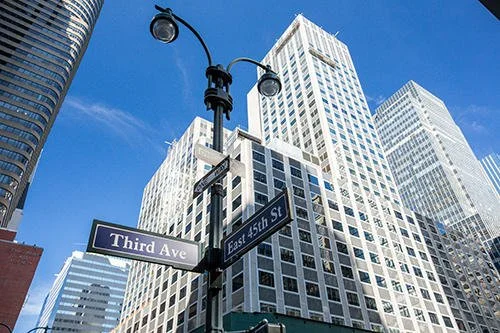
What are the options, then, when considering retrofitting? Using energy as the only deciding factor does not always fully justify the cost of retrofitting. However, the return on investment becomes much more compelling when one begins to consider occupant benefits in the calculations. In the modeled renovation of 345 Park Avenue in Manhattan completed by Dr. Reinhart’s team, the addition of electrochromic glass provided a 20% return on investment when accounting for higher rents and the increase in rentable square feet. A similar instance occurred in 730 3rd Avenue, where electrochromic glass allowed owners to fit the same number of people into 30% less space, allowing them to then rent out the extra space to additional tenants.
As part of the movement towards sustainable buildings through LL97, there is pressure to reduce energy consumption but not necessarily to promote occupant health and wellness. For example, heat pumps, building electrification, boiler replacements, and insulation provide substantive energy savings but do not meaningfully impact the end-user. During the retrofit process, developers should consider repositioning the asset to deliver at the same time an enhanced occupant experience. This will ultimately translate into faster lease velocity, higher rents, and potentially greater tenant density.
View Smart Windows, for example, decrease buildings’ HVAC and energy usage through predictively tinting windows along the sun’s path. At the same time, smart windows also eliminate the need for blinds to combat glare while increasing occupants’ thermal and visual comfort and access to views of the outside. Both the creation of high-quality spaces and the need for sustainable buildings can be addressed through the addition of a single amenity, View Smart Windows.
Tenants Willing to Pay 6.1% More for Offices with Abundant Natural Light
A recent study by researchers at the MIT Center for Real Estate and Sustainable Design found that corporate tenants are willing to pay 6.1% more in rent for offices with abundant access to natural light […]
View, Inc.
Tenants Willing to Pay 6.1% More for Offices with Abundant Natural Light
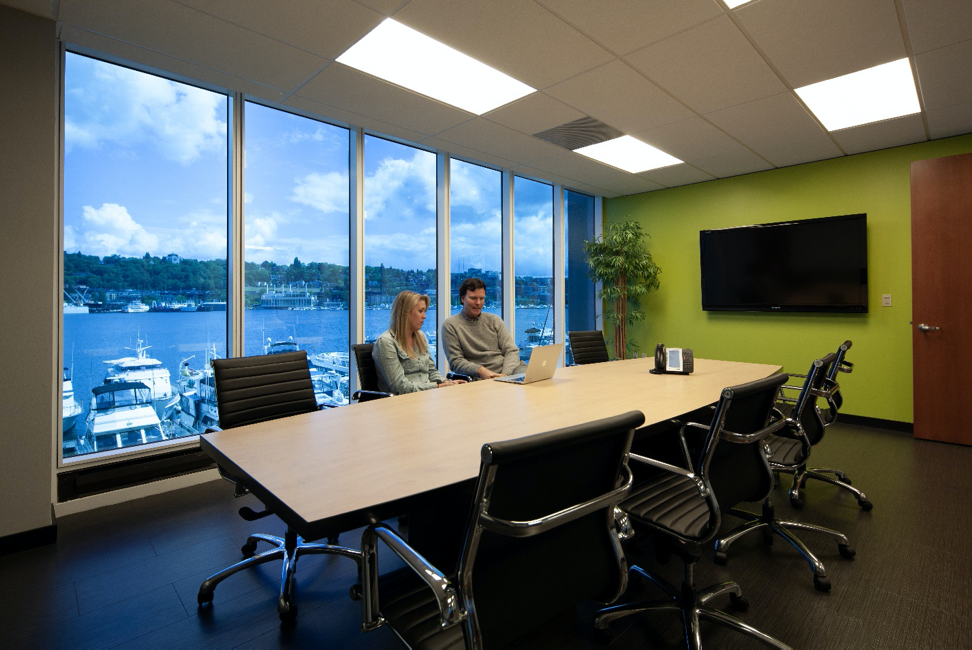
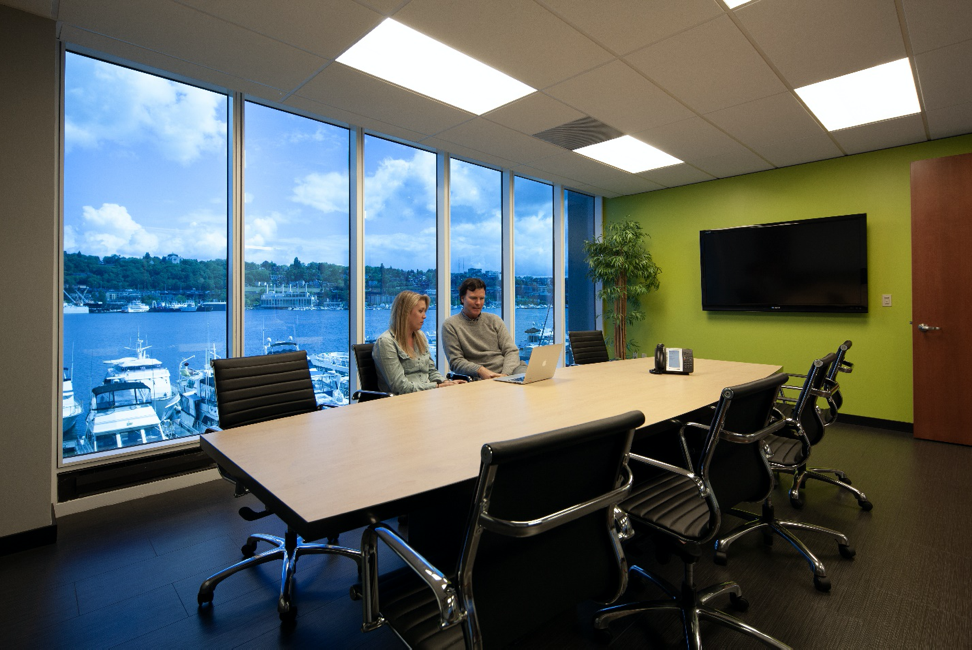
From the upper floors of the Lake Union Building in downtown Seattle, residents can look out their windows and watch the yachts and sailboats on Elliott Bay. At least, they can now.
The office space was built in the 1970s and for almost 50 years, its tenants suffered the consequences of its traditional glass windows. As soon as the sun came out, they turned the blinds down, blocking the picturesque view of the Seattle Waterfront. They waged an endless battle with the thermostat.
In 2015, Henbart LLC, which owns the Lake Union Building, wanted to upgrade and modernize it, so they could compete with the booming tech sector that dominates the area. And so, in 2015, it decided to replace its traditional glass windows with smart windows from View.
“Choosing a window that spoke to innovation, to creativity, to technology, and also allowed a connection to the outdoor natural environment and to the lake was hugely important in that decision making,” said Brett Phillips, the director of sustainability for UNICO Properties, which helped renovate the Lake Union Buildings. “This glass is transformative. It’s the future.”
Apart from achieving significant energy savings (not to mention ending the thermostat wars), Henbert LLC saw an unexpected benefit to replacing the windows with View Smart Windows: it increased its asking rent for the Lake Union building by 16% and generated an extra $450,000 a year in income.
For so long, landlords paid little attention to a building’s wellness amenities. Location was more important they argued. And given the current crunch for real estate, why should they worry about vacancy? A growing body of research suggests installing windows that bring in more natural light can provide a significant financial boost. In buildings that feature smart windows, tenants sign on sooner, stay on longer, and are willing to pay more in rent.
A recent study by researchers at the MIT Center for Real Estate and Sustainable Design found that corporate tenants are willing to pay 6.1% more in rent for offices with abundant access to natural light. The researchers, who surveyed more than 5,000 office spaces in over 900 buildings in Manhattan, said that the presence of natural light in the workplace environment improves human health, wellbeing, and productivity.
Traditional windows amplify the sun’s energy like a greenhouse. Building occupants can only spend so much time near them before they start to feel uncomfortable. In 2013, the Urban Green Council released a report showing that 59% of the windows in New York City are permanently covered with blinds. “Architects, engineers, and developers should work together to discover ways to resolve energy and comfort issues while maintaining great views,” the authors of the study concluded.
Thankfully for architects and building designers today, traditional windows are no longer the only option. View has developed smart windows with built-in intelligence, allowing them to predictably change their tint based on cloud cover and the angle of the sun. This high-performance technology—a combination of durable nano coatings, intelligent controls, and machine learning software—blocks out heat and glare, optimizing comfort levels for occupants while giving them access to natural light and views of the outdoors.
Scientists have known for a long time that these things are important for our health and wellbeing. In the spring of 2018, employees for the Canada Lands Company in Toronto, Ontario moved from their old corporate offices, where the windows were outfitted with traditional manual blinds, to offices in the same building where the windows had been renovated with smart window technology. The move offered the chance for a natural experiment. View partnered with three major research institutions to complete a before-and-after survey of the employees’ health and wellbeing.
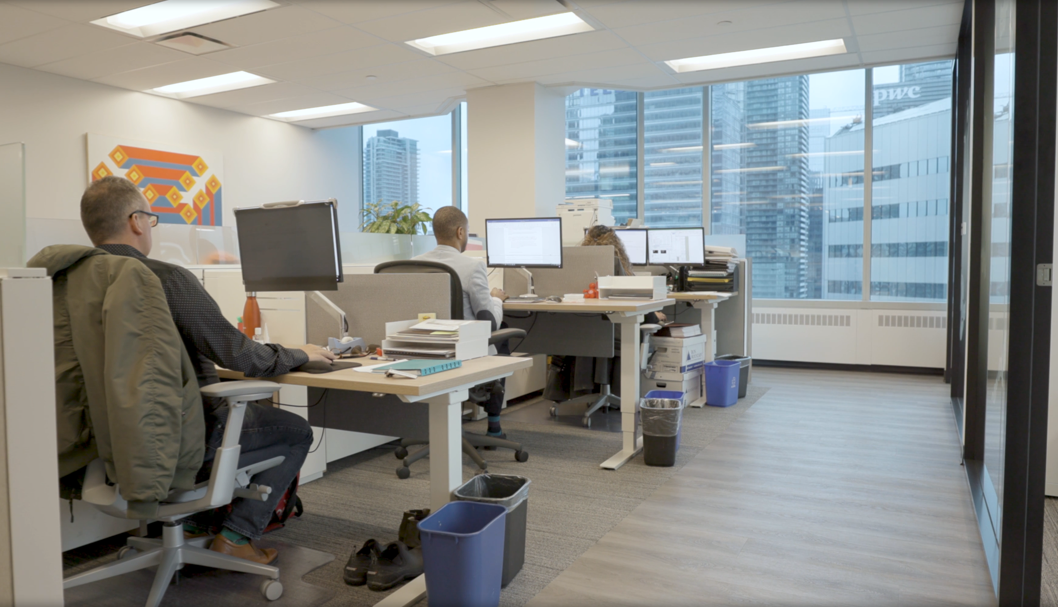
After moving into their new offices, Canada Lands employees reported significant reductions in eyestrain, headaches and drowsiness—findings consistent with a previous study on access to natural light. They also were 5 times more likely to rate their workplace as healthy, had 5 times more pride in their company, and were 3 times more excited to go to work than they were prior to the move.
“You can see the results,” said Matthew Tapscott, vice president of finance for the Canada Lands Company. “People have pride in the office. They are happy to come to work. You can feel that they’re more connected, they’re more motivated, and they’re healthier.”
As the fierce competition to attract and keep talent rages on, companies are realizing their offices are an untapped recruiting tool. Driven by their experiences outside of work, employees expect companies to design a workplace environment that supports their health and wellbeing. The built environment is now central to a company’s ability to retain employees. More than any other design element in the building envelope, smart window technology has been proven to increase employee satisfaction.

And that satisfaction translates into increased rents. After GFP Real Estate decided to transform an early 20th century warehouse in Brooklyn into an office building, the first thing its designers did was look out the warehouse’s windows. They saw a skyline of similar buildings, each with stunning views. But every time the sun was out, the shades in those buildings were down. “You have this great opportunity to look at something beautiful and dynamic,” said Eric Gural, the co-CEO of GFP. “Yet, you lose it on sunny days. And there are a lot of sunny days.”
Seeking to provide an “exclusive amenity” for its would-be renters, GFP Real Estate chose to install View Smart Windows in the building, now the N6 Lofts. Because of this choice, GFP has been able to charge rents 25% higher than the building’s neighbors—on par with prices in downtown Manhattan.
The N6 Lofts aren’t alone. Bolstered by this success, developers and architects throughout the country are designing buildings to include smart window technology—and reaping their rewards. By installing View in its Civica Cherry Creek Property, Schnitzer West achieved the highest weighted average rents in the Denver Market, 12% higher than comparable buildings. Churchill Hall, an office building in Durham, North Carolina, is charging rents 5% higher than the average Class A building in North Carolina’s Research Triangle.
“I think it would be a big mistake to build a building right now without this technology,” said Matt Winters, a vice president at Tri Properties, which owns Churchill Hall.
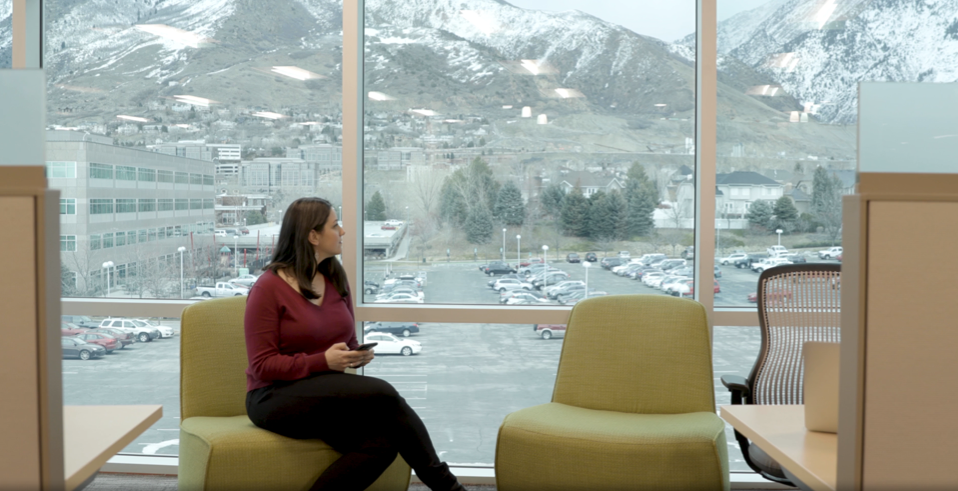
When it decided to embark on a second construction project next to its wildly successful office building in Cottonwood Heights, Utah, Cottonwood Partners chose an almost identical design. The new building, however, included just one change: instead of traditional glass, Cottonwood Partners installed View Smart Windows, which eliminated the need for shades and preserved the breathtaking views of the snow-capped Wasatch Mountains outside.
The results provide a poignant case study for developers unsure of whether or not they should choose View. The building, called Cornerstone II, leased up six months faster than Cornerstone I, and despite the fact that it was a 20-minute drive from Salt Lake City, Cottonwood Partners were able to charge rates similar to buildings downtown.
“We got the building leased very quickly, mostly before it was even complete,” said Jeff Gochnour, president of development at Cottonwood Partners. “We’d like to attribute that to View glass, in part. People love the design of these buildings.”
Atlanta’s The Interlock Featuring View Smart Windows Wins Prestigious Commercial Construction Award
The Interlock is set to delight future residents, employees and visitors with ample natural light and access to views through View Smart Windows […]
View, Inc.
Atlanta’s The Interlock Featuring View Smart Windows Wins Prestigious Commercial Construction Award
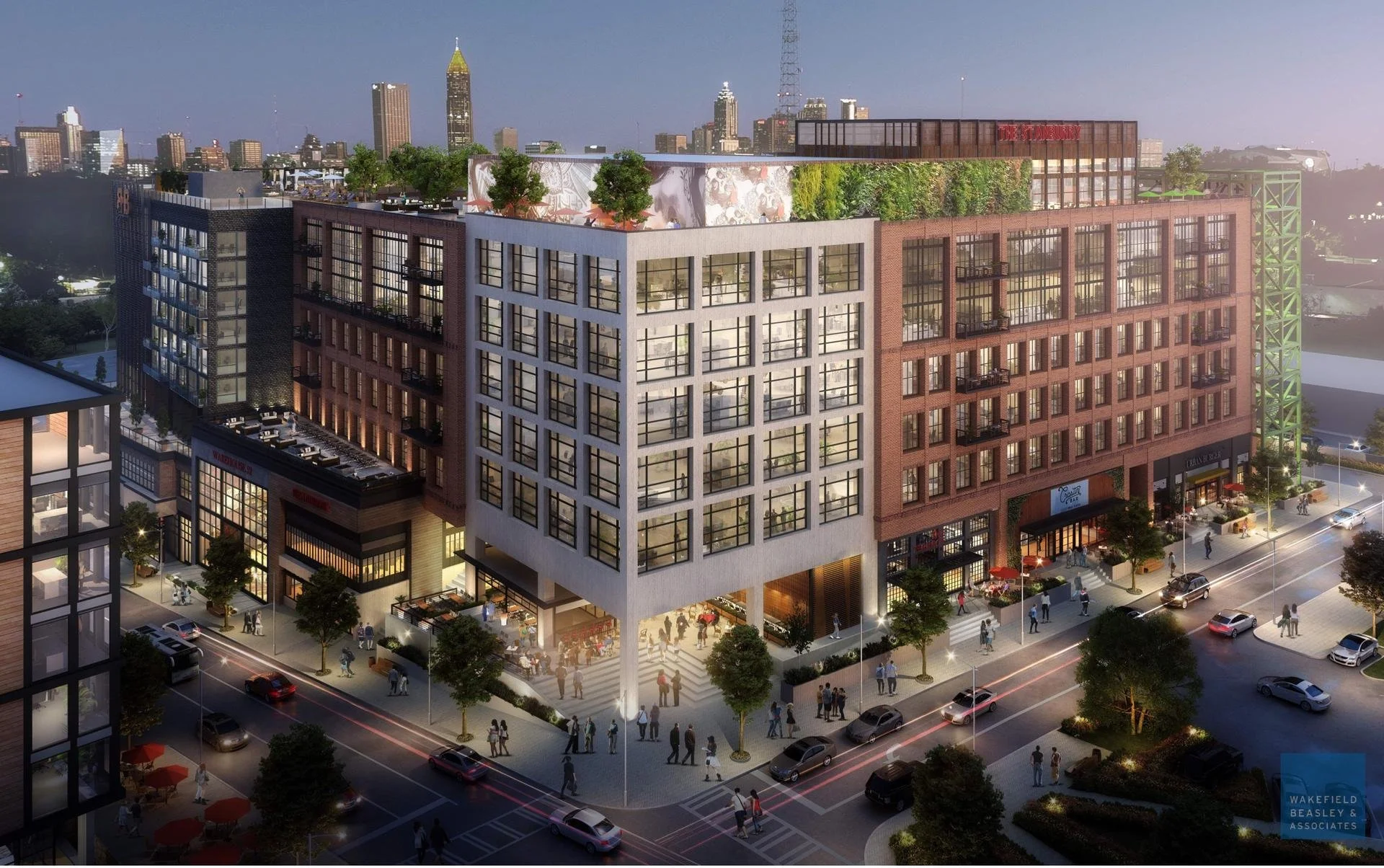
The Interlock is set to delight future residents, employees and visitors with ample natural light and access to views through View Smart Windows.
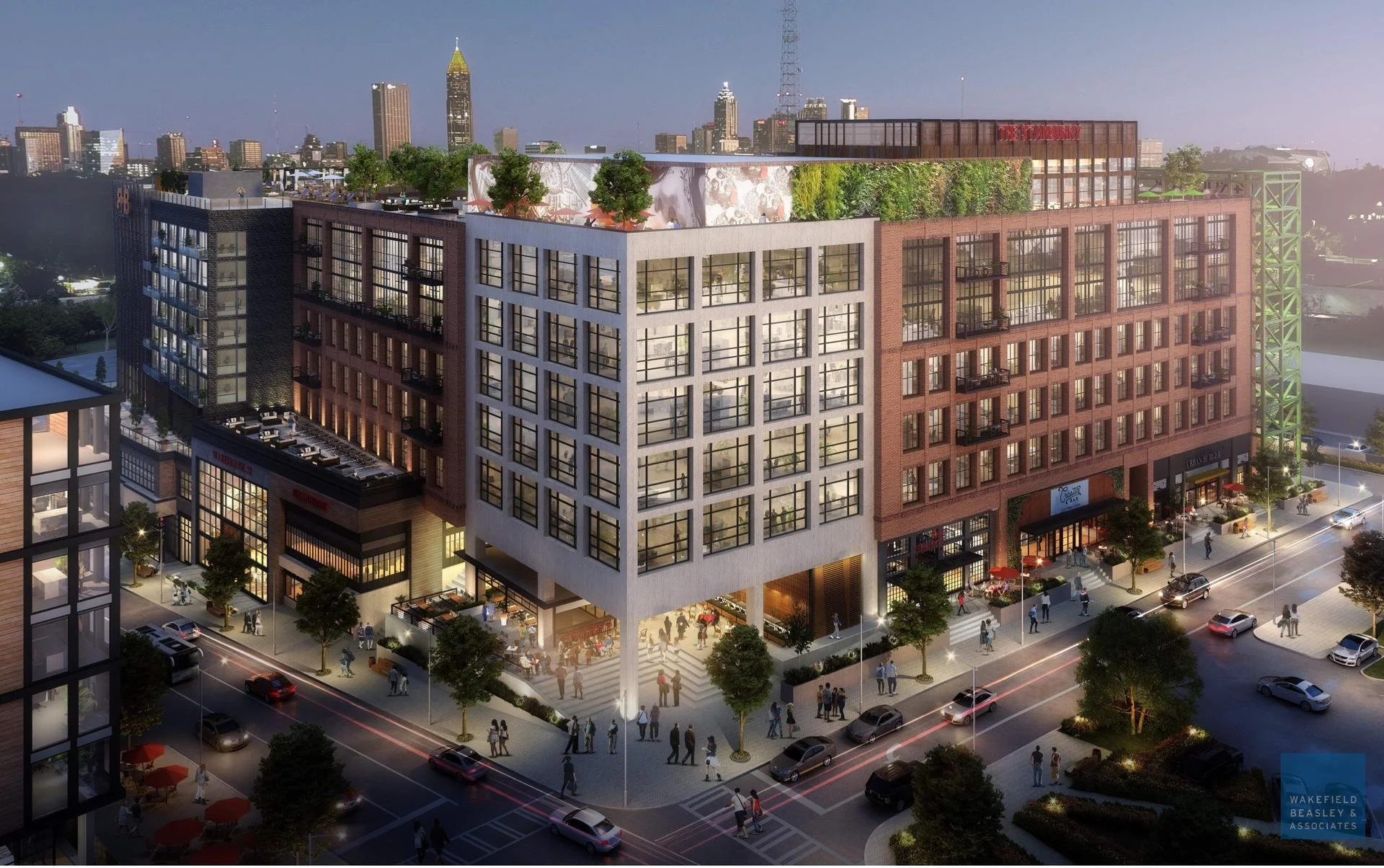
The corner of Howell Mill Road and 14th Street in Atlanta will soon look smarter than ever as developer S.J. Collins Enterprises builds out the new $450 million mixed-use development The Interlock featuring View Smart Windows. The Interlock was recently recognized by Commercial Property Executive (CPE) with a silver award in the Unbuilt category for its exceptional mixed-use site plan design and commitment to sustainability, earning S.J. Collins Enterprises a prestigious 2019 Distinguished Achievement Award. CPE’s Distinguished Achievement Awards recognize commercial real estate industry’s most noteworthy properties and transactions.
Scientific research has proven View’s smart windows enhance mental and physical wellbeing by significantly reducing headaches, eyestrain and drowsiness and studies show significant gains in productivity as a result. In addition, they control heat and glare, which improves the energy efficiency of buildings by up to 20 percent.
“Choosing View Smart Windows allows us to create a new type of office environment that will dramatically improve productivity with big open spaces that feature the floor-to-ceiling windows,” said Jeff Garrison, partner at S.J. Collins Enterprises. “In a tight market, it’s amenities like this that allow us to be successful and attract high-profile clients who are looking to take their office environment to the next level.”
The Interlock is slated to open in Fall 2020 and will offer a versatile mix with 200,000 square feet of creative office space, 100,000 square feet for retail and restaurant space, 350 apartment units, 70 single-family homes and a boutique hotel. It’s easy to imagine future employees, residents and visitors enjoying the vibrant streetscape of Atlanta’s West Midtown neighborhood through the beautiful, smart and healthy views that View Smart Windows create.

Designing Buildings With Smart Bird-Safe Windows
Birds are a fundamental part of maintaining a healthy ecosystem. As human societies grow, so does our awareness of bird safety and the impact our built environment has on them […]

View, Inc.
Designing Buildings With Smart Bird-Safe Windows
Birds are a fundamental part of maintaining a healthy ecosystem. As human societies grow, so does our awareness of bird safety and the impact our built environment has on them.
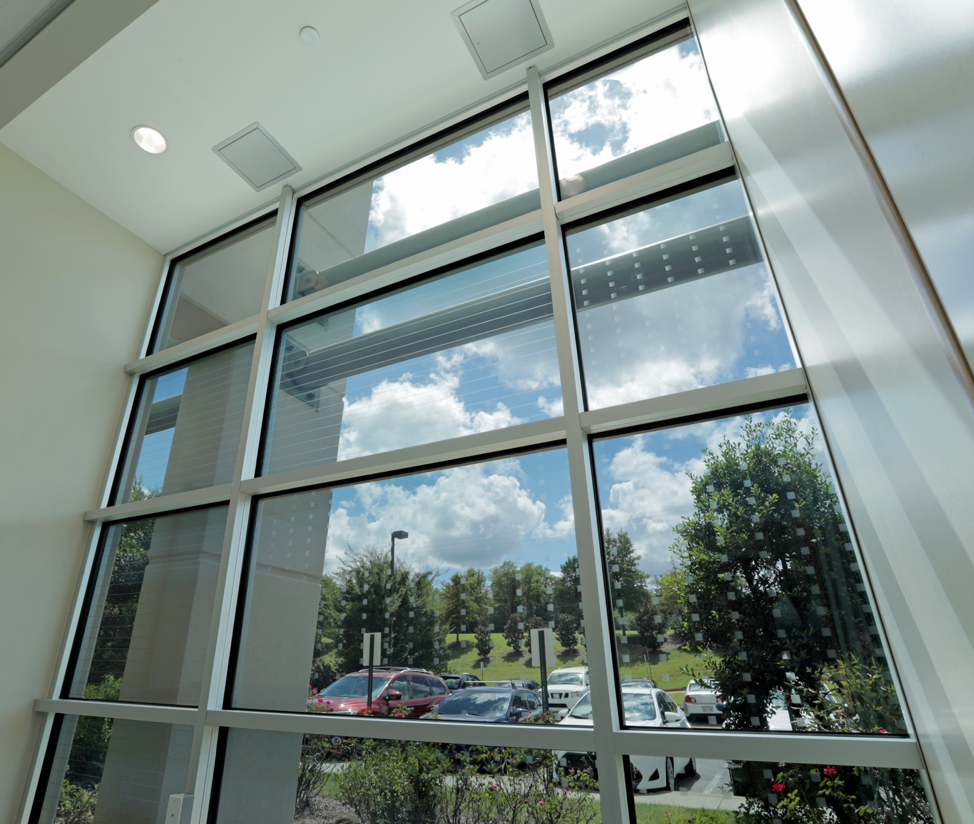
Birds do not see clear glass as an obstacle and don’t see images in glass as reflections. Because of the difference in how they see the world, millions of birds die from collisions with glass each year. As a company dedicated to health, wellness, and sustainability, View listened early on to customers and responded to the high interest in bird safety. View is the first electrochromic company to make bird-safe glass without sacrificing any of the core benefits of the smart windows.
Bird-safe designs are critical architectural and design requirements in modern commercial real estate. Across North America, new guidelines for bird-safe buildings are now the norm. LEED certification, the leading benchmark in green building, has added bird collision deterrence to its credits and reports a significant increase in interest in the program. Many metropolitan areas are making bird-friendly glass mandatory, such as Chicago, Illinois, New York, and Washington DC, in the United States and major metro areas like Toronto in Canada.
According to the American Bird Conservatory(ABC), adding visual markers to glass is the best way to create a bird-safe environment. To do this, View developed windows with markers and conducted extensive studies. It was essential to ensure the birds avoided flying into the glass while ensuring the views from the windows were not compromised. View created dozens of different designs that were thoroughly tested, resulting in two different bird-friendly patterns, both approved by the ABC with an Avoidance Index of 80 and above. View also offers custom patterns to meet customer requirements or local regulations.
Daytime isn’t the only time the need for wildlife consideration arises: the Audubon society notes, “Many birds, particularly songbirds, migrate at night, navigating by the moon and stars.” Mostly flying at altitudes below 2,000 feet, and even lower on foggy and rainy nights, they often become disoriented by brightly lit windows in tall buildings. All View Smart Windows can be tinted at night to avoid light from escaping the building and thereby eliminating the light spillage for the building.
Our bird-friendly glass is only one aspect of View’s smart windows. They are designed to automatically change their tint based on weather, and internal occupancy conditions. View’s intelligent windows have been proven to reduce eyestrain, headaches, and drowsiness for people inside, and decrease building energy consumption. With credits for both energy efficiency and bird-friendly glass, View helps innovative companies quickly obtain LEED status.
You can see View’s smart windows in action, with the bird-friendly pattern, at innovative sites such as San Francisco International airport Terminal 1. You can also see our windows at locations across North America.