

Your backstage pass

Light It Up: View Smart Windows Transforming Healthcare
Written by Piers MacNaughton
Healthcare has come a long way, from the development of cutting-edge treatments to the design of healthcare facilities. Remember the dark, uninviting buildings of the past? They're quickly becoming a distant memory.

Piers MacNaughton
Light It Up: View Smart Windows Transforming Healthcare
Written by Piers MacNaughton
Healthcare has come a long way, from the development of cutting-edge treatments to the design of healthcare facilities. Remember the dark, uninviting buildings of the past? They're quickly becoming a distant memory. Today's healthcare facilities have morphed into bright, welcoming spaces, intentionally designed with patients and healthcare staff in mind. The key element to this transformation is the focus on the physical environment to improve patient outcomes, elevate patient and staff experience, operate sustainably, and digitize the patient experience. Healthcare providers are increasingly looking to amenities like View Smart Windows to bolster these outcomes and create a differentiated experience for their consumers.
Fewer Infections and Shorter Stays
Creating a healing environment goes beyond the latest medical technology – it’s about getting the fundamentals right – clean surfaces, fresh air, comfortable temperature, and a connection to outside. While much attention has been paid to ventilation rates and air filtration, daylight and views have often been left as an afterthought. However, decades of research have revealed compelling benefits of daylight into patient rooms:
A study by the University of British Columbia showed that daylight passing through View Smart Windows carries antimicrobial properties that eliminate MRSA from surfaces in 24 hours, resulting in an 11-13% reduction in the likelihood of acquiring an infection compared to a room with traditional windows and blinds.1
Research by Ulrich et al. in 1984 found a half day reduction in length of stay for patients with a view outside.2 The effect of daylight and views on length of stay has been repeatedly demonstrated, most recently by Jafarifiroozabadi et al. in a cardiac ICU.3
Value-based care calls for low infection rates and fast recovery times, and the Center for Medicare and Medicaid Services (CMS) even ties reimbursements back to those performances. View Smart Windows give health systems an edge in meeting ever-higher standards for these metrics.

View installation at Methodist University Hospital
Putting the Hospital in Hospitality
Patients are now approaching healthcare with a goal of holistic wellness, not just the treatment of illness. Beyond improving patient health outcomes, View Smart Windows elevate the patient and caregiver experience. A recent study at the University of Vermont Medical Center found that 76% of patients randomly admitted to a room with View Smart Windows gave a 9 or 10 rating on their overall hospital experience HCAHPS rating, compared to 60% of patients assigned to the unit with traditional windows.4 A study by Clemson University showed that patients with access to daylight and views through View Smart Windows gave a 25% higher overall hospital rating when compared to traditional windows with blinds, which was already 75% higher than a room with no window at all.5 Not only do high patient ratings contribute to the hospital brand; they also are factored into reimbursement rates from CMS.
Green Light for Sustainability
While strategies that support better health outcomes and an elevated patient experience are central to the mission of most modern healthcare facilities, sustainability is increasingly factoring into the decision process, with most major health systems committing to lofty carbon reduction targets by 2050 along with facing increasingly strict local codes. View Smart Windows can help contribute to sustainability goals by blocking three times more heat than traditional windows, reducing the cooling load from on HVAC systems in perimeter spaces such as patient and recovery rooms. This energy-smart move translates into reduced operational costs for healthcare facilities and aligns with sustainability efforts—an undeniable win-win.
Digitizing the Envelope
Over the past 30 years healthcare has been transitioning from physical to digital. This has taken the form of digital health records, telemedicine, and web-based/mobile patient portals. Health systems’ physical spaces are the last frontier of digitalization. View transforms the skin of the building into a smart digital interface that tints automatically to control for heat and glare and puts control of the environment at the patient’s bedside. With the rise of smart technology in every aspect of people's lives, patients expect to have a smart, seamless experience during their patient stay.
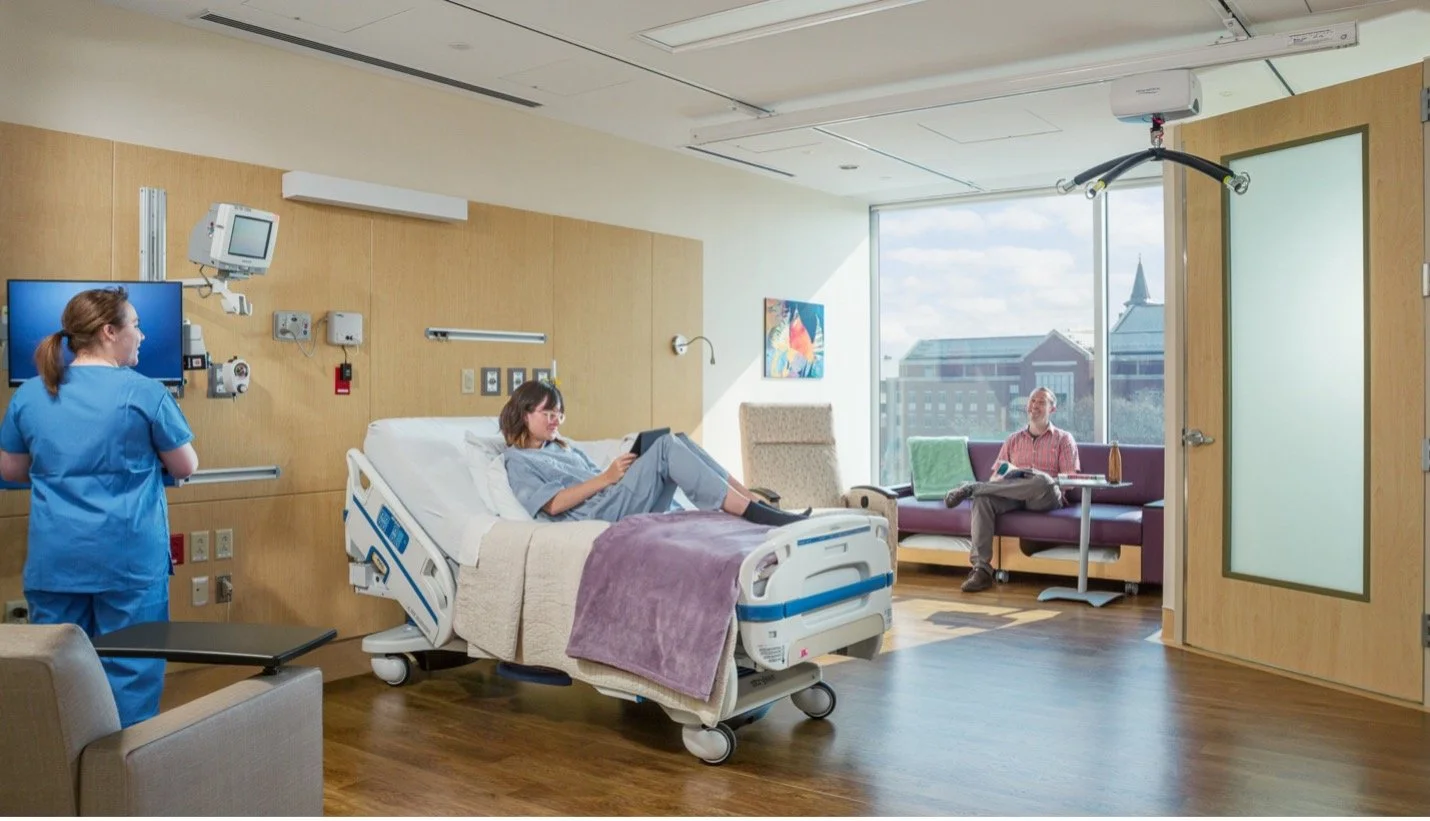
View installation at Memphis Methodist Hospital
Embrace the Light: Smart Window System for No Additional Cost
Enhancing health outcomes, elevating the patient and caregiver experience, improving sustainability, and digitizing physical assets are four mega trends that are underway in healthcare. View Smart Windows check all the boxes without compromise for facility owners and guides us toward a brighter future in healthcare. The federal government has recognized the value of electrochromic glass in healthcare settings – as part of the Inflation Reduction Act passed in 2022, tax-exempt healthcare systems are able to get 40% of the cost of the smart window system reimbursed, bringing the cost of View Smart Windows below traditional windows and blinds.
1. M. I., Vojnits, K., Zhao, M., MacNaughton, P. & Pakpour, S. The effect of indoor daylight spectrum and intensity on viability of indoor pathogens on different surface materials. Indoor Air 32, e13076 (2022).
2. Ulrich, R. S. View through a window may influence recovery from surgery. Science 224, 420–421 (1984).
3. Jafarifiroozabadi, R., Joseph, A., Bridges, W. & Franks, A. The impact of daylight and window views on length of stay among patients with heart disease: A retrospective study in a cardiac intensive care unit. Journal of Intensive Medicine 3, 155–164 (2023).
4. Koundakjian, D. C., Tompkins, B. J. & Repp, A. B. Evaluation of a New Hospital Building’s Impact on Clinical Outcomes and Consumer Experience in Medical Inpatients. Am J Med Qual 38, 122–128 (2023).
5. Mihandoust, S., Joseph, A., Kennedy, S., Macnaughton, P. & Woo, M. Exploring the relationship between window view quantity, quality, and ratings of care in the hospital. Int J Environ Res Public Health 18, (2021).

Climate Resilience: How to deal with the ‘here and now’ while building long-term solutions to climate change
Written by Rao Mulpuri
While there is broader consensus that climate change is real, and there is overwhelming scientific evidence that it is caused by human activity, many struggle to identify things we can do now to deal with its present ramifications.

Climate Resilience
Climate Resilience: How to deal with the ‘here and now’ while building long-term solutions to climate change
Written by Rao Mulpuri
While there is broader consensus that climate change is real, and there is overwhelming scientific evidence that it is caused by human activity, many struggle to identify things we can do now to deal with its present ramifications.
Fundamental changes to industries such as power generation, transportation, construction, and industrial manufacturing are finally underway, but they take time and must be implemented at large scale to realize their full benefits.
In the meantime, extreme weather events are disrupting human life and putting a strain on societal infrastructure. Catastrophic incidents are becoming ever more regular and more severe — from wildfires in the west, extreme heat in Texas, water shortages in Colorado, California, Nevada, and Arizona, and more — a key question is: what are we doing to adapt? What investments are we making to cope with the impacts that climate change is already having on our lives? How are we protecting ourselves, our homes, our workplaces, and our cities from extreme heat, fires, and floods?
We need to address the root causes of climate change to stop the warming planet, while simultaneously adapting to the new realities we face as a society. Utilities are proactively implementing demand-response, even shutting down power on windy, hot days, fire departments are implementing new technology to detect and warn people of upcoming fire danger, and individuals are installing battery systems at home to cope with increasing power outages.
The real estate industry consumes nearly 40% of all energy and 70% of all electricity and has an immediate imperative to improve energy efficiency and resiliency. While there are several steps the industry can and should take, one of the most impactful is to upgrade buildings to consume less energy AND make them more resilient to rising temperatures and blackouts..

For example, data shows that swapping regular windows with smart windows reduces base building energy consumption by up to 30% and enables a simpler path to net zero. Importantly, they block heat from entering the building, reducing peak cooling load which comes from energy sources that release the most carbon, such as coal and natural gas. The windows also provide immediate tangible benefits by keeping building interiors cool and comfortable for occupants. A few recent examples from buildings that have View Smart Windows installed:
(1) On a 100°F day at Dallas Fort Worth Airport, seats near gates with View Smart Windows stayed 20°F cooler than gates with regular windows.
(2) During a power outage on a 90+°F day in New York this summer, apartments at the residential tower Sven that have View Smart Windows stayed 11°F cooler than apartments that do not.
(3) At the newly-renovated office building at 730 3rd Ave in New York, desk surfaces stayed 12°F cooler after View Smart Windows were installed.
With thermal discomfort in buildings affecting everything from elderly health to workplace productivity and student attendance, finding energy efficient ways to keep buildings cool and comfortable as the planet heats up is one of the immediate opportunities for the real estate industry to build resilience.
What are you doing to create climate resilience today?
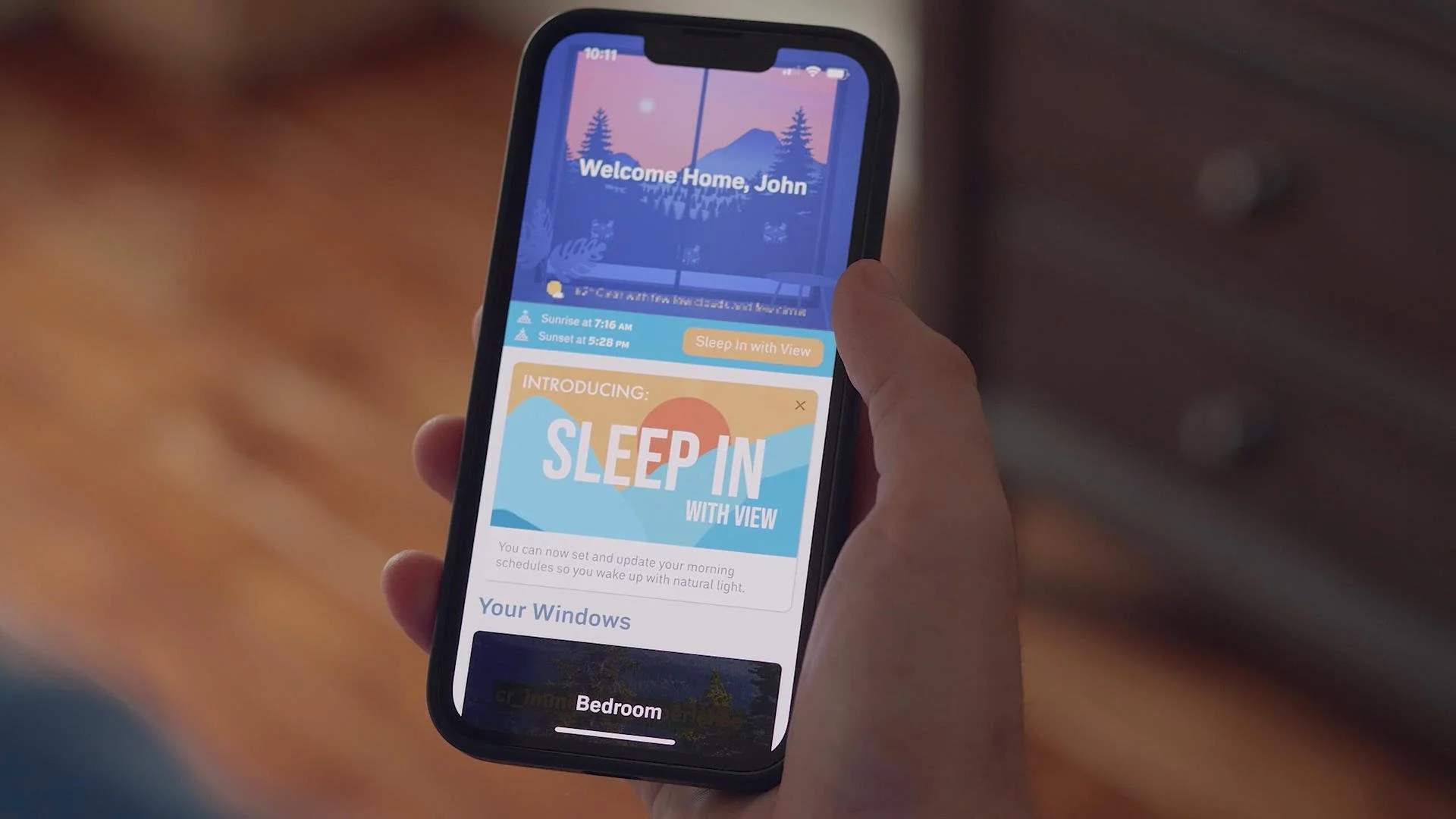
Wish you got more sleep? Introducing Sleep In Mode from View
Written by Tanya Makker
As an architect and product manager at View, I obsess over designing user experiences that are comfortable, healthy, and fun. Today, I’m excited to introduce a new feature that’s all three.
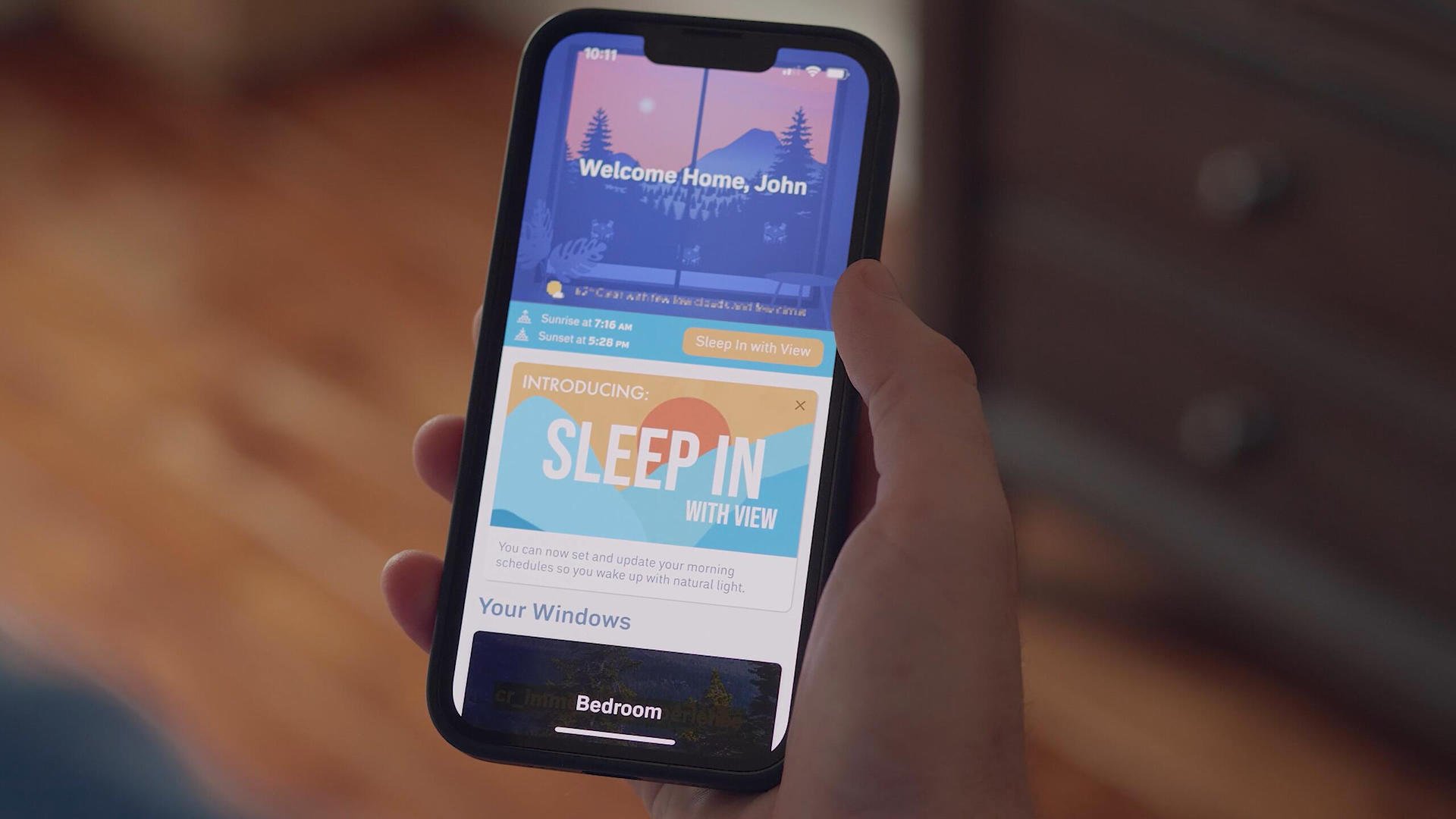
Wish you got more sleep? Introducing Sleep In Mode from View
Written by Tanya Makker
As an architect and product manager at View, I obsess over designing user experiences that are comfortable, healthy, and fun. Today, I’m excited to introduce a new feature that’s all three. We’re giving residents in our buildings agency over their sleep schedule, independent of the sun’s schedule, so they can get the rest they need.
View Smart Windows are installed in apartments across the country, maximizing access to natural light and providing continuous views. We know that this not only keeps users visually and thermally comfortable but also healthy and energized. Research has shown that residents on average sleep 22 minutes longer, have consistent melatonin onset, and a healthier circadian rhythm. Brighter days make for better nights.
We’re now taking this one step further.
As important as it is to let natural light in throughout the day, it’s just as important to keep light out for a restful night’s sleep. Sleep In Mode gives users the luxury to keep their space cool and dark until they are ready to soak in the sun again.
Using the View mobile app, residents can enter their preferred bedtimes and wake up times. For the selected spaces, the windows darken, blocking out city light pollution and the morning sun until the user is ready to wake up. At that time, the windows gradually clear, gently rousing users with natural light. They can set recurring daily schedules or make one off adjustments if their schedule changes. Did you know that a sound sleep strengthens your immune system, helps with information retention, and makes you more creative? Darker nights make for better days!
We at View continue to learn about the human body and how indoor environments affect our health. We apply these learnings to continuously enhance the user experience through regular over-the-air software updates. So even as a physical building ages, the user experience is always evolving.
If you’re an apartment seeker in New York, Boston, DC, Seattle or Toronto, find the View apartment in your region, take control of the sun, and Sleep In with View.
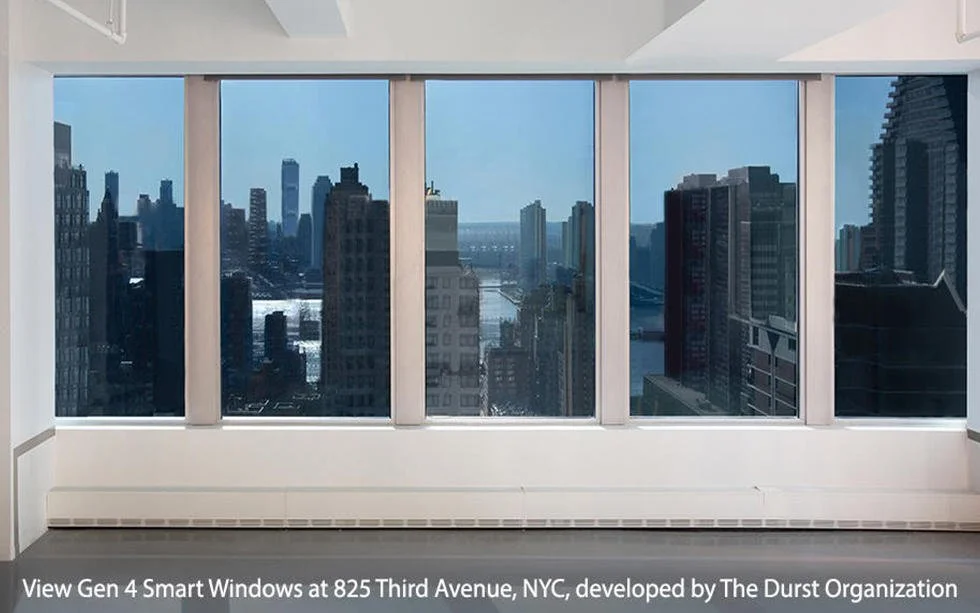
Think you have to compromise on color quality when you choose smart windows? Think again.
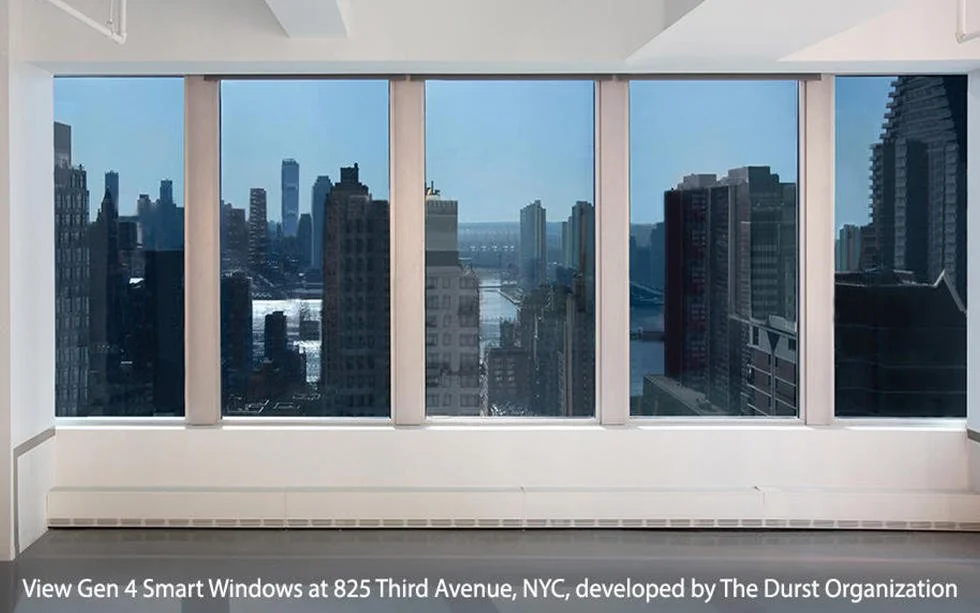
Today, smart windows are installed and designed into well over 100 million square feet of buildings and are being adopted at a rapidly growing rate by leading companies such as Google, Walmart, Amazon, Uber, Dallas-Fort Worth Airport (DFW), among many others […]
Written by View, Inc.
Think you have to compromise on color quality when you choose smart windows? Think again.
Smart windows have come a long way from their days of small proof-of-concept installations and limited design flexibility. Today, smart windows are installed and designed into well over 100 million square feet of buildings and are being adopted at a rapidly growing rate by leading companies such as Google, Walmart, Amazon, Uber, Dallas-Fort Worth Airport (DFW), among many others.
While increasing awareness of the sustainability and health benefits of smart windows are bringing the technology into the mainstream, another key reason for the recent surge in adoption is the improvement of the color quality of smart glass. The material science behind smart glass is incredibly complex, and for quite some time the reality was that to achieve maximum heat and glare control, compromises had to be made in the color quality of the glass in its tinted state.
View has pioneered advancements in the manufacturing process over the last several years so building owners and architects no longer have to choose between heat and glare control and color quality. Over the last year, buildings across the country have opened their doors with View’s latest generation of smart windows. View Gen 4 Smart Windows provide the industry’s most neutral color and picture-perfect clarity, while continuing to deliver best-in-class heat and glare control by blocking 99.5% of light in their darkest tint state.
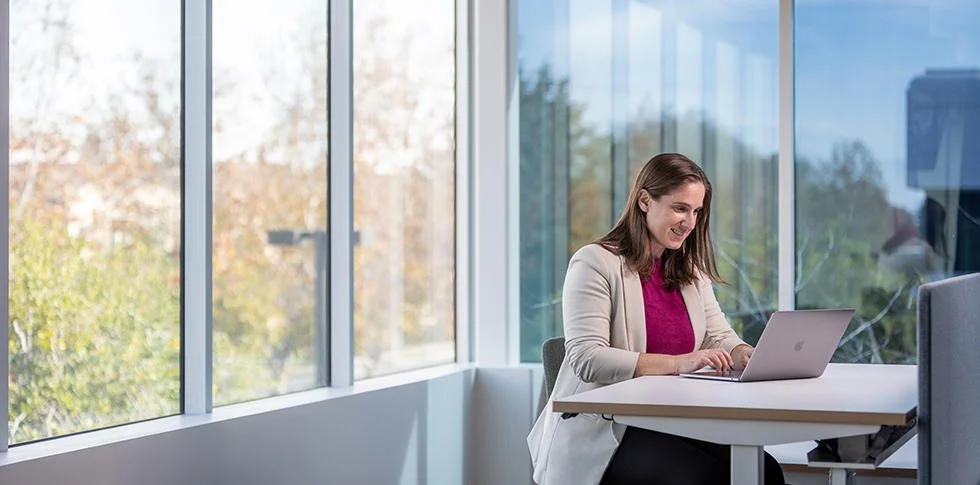
View installation at Methodist University Hospital
The importance of color
The benefits of smart windows are well established. Occupants in buildings with View Smart Windows enjoy unobstructed views, experience fewer headaches, and sleep better at night. But color quality has an impact on the occupant experience as well as the perception of the glass. High color quality renders skin tones and interior finishes more naturally, maintains the vibrancy and authenticity of views to the outside, and makes lighting the space simpler.
Measuring color quality
Color quality of daylight can be characterized using the same metrics that the architectural lighting industry uses for electric lighting. Color temperature expresses how “warm” or “cool” the light is, color fidelity expresses how accurately it renders colored objects and finishes, and color gamut expresses how saturated colored objects appear.
View Gen 4 Smart Windows color performance
The photo comparisons below show the effect that improved color fidelity can have on the appearance of skin tones in a building and views to the outside. View Gen 4 Smart Windows’ superior color fidelity and color rendering with visible light transmission (Tvis) of 1% are evident in both cases.
Effect on skin tones
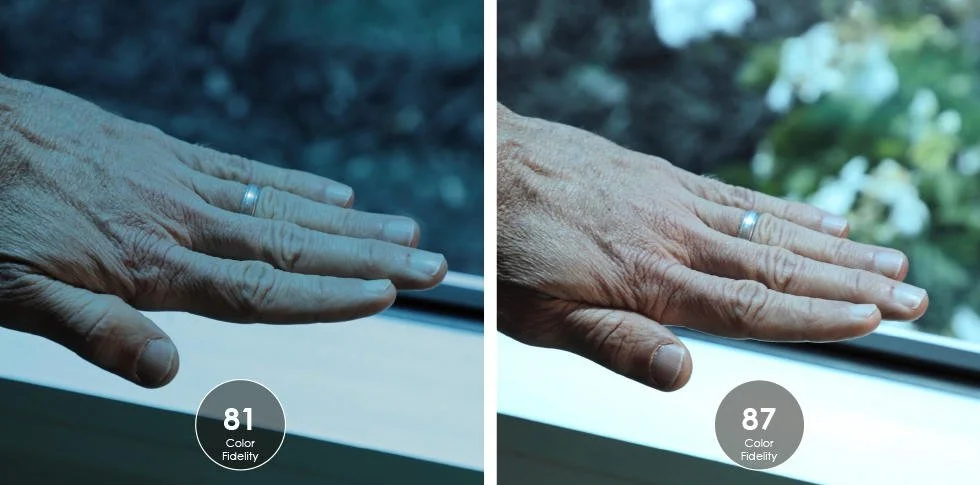
Left: Traditional EC glass at 1% Tvis; Right: View Gen 4 at 1% Tvis
Effect on exterior views
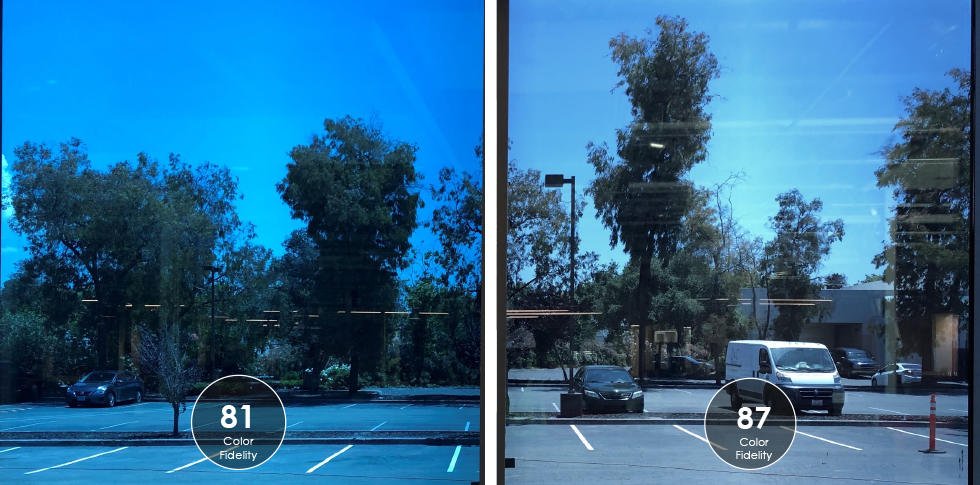
Left: Traditional EC glass at 1% Tvis; Right: View Gen 4 at 1% Tvis
For more details on the color quality of View Gen 4 Smart Windows, please download our color quality whitepaper.
Maintaining optimal glare control
Though color quality may be the first thing an occupant notices about smart windows, it is crucial to maintain the fundamental benefits of the product—protection from heat and glare—while improving color quality. In a building with traditional windows, occupants will typically close the blinds when direct sunlight is causing intolerable glare, but in a building with smart windows they rely on the tinting to keep the room comfortable.
In a study of the effectiveness of smart windows in different tint states in three major US cities, it was found that the glass must block out at least 99% of light (equal to a Tvis of 1%) during periods of direct sunlight in order to significantly reduce intolerable glare. Increasing the amount of visible light transmission by just 1% results in hundreds of hours per year of intolerable glare.
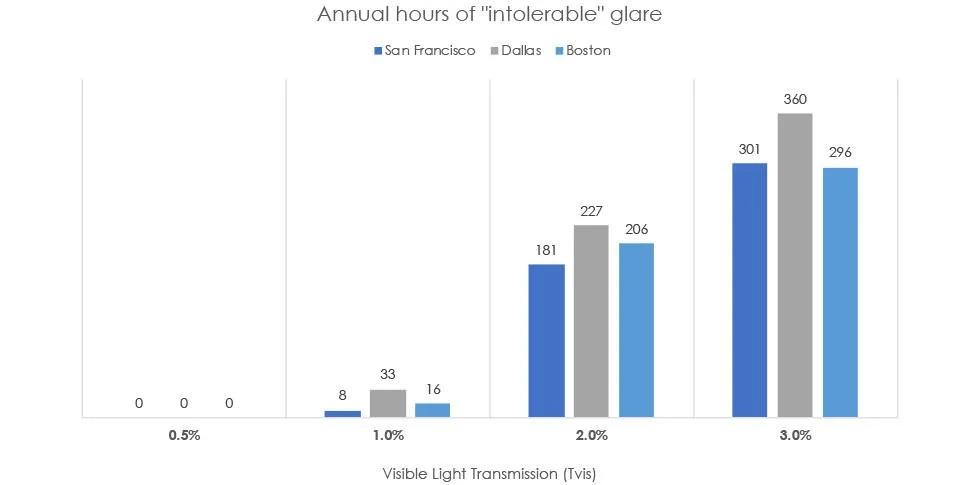
The implications for building owners are significant. Other smart windows options on the market have mitigated color quality issues either by simply tinting the glass less, increasing visible light transmission to 2%, or by leaving part of the window untinted. As the above chart makes clear, a building with smart windows that only blocks out 98% of light will result in uncomfortable occupants and will ultimately still require blinds, defeating the entire purpose of smart windows.
View Gen 4 Smart Windows are the only product on the market that can block up to 99.5% of light while also delivering the industry’s most neutral color quality, enabling building owners and architects to design without compromise. Learn more: https://view.com/product.

Log4j rattled the infrastructure security world. Here’s how to prepare for the next security threat.
Building owners need more sustainable solutions to strengthen their cyber defenses. In a recent report, CISA highlighted a few immediate actions real estate owners can take to protect their buildings against cyberattacks […]

Written by View, Inc.
Log4j rattled the infrastructure security world. Here’s how to prepare for the next security threat.
Since December, cybercriminals have made hundreds of thousands of attempts to exploit vulnerabilities in a little-known but virtually ubiquitous piece of software called Log4j. Jen Easterly, the director of the U.S. Cybersecurity and Infrastructure Security Agency (CISA), called Log4j the “most serious” security flaw she’s seen in her career.
And it’s just the beginning. Cybersecurity agencies in the United States, Australia, and the United Kingdom have detected an increase in sophisticated ransomware attacks against “critical infrastructure” sectors, including airports, hospitals, and academic research facilities. The cyberwar accompanying Russia’s invasion of Ukraine could make matters worse. As state-sponsored hackers pump out a barrage of attacks to see what sticks, American businesses could get caught in the crossfire.
Security breaches have the potential to hit commercial real estate particularly hard. Real estate owners are increasingly recognizing the need to make their buildings “smart,” but as our buildings become more connected the risk of potential cyber threats increases. Just like a smartphone, the technology that makes a building smart requires regular software updates to patch evolving security threats.
Simply reacting to every new cybersecurity threat is a losing strategy. Building owners need more sustainable solutions to strengthen their cyber defenses. In a recent report, CISA highlighted a few immediate actions real estate owners can take to protect their buildings against cyberattacks:
1. Update operating systems and software.
In the wake of security breaches, IT departments often scramble to patch affected systems before hackers can exploit them. But the projected pace of cyberattacks won’t be rebuffed through diligent patching alone. For one, reactively patching thousands of affected devices across an entire real estate portfolio is a nightmare, leaving building owners and tenants exposed to cybersecurity threats for weeks.
Building administrators need to be able to proactively orchestrate updates and patches across an entire building portfolio simultaneously.
2. Secure and monitor remote desktop protocols.
Remote building access is often monitored on a building-by-building basis, and each property in a portfolio can have different networks, automation systems, and devices. Every day, building operators grant technicians from hundreds of third-party vendors access to these systems. In most cases, a building operator needs to be onsite—at a physical workstation—to initiate a third-party vendor’s access. There’s little governance around who is accessing a building’s operations network and when. Needless to say, this creates significant security concerns.
Property owners need a secure way to uniformly authenticate, manage, and audit who has access to building networks, connected devices, and software applications.
3. Adopt multi-factor authentication.
Because single-factor authentication, such as a lone password, is vulnerable to even the most amateur hackers, many companies have switched to two-factor authentication, which requires a second piece of information—often a phone number or separate email account—to access a system. But when it comes to cyber security, three is better than two (and four is better than three, and so on). Additional layers of protection can include physical tokens—a key fob or USB drive, for example—or even biometric identifiers such as a fingerprint, retinal scan, or voice recognition.
Building administrators should require multi-factor authentication for as many services as possible—particularly for email and accounts that access critical systems.
4. Regularly backup data.
It’s the oldest safeguard in the book. In the event of an attack, having a secure backup of a building’s data infrastructure will help safeguard continuity of operations and minimize potential downtime.
Building administrators should maintain an offline, encrypted backup of a building’s data. One good option is to maintain the backup in a native cloud (though, consider storing the backup’s encryption key somewhere else).
Be prepared for the next security threat with IoTium from View
IoTium’s easy-to-deploy solutions can facilitate all four of these actions, enabling building owners to quickly achieve enterprise-grade security and gain real-time visibility into their entire real estate portfolio. For more information, please visit: www.iotium.io or contact us below.