

Your backstage pass

Log4j rattled the infrastructure security world. Here’s how to prepare for the next security threat.
Building owners need more sustainable solutions to strengthen their cyber defenses. In a recent report, CISA highlighted a few immediate actions real estate owners can take to protect their buildings against cyberattacks […]

Written by View, Inc.
Log4j rattled the infrastructure security world. Here’s how to prepare for the next security threat.
Since December, cybercriminals have made hundreds of thousands of attempts to exploit vulnerabilities in a little-known but virtually ubiquitous piece of software called Log4j. Jen Easterly, the director of the U.S. Cybersecurity and Infrastructure Security Agency (CISA), called Log4j the “most serious” security flaw she’s seen in her career.
And it’s just the beginning. Cybersecurity agencies in the United States, Australia, and the United Kingdom have detected an increase in sophisticated ransomware attacks against “critical infrastructure” sectors, including airports, hospitals, and academic research facilities. The cyberwar accompanying Russia’s invasion of Ukraine could make matters worse. As state-sponsored hackers pump out a barrage of attacks to see what sticks, American businesses could get caught in the crossfire.
Security breaches have the potential to hit commercial real estate particularly hard. Real estate owners are increasingly recognizing the need to make their buildings “smart,” but as our buildings become more connected the risk of potential cyber threats increases. Just like a smartphone, the technology that makes a building smart requires regular software updates to patch evolving security threats.
Simply reacting to every new cybersecurity threat is a losing strategy. Building owners need more sustainable solutions to strengthen their cyber defenses. In a recent report, CISA highlighted a few immediate actions real estate owners can take to protect their buildings against cyberattacks:
1. Update operating systems and software.
In the wake of security breaches, IT departments often scramble to patch affected systems before hackers can exploit them. But the projected pace of cyberattacks won’t be rebuffed through diligent patching alone. For one, reactively patching thousands of affected devices across an entire real estate portfolio is a nightmare, leaving building owners and tenants exposed to cybersecurity threats for weeks.
Building administrators need to be able to proactively orchestrate updates and patches across an entire building portfolio simultaneously.
2. Secure and monitor remote desktop protocols.
Remote building access is often monitored on a building-by-building basis, and each property in a portfolio can have different networks, automation systems, and devices. Every day, building operators grant technicians from hundreds of third-party vendors access to these systems. In most cases, a building operator needs to be onsite—at a physical workstation—to initiate a third-party vendor’s access. There’s little governance around who is accessing a building’s operations network and when. Needless to say, this creates significant security concerns.
Property owners need a secure way to uniformly authenticate, manage, and audit who has access to building networks, connected devices, and software applications.
3. Adopt multi-factor authentication.
Because single-factor authentication, such as a lone password, is vulnerable to even the most amateur hackers, many companies have switched to two-factor authentication, which requires a second piece of information—often a phone number or separate email account—to access a system. But when it comes to cyber security, three is better than two (and four is better than three, and so on). Additional layers of protection can include physical tokens—a key fob or USB drive, for example—or even biometric identifiers such as a fingerprint, retinal scan, or voice recognition.
Building administrators should require multi-factor authentication for as many services as possible—particularly for email and accounts that access critical systems.
4. Regularly backup data.
It’s the oldest safeguard in the book. In the event of an attack, having a secure backup of a building’s data infrastructure will help safeguard continuity of operations and minimize potential downtime.
Building administrators should maintain an offline, encrypted backup of a building’s data. One good option is to maintain the backup in a native cloud (though, consider storing the backup’s encryption key somewhere else).
Be prepared for the next security threat with IoTium from View
IoTium’s easy-to-deploy solutions can facilitate all four of these actions, enabling building owners to quickly achieve enterprise-grade security and gain real-time visibility into their entire real estate portfolio. For more information, please visit: www.iotium.io or contact us below.
The rental market has changed. Here’s how to win in a post-Covid world.
The Covid-19 pandemic changed the way Americans live. Almost overnight, tens of millions of people transitioned from working in an office to working from home, with the percentage of those working remotely increasing nearly threefold […]
Written by View, Inc.
The rental market has changed. Here’s how to win in a post-Covid world.
The Covid-19 pandemic changed the way Americans live. Almost overnight, tens of millions of people transitioned from working in an office to working from home, with the percentage of those working remotely increasing nearly threefold. Untethered to a particular location, city dwellers retreated to the suburbs, exurbs, and beyond. As a result, rents plummeted in major cities across the country.
But there are signs that the future of remote work is no longer certain. Covid turned Wall Street into a ghost town. Now, big banks such as JPMorgan Chase and Goldman Sachs have scheduled definitive dates for their employees to return to the office, citing high vaccination rates, low case counts, and widely available Covid tests. And major tech companies are investing billions in reinvigorating the work environment. Amazon is leasing new office space in Seattle to make room for 10,000 employees. Google is buying entire buildings in New York City and London, where it is expanding its office capacity by nearly 50%.
Office Occupancy on the Rise
Data from the security firm Kastle Systems showed that office occupancy across the country was at an average of nearly 40% of pre-Covid levels at the end of February, up from 23% in early January. A majority of employers in New York City expect daily attendance in their offices to exceed 50% on an average weekday by late March, according to a recent report by the Partnership for New York City.
As people flock back to cities to return to the office, real estate markets are once again booming. But pandemic-related delays and an increase in the price of construction materials have exacerbated housing shortages in many of the country’s technology and business hubs. The upshot is that real estate—just like gas, used cars, and beef—is a victim of high demand and low supply: Rents in major urban areas, including Los Angeles, Seattle, and Denver, have hit an all-time high.
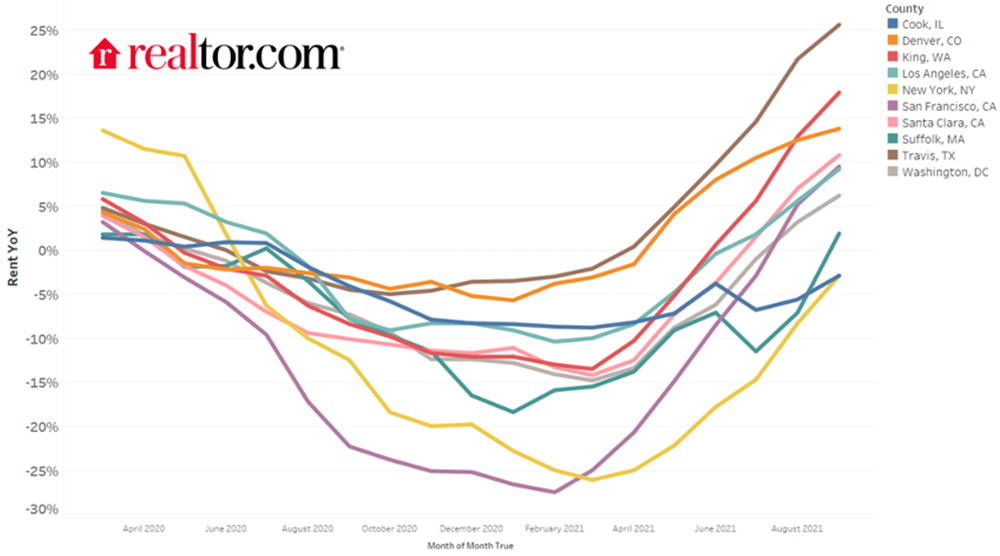
At the same time, the “great resignation” has propelled salaries higher across all income levels. Young professionals now have more money than ever to spend on their homes—and they are willing to spend a lot. Demand for two-bedroom apartments, in particular, is driving a national surge in rent, according to a reportby Realtor.com.
The need for multifamily developments that provide space to live and work is greater than ever before. Even as companies implement permanent return-to-office plans, many employees are going to maintain some sort of hybrid work arrangement. Since employees will likely continue to work from home a few days each week, their expectations are high. Multifamily developers need to design buildings that cater to the lifestyle changes brought about by the pandemic. This will require a fresh understanding of what tenants want and a strategic approach to meeting these evolving demands and staying ahead of the competition with new and differentiated amenities.
The Post-Covid Rental Requirements
According to a recent survey by Rent.com, tenants want innovative technology that automates key components of the home while giving them insights and control—from smart security systems that help them monitor their homes from a distance to energy-efficient devices such as smart lighting that automatically adjusts based on occupancy or daylight. Tenants are driving demand for buildings that optimize their health and wellness, with abundant natural light and views of the outdoors and sensors that track indoor environmental quality. And they want a home designed with flexible, functional spaces that allow seamless work-life integration, such as built-in desks, shared workspaces, and an atmosphere that inspires creativity and productivity.
View Smart Windows, which use artificial intelligence to automatically adjust their tint in response to the sun, can provide all three.
By maximizing natural light and views of the outdoors while optimizing building occupant comfort, View Smart Windows make multifamily developments a better place to live and work. Multiple studies have shown that View Smart Windows generate significant health benefits for building occupants. And View’s cloud-connected smart building network provides a flexible technology backbone that can be leveraged to connect, control, and continually upgrade multiple smart home applications—from smart locks to smart thermostats, air quality sensors, and more—on a unified, secure system.
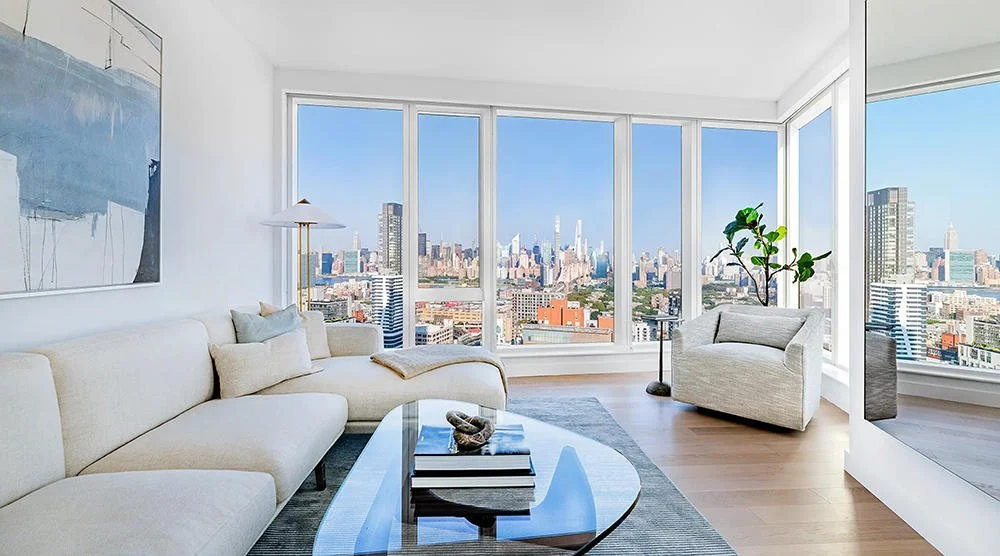
Image courtesy of www.svenlic.com
At the end of the day, the buildings that stand out from the crowd will attract the attention — and dollars — of tenants flocking back to cities. By installing View at Sven, its 71-story apartment tower in Long Island City, Queens, the Durst Organization was able to maximize panoramic views of downtown Manhattan and achieve higher rents. The “wow factor” is important, and View Smart Windows are a differentiator in competitive markets.
View Smart Windows are currently designed into 1,630 units and more than 2.5 million square feet of multifamily developments. Learn more about the benefits of View Smart Windows for multifamily properties.
In Response to New York Mayor de Blasio’s Glass Building Ban
What Can We Learn from the Great Horse Manure Crisis of 1894? […]
Rao Mulpuri, CEO, View, Inc.
In Response to New York Mayor de Blasio’s Glass Building Ban
By Rao Mulpuri, CEO, View, Inc
What Can We Learn from the Great Horse Manure Crisis of 1894?
On Earth Day, New York City launched a plan to significantly curb buildings’ greenhouse gas emissions, specifically targeting the glass skyscrapers that have transformed the Manhattan skyline. The City enacted a law requiring large buildings to reduce their emissions or face millions of dollars in annual fines. This will drive renovations on a scale never before seen. And Mayor de Blasio wants to go even further; he said “We are going to introduce legislation to ban the glass and steel skyscrapers that have contributed so much to global warming. They have no place in our city or on our Earth anymore.”
I have some thoughts about this as the CEO of View, a technology company that is transforming buildings to improve people’s health and wellness, while simultaneously reducing energy consumption.

New York City, Morton Street, 1893
First, some history. In the late 1800s, many of the world’s great cities such as London and New York were experiencing a major crisis. New York City was home to more than 150,000 horses that pulled carriages and streetcars. Every year, the horses produced more than 100,000 tons of manure. It piled up in the streets, it stunk, and it became a major environmental and health crisis.
The issue led to the first ever International Urban Planning Conference in New York, but it disbanded without finding a solution. Meanwhile, inventors and entrepreneurs were building the automobile, which replaced horses completely, and solved the problem much faster and better than anyone imagined.
Now, to the current glass building crisis. We spend 90% of our time inside buildings. From a historical perspective, this is a relatively new thing. Humans used to be a completely outdoor species. This wasn’t always good for us. Sometimes, the outdoors were too hot or too cold. Sometimes, we were battered by rain and wind. Sometimes, animals tried to eat us. To protect ourselves, we created shelters.
Modern society has erected walls between humans and the outdoors. We’ve replaced the sun’s natural light with artificial lighting, the sound of the wind and the rustle of leaves with the hum of electricity and the tapping of keyboards. But we’re still the same species. When we get disconnected from the outdoors, we go crazy. There is a lot of science to prove this.
As a materials scientist, I find glass to be magical. It provides shelter and protection, but we can still see through it and connect to the outdoors. When we walk into a space with a lot of windows and daylight it just feels good. This is why today’s buildings use as much glass as possible.
I can appreciate that many environmentalists see glass as the enemy. Glass skyscrapers can be incredibly inefficient. These buildings trap heat like a greenhouse. And they use big air conditioning systems to pull all that heat out. The more glass you design with, the bigger this issue.
And the worst part about traditional glass is that people still aren’t connected to the outdoors because blinds block the views. In 2013, the Urban Green Council released a study showing that 59% of the window area in New York City is covered by blinds.
So where do we go from here? Just as we didn’t get to the car by making a better horse, incremental solutions such as smaller windows, fritted glass or motorized shades aren’t the real answer.
There’s a better way – windows that automatically change their tint, eliminate shades entirely while keeping floor to ceiling glass, and maintain views and connection 100% of the time. Smart glass works to transform both the energy consumption of buildings and the quality of life of the people that live and work inside them.
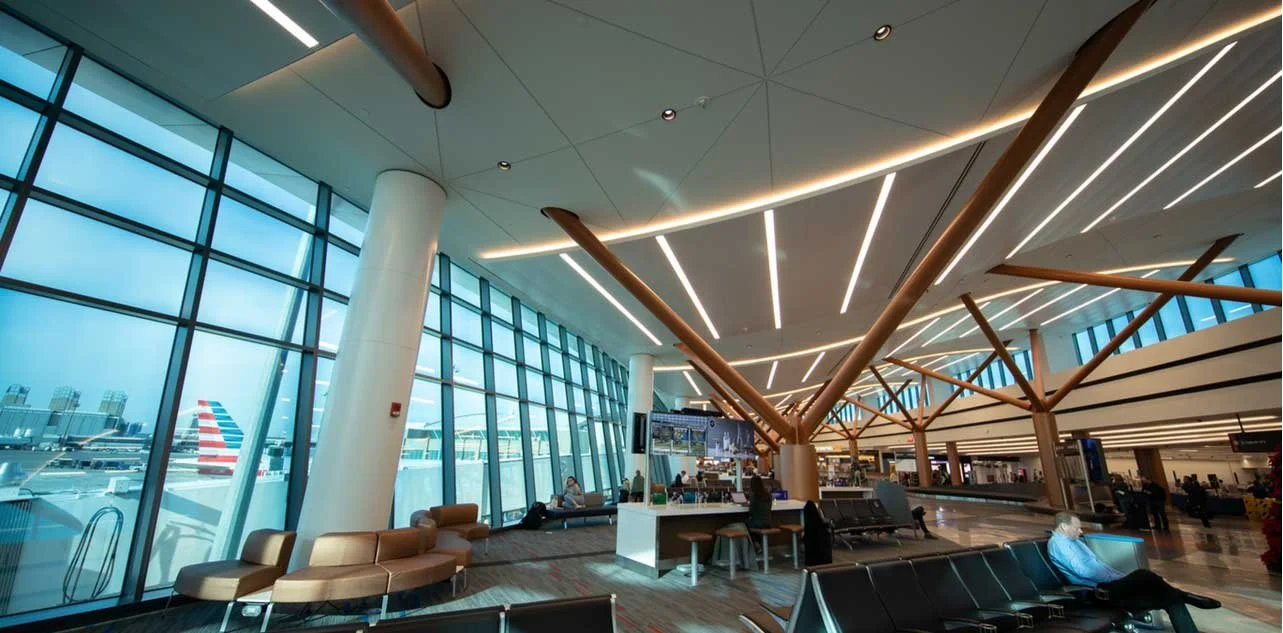
Boston Logan International Airport with View Smart Windows
Smart glass improves a building’s energy efficiency by up to 20% and helps downsize heating and cooling systems. Moreover, with smart glass, people can work comfortably while sitting close to the windows, increasing the tenant’s usable space, resulting in a significantly lower environmental footprint per person. From an environmental perspective, the most sustainable building is one that doesn’t get built in the first place. What if we can eliminate the need for one out of ten buildings?
A recent study by Alan Hedge, a professor in the Department of Design and Environmental Analysis at Cornell University, showed that smart glass reduces people’s eye strain by 51%, headaches by 63%, and drowsiness by 56% - dramatically increasing employee health and productivity.
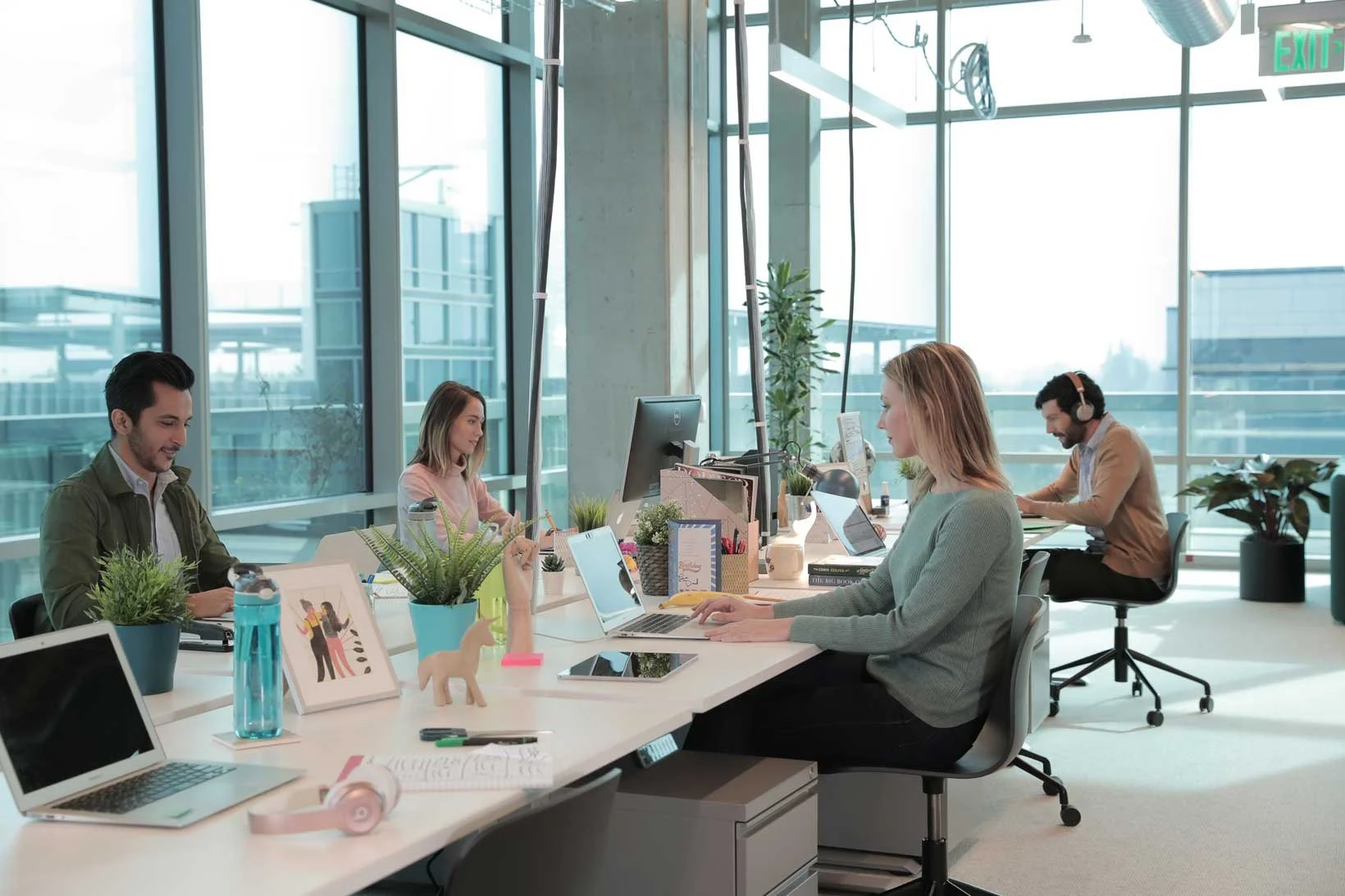
Facebook/WeWork buildings with View Smart Windows, Mountain View, CA
Ultimately, buildings are not pieces of art to look at from afar. They exist for people to inhabit, live better lives, and produce goods and services that serve the larger society. Instead of looking at the environmental footprint per square foot of the building, we should be looking at the environmental footprint per unit of output – the value humans are able to create.
Smart windows aren't just an idea. Over a decade of development and $2 billion of investment later, View Smart Windows are in 500 buildings totaling 50 million square feet of space, growing very rapidly. Just in New York, our smart windows are being installed in buildings owned by The Durst Organization, GFP Real Estate, Regeneron Pharmaceuticals in Tarrytown, Tompkins Financial in Ithaca, and the Delta Terminal at LaGuardia to name a few.
Too often, humans attribute change to a sense of loss. But we can drive change so that it works better for everyone. This has happened over and over again throughout human history.
We have a unique opportunity to improve people’s quality of life while also benefiting the environment. I would be happy to join the dialogue with the mayor and the real estate community about how we can achieve this ambitious goal.

View Wins GOLD Edison Award!
View Receives the Gold Edison Award for Innovation in Energy and Sustainability […]

View, Inc.
View Wins GOLD Edison Award!
On Thursday April 5th, in New York City, we were honored to receive the Gold Edison Award for Innovation in Energy and Sustainability.
The Edison Awards, part of the non-profit Edison Universe, seek to highlight ground-breaking technology and innovative companies that are using technology to make the world a better place for all. View’s Dynamic Windows were recognized for allowing in natural light while enhancing physical well-being by significantly reducing headaches, eyestrain and drowsiness, in addition to improving the energy efficiency by 20 percent.
It was an outstanding event, and a notable win for View.
Congratulations to everyone at View!
You can read more about the awards on Entrepreneur.com, or see see all the winners, and learn more about the Edison Awards here.
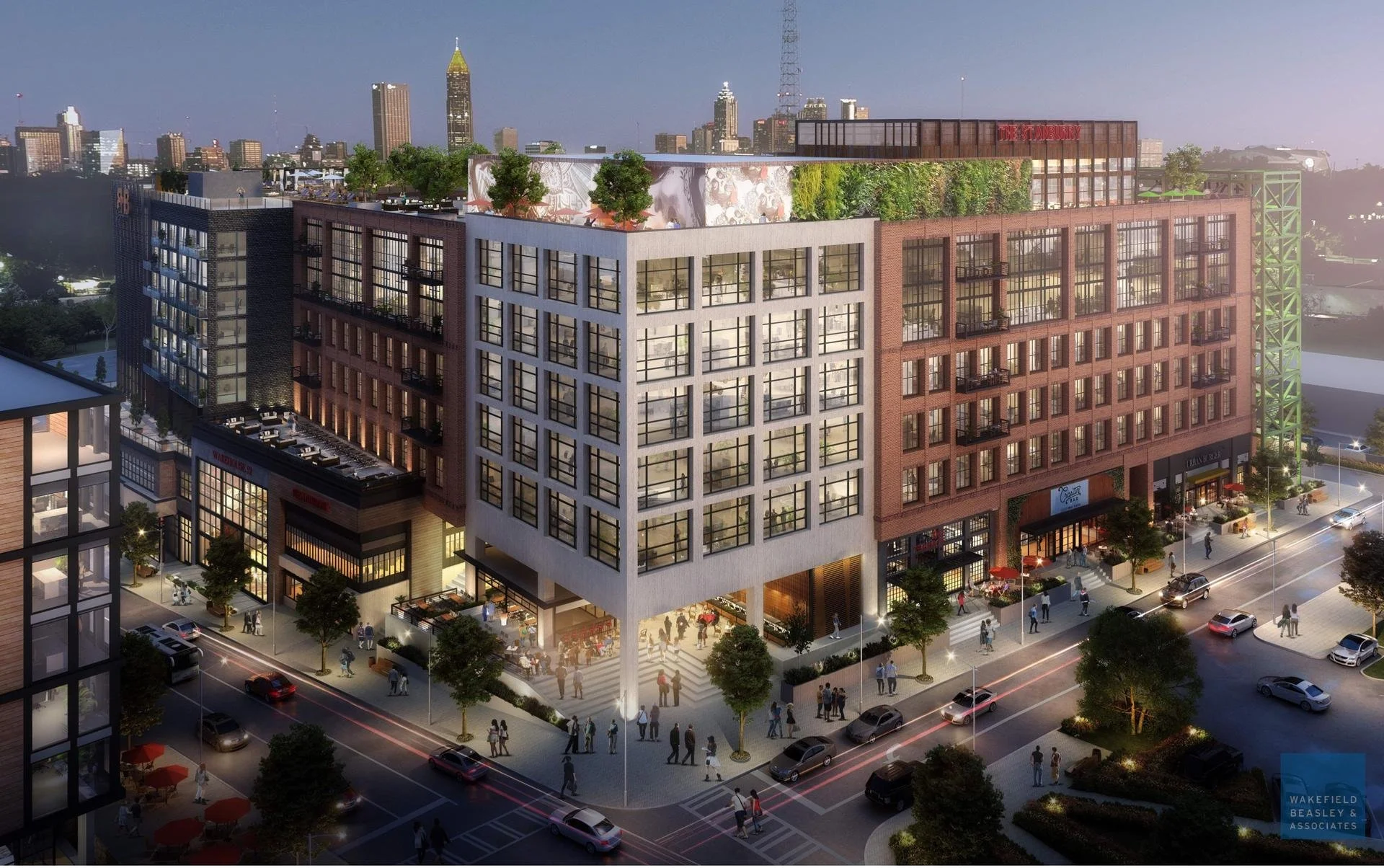
Atlanta’s Newest Class A Office Space, The Interlock, Features Smart Windows from View
View windows will let in the optimal amount of natural light and preserve views while blocking unwanted glare and heat [...]
View, Inc.
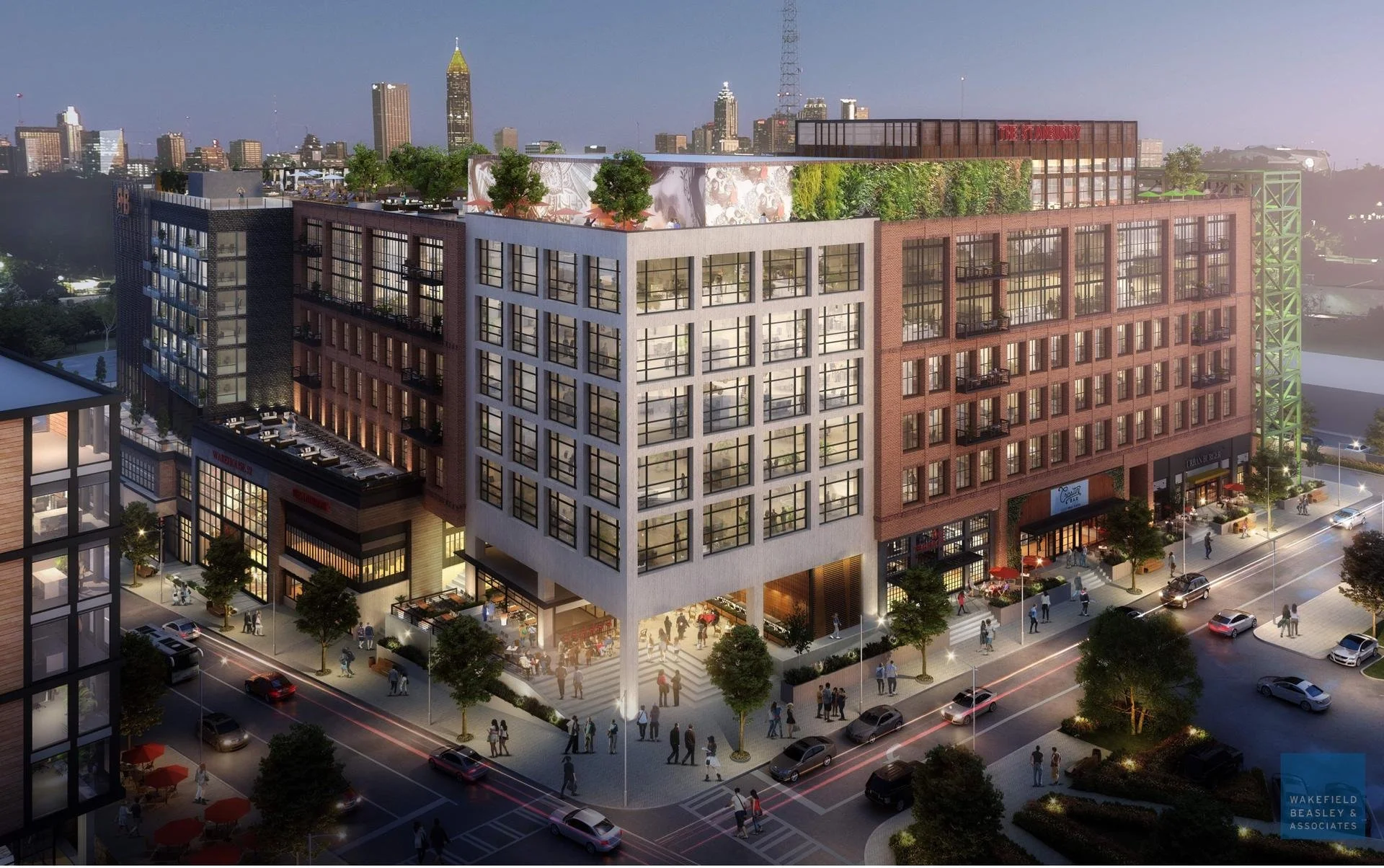
Atlanta’s Newest Class A Office Space, The Interlock, Features Smart Windows from View
View windows will let in the optimal amount of natural light and preserve views while blocking unwanted glare and heat
Developer S.J. Collins Enterprises has chosen to outfit The Interlock, Atlanta’s newest mixed-use development project with Class A office space in the emerging West Midtown neighborhood, with View Dynamic Glass.
“The Interlock is 85 percent leased for its office space component, and we believe that is due to our commitment to providing the best in amenities, open space and design for residents, visitors and office workers,” said Jeff Garrison, a partner at S.J. Collins Enterprises. “We are excited to offer the first building in Atlanta with these high-tech windows that will enhance the occupant experience within the space.”
Scientific research has proven View’s smart windows enhance mental and physical wellbeing by significantly reducing headaches, eyestrain and drowsiness and studies show significant gains in productivity as a result. In addition, they control heat and glare, which improves the energy efficiency of buildings by up to 20 percent.
“Choosing View Smart Windows allows us to create a new type of office environment that will dramatically improve productivity with big open spaces that feature the floor-to-ceiling windows,” said Garrison. “In a tight market, it’s amenities like this that allow us to be successful and attract high-profile clients who are looking to take their office environment to the next level.”
Garrison was familiar with View Dynamic Glass from his experience on the board of the Mount Vernon Presbyterian School, which had also chosen to use View’s smart windows.
“The View Smart Windows ensure education spaces at Mount Vernon Presbyterian School have ample natural light and access to views, which has been shown to improve student performance,” said Garrison.
The commercial office component of The Interlock is currently pre-leased by a 50,000-square-foot space for Georgia Tech and a 120,000-square-foot lease for WeWork.
Located at the corner of Howell Mill Road and 14th Street, The Interlock is expected to offer 200,000 square feet of creative office space, 100,000 square feet of retail space, 345 apartment units and a rooftop view of the city’s skyline, representing approximately $245 million of new development. The Interlock is scheduled for completion in 2020.
Other properties with View Dynamic Glass in the Atlanta area include the AC Hotel Buckhead Plaza. For more information, view this video.
Developer: S.J. Collins Enterprises
Architect: Wakeield Beasley Associates Architects
Glazing Contractor: Jones Glass Inc
Consultant: American Community Builders LLC