
Your backstage pass
The rental market has changed. Here’s how to win in a post-Covid world.
The Covid-19 pandemic changed the way Americans live. Almost overnight, tens of millions of people transitioned from working in an office to working from home, with the percentage of those working remotely increasing nearly threefold […]
Written by View, Inc.
The rental market has changed. Here’s how to win in a post-Covid world.
The Covid-19 pandemic changed the way Americans live. Almost overnight, tens of millions of people transitioned from working in an office to working from home, with the percentage of those working remotely increasing nearly threefold. Untethered to a particular location, city dwellers retreated to the suburbs, exurbs, and beyond. As a result, rents plummeted in major cities across the country.
But there are signs that the future of remote work is no longer certain. Covid turned Wall Street into a ghost town. Now, big banks such as JPMorgan Chase and Goldman Sachs have scheduled definitive dates for their employees to return to the office, citing high vaccination rates, low case counts, and widely available Covid tests. And major tech companies are investing billions in reinvigorating the work environment. Amazon is leasing new office space in Seattle to make room for 10,000 employees. Google is buying entire buildings in New York City and London, where it is expanding its office capacity by nearly 50%.
Office Occupancy on the Rise
Data from the security firm Kastle Systems showed that office occupancy across the country was at an average of nearly 40% of pre-Covid levels at the end of February, up from 23% in early January. A majority of employers in New York City expect daily attendance in their offices to exceed 50% on an average weekday by late March, according to a recent report by the Partnership for New York City.
As people flock back to cities to return to the office, real estate markets are once again booming. But pandemic-related delays and an increase in the price of construction materials have exacerbated housing shortages in many of the country’s technology and business hubs. The upshot is that real estate—just like gas, used cars, and beef—is a victim of high demand and low supply: Rents in major urban areas, including Los Angeles, Seattle, and Denver, have hit an all-time high.
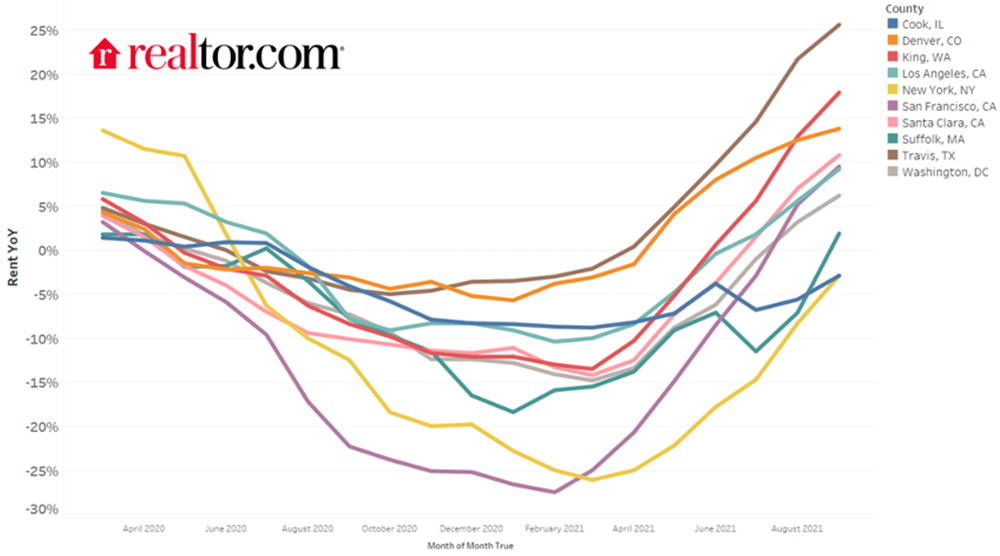
At the same time, the “great resignation” has propelled salaries higher across all income levels. Young professionals now have more money than ever to spend on their homes—and they are willing to spend a lot. Demand for two-bedroom apartments, in particular, is driving a national surge in rent, according to a reportby Realtor.com.
The need for multifamily developments that provide space to live and work is greater than ever before. Even as companies implement permanent return-to-office plans, many employees are going to maintain some sort of hybrid work arrangement. Since employees will likely continue to work from home a few days each week, their expectations are high. Multifamily developers need to design buildings that cater to the lifestyle changes brought about by the pandemic. This will require a fresh understanding of what tenants want and a strategic approach to meeting these evolving demands and staying ahead of the competition with new and differentiated amenities.
The Post-Covid Rental Requirements
According to a recent survey by Rent.com, tenants want innovative technology that automates key components of the home while giving them insights and control—from smart security systems that help them monitor their homes from a distance to energy-efficient devices such as smart lighting that automatically adjusts based on occupancy or daylight. Tenants are driving demand for buildings that optimize their health and wellness, with abundant natural light and views of the outdoors and sensors that track indoor environmental quality. And they want a home designed with flexible, functional spaces that allow seamless work-life integration, such as built-in desks, shared workspaces, and an atmosphere that inspires creativity and productivity.
View Smart Windows, which use artificial intelligence to automatically adjust their tint in response to the sun, can provide all three.
By maximizing natural light and views of the outdoors while optimizing building occupant comfort, View Smart Windows make multifamily developments a better place to live and work. Multiple studies have shown that View Smart Windows generate significant health benefits for building occupants. And View’s cloud-connected smart building network provides a flexible technology backbone that can be leveraged to connect, control, and continually upgrade multiple smart home applications—from smart locks to smart thermostats, air quality sensors, and more—on a unified, secure system.
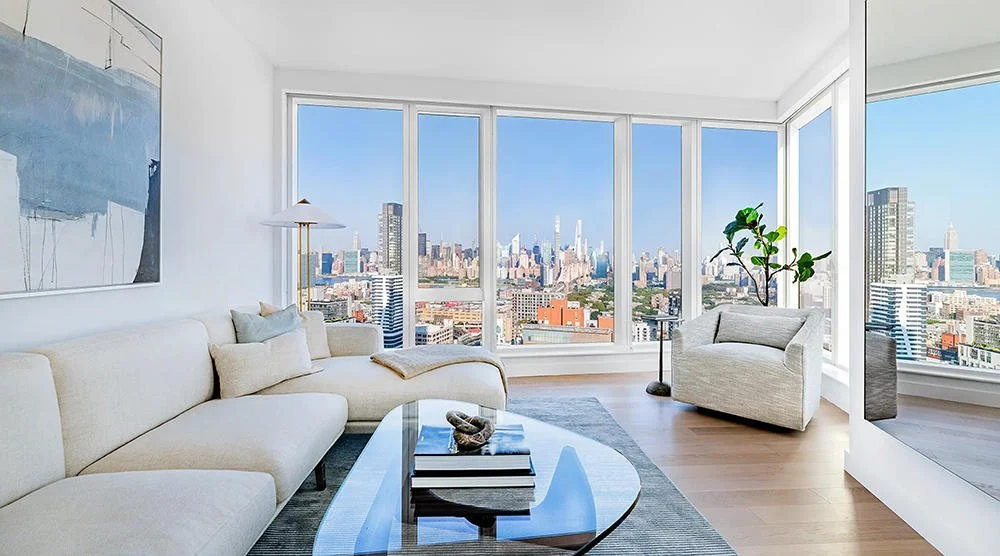
Image courtesy of www.svenlic.com
At the end of the day, the buildings that stand out from the crowd will attract the attention — and dollars — of tenants flocking back to cities. By installing View at Sven, its 71-story apartment tower in Long Island City, Queens, the Durst Organization was able to maximize panoramic views of downtown Manhattan and achieve higher rents. The “wow factor” is important, and View Smart Windows are a differentiator in competitive markets.
View Smart Windows are currently designed into 1,630 units and more than 2.5 million square feet of multifamily developments. Learn more about the benefits of View Smart Windows for multifamily properties.
Delivering Asset Value through Sustainability and Health
With the recent COP26 summit at a global scale and the passing of the infrastructure bill at a national level, sustainability has reemerged as a primary consideration in real estate development and operations […]
Written by View, Inc.
Delivering Asset Value through Sustainability and Health
With the recent COP26 summit at a global scale and the passing of the infrastructure bill at a national level, sustainability has reemerged as a primary consideration in real estate development and operations. State and federal policies are incentivizing more sustainable building practices, while buildings preparing for re-occupancy are encountering new questions from tenants about the ability of spaces to promote occupant health following the COVID-19 pandemic.
A recent panel event held in New York City explored how asset value can be delivered through sustainability and health in the wake of the COVID-19 pandemic. The panel was hosted by the Urban Green Council, a nonprofit dedicated to advancing sustainability in New York real estate, and View Inc., a smart building technology company transforming buildings for sustainability and health.
Speakers on the panel included Prof. Christoph Reinhart, director of the Sustainable Design Lab at MIT, and Sean Brennan, head of research at the Urban Green Council. Prof. Reinhart leads a team that built software tools used across the globe to model building performance and recently developed city-scale energy models designed to help policymakers and Community Resource Exchange (CRE) leaders adapt to a changing climate. Sean Brennan leads Urban Green’s research team and is responsible for identifying and executing studies that reveal industry trends and influence building design. He has worked in the energy and utility space for over ten years and has specialized in building science and analysis. Dr. Piers MacNaughton, VP of Health Strategy at View Inc, moderated the panel discussion.
The pandemic has altered building use and occupancy patterns. Brennan shared data from Google that showed an 80% dip in NYC office occupancy during the pandemic and currently shows occupancy rates 40% below baseline levels. High vacancy rates increase pressure to create spaces that will bring occupants and tenants back to the city. Buildings will need to be of higher quality to entice tenants to return to working and living in Manhattan. The panel explored whether this flight to quality can and will be monetized.
The recently passed infrastructure bill and upcoming reconciliation packages include provisions that incentivize sustainable building strategies at a federal level. Despite having such influential incentivization plans in place, the current retrofit rate is 1%, well below what is needed to meet science-based carbon emission targets.
Local ordinances in New York City both reward and penalize buildings for their sustainability performance. For example, Local Law 97, part of the Climate Mobilization Act, and Mayor de Blasio’s larger New York City Green New Deal were passed in April 2019. Under LL97, most buildings that do not limit greenhouse gas emissions and meet specific energy efficiency goals by 2024 will be subject to fines. Conversely, buildings that wish to retrofit their systems can take advantage of Property Assessed Clean Energy (PACE) financing, a program that funds improvements to the energy efficiency and sustainability of commercial property owners’ buildings. Recently, 111 Wall Street became the first building in New York City to utilize C-PACE financing.

What are the options, then, when considering retrofitting? Using energy as the only deciding factor does not always fully justify the cost of retrofitting. However, the return on investment becomes much more compelling when one begins to consider occupant benefits in the calculations. In the modeled renovation of 345 Park Avenue in Manhattan completed by Dr. Reinhart’s team, the addition of electrochromic glass provided a 20% return on investment when accounting for higher rents and the increase in rentable square feet. A similar instance occurred in 730 3rd Avenue, where electrochromic glass allowed owners to fit the same number of people into 30% less space, allowing them to then rent out the extra space to additional tenants.
As part of the movement towards sustainable buildings through LL97, there is pressure to reduce energy consumption but not necessarily to promote occupant health and wellness. For example, heat pumps, building electrification, boiler replacements, and insulation provide substantive energy savings but do not meaningfully impact the end-user. During the retrofit process, developers should consider repositioning the asset to deliver at the same time an enhanced occupant experience. This will ultimately translate into faster lease velocity, higher rents, and potentially greater tenant density.
View Smart Windows, for example, decrease buildings’ HVAC and energy usage through predictively tinting windows along the sun’s path. At the same time, smart windows also eliminate the need for blinds to combat glare while increasing occupants’ thermal and visual comfort and access to views of the outside. Both the creation of high-quality spaces and the need for sustainable buildings can be addressed through the addition of a single amenity, View Smart Windows.
5 scientifically proven ways to improve your sleep
The CDC recommends at least seven hours of sleep a night for an average adult—yet that is a far cry from the actual amount many Americans get […]
Written by Nicole Johnson
5 scientifically proven ways to improve your sleep
The CDC recommends at least seven hours of sleep a night for an average adult—yet that is a far cry from the actual amount many Americans get.
Sleep disorders impact roughly 70 million Americans, according to data from the Cleveland Clinic, and more than 100 million Americans do not get the recommended amount of sleep each night.
While we can all relate to the difficulty of making it through the day after a poor night of sleep, the consequences of sleep impairment are much direr. In the short term, sleep deprivation can lead to irritability, performance problems, and slowed reaction times. In fact, 6% more car accidents occur the day after daylight savings when everyone loses an hour of sleep. Over time, sleep has chronic impacts on the cardiovascular system, metabolism, reproductive health, aging and is even considered a carcinogen.
To further understand sleep and its importance on both physical and mental health, it is vital to have a basic understanding of circadian rhythms, which help carry out the body’s most essential functions. Connected to the body’s internal master clock, located in the brain—more specifically in the suprachiasmatic nucleus (SCN), which is in the hypothalamus—these 24-hour cycles regulate virtually every hormone and neurotransmitter in the body. Daylight sends a signal to the SCN every day to reset the clock and keep it aligned with the local time on earth. A properly aligned circadian rhythm promotes restorative and consistent sleep, while a rhythm that is not aligned by daylight can lead to sleep issues.
There are two types of sleep: NREM, or non-rapid eye movement, and REM, or rapid eye movement. We cycle back and forth between the two sleep cycles, with each being essential for achieving a decent night’s sleep. NREM takes far less energy and helps the brain restore its supply of adenosine triphosphate (ATP) and is divided into sub-stages. REM sleep has many benefits, according to several studies, and can impact learning, mood, and memory, and is tied to mental well-being and overall physical health.
Many factors can cause sleep disorders, including genetics, aging, certain medications, psychiatric disorders, nighttime work shifts, and medical conditions like asthma. Sleep disorder symptoms include memory impairment, irritability, falling asleep during the day, slowed responses, and performance problems at school or work.
Therapy and medical attention can help address underlying causes of poor sleep, but the best solutions are widely believed by medical experts to come from maintaining a healthy, active lifestyle.
Below is a list of five scientifically proven ways people can improve their sleep, citing peer-reviewed studies such as Mount Sinai’s recent REVOLV Study, which was sponsored by View Inc.
bodnar.photo // Shutterstock
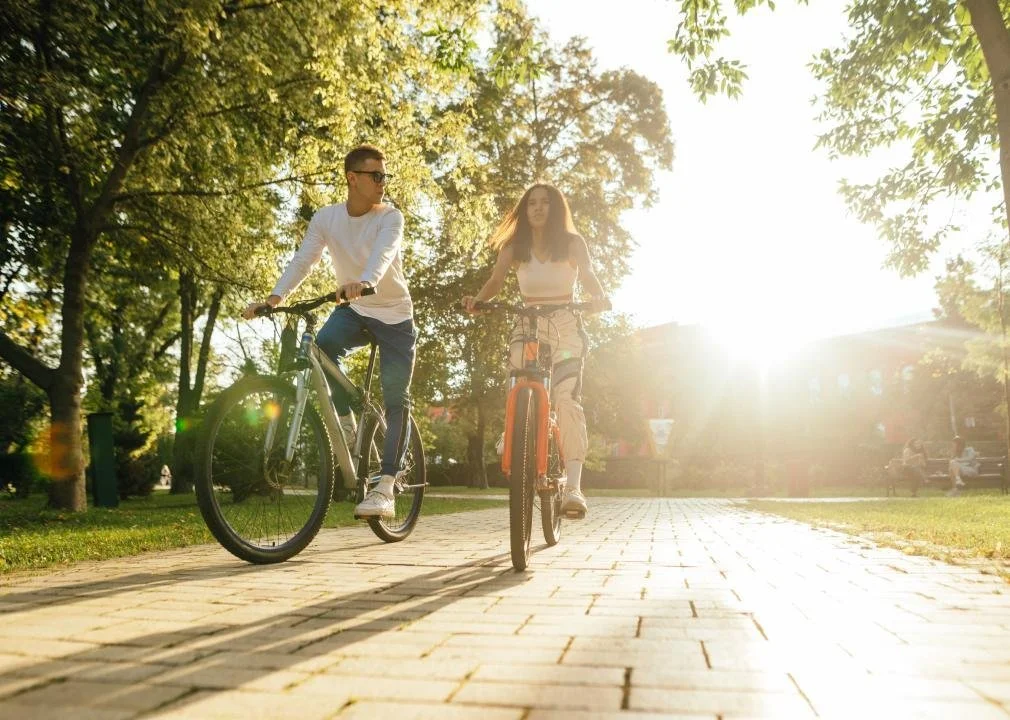
Take advantage of daylight
Research has shown that daylight improves the quality of the rest you get while sleeping and improves energy levels during waking hours. Timed exposure to bright daytime light was proven in 1993 to help those struggling with insomnia by reducing the time it took them to fall asleep. Study participants also saw improvements in their quality of sleep and sleep duration.
The REVOLV Study further found that more daylight during the day led to better sleep at night, with study participants who received more daylight exposure during the day enjoyed on average 16 more minutes of sleep each night and higher energy levels during the day.
Taking advantage of daylight is a simple, natural, healthy, and inexpensive solution for those dealing with sleep issues. Sunlight also provides a dose of vitamin D, and for those tricky weather days with rain or snow, artificial bright light is another way to take advantage of light to aid sleep—though bright light should not be used at night.

Jacob Lund // Shutterstock
Develop an exercise routine
Physical activity has been proven time and again to help people fall asleep faster and enjoy an overall improved quality of sleep. One study published in the American Journal of Lifestyle Medicine in 2010 found that exercise—particularly a routine over sporadic bouts of working out—can be used as a nonpharmacological therapy for those struggling with sleep issues or disorders. Another study that same year found older adults who struggled with insomnia experienced improved sleep quality and a reduction in depressive symptoms and daytime sleepiness with four months of exercise training.
While research supports the importance of an exercise routine to combat sleep issues, less research exists on what time of day is best to exercise—though avoiding vigorous exercise close to bedtime is a good idea if you are looking for better sleep.

Stock-Asso // Shutterstock
Go screen-free in bed
Screen time before bed can make getting to sleep challenging. While blue light from the sun during the day is good for sleep, receiving that type of light from electronic devices in the evening can interfere with sleep because it can convince your brain that it is daytime.
Social media use has also had a significant impact on the sleep habits of both young adults and adults. A 2017 study published in Oxford’s academic journal Sleep found that young adults who used social media 30 minutes before bed had an increased rate of sleep disturbance compared to those who rarely checked social media in the 30 minutes leading up to bedtime.
There are many things people can do to avoid blue light before bed, including avoiding screen time (and social media) for two hours before trying to get to sleep. Blue-light-blocking apps and glasses can also reduce the amount of blue light before bed. However, even reducing the amount of blue light won’t alter what’s being consumed on the screen—and the authors of that 2017 study hypothesize that in addition to the light, going on social media before bed could negatively impact sleep because of negative experiences online. Forgoing screens altogether and establishing a relaxing pre-bed routine is the safest bet.
New Africa // Shutterstock
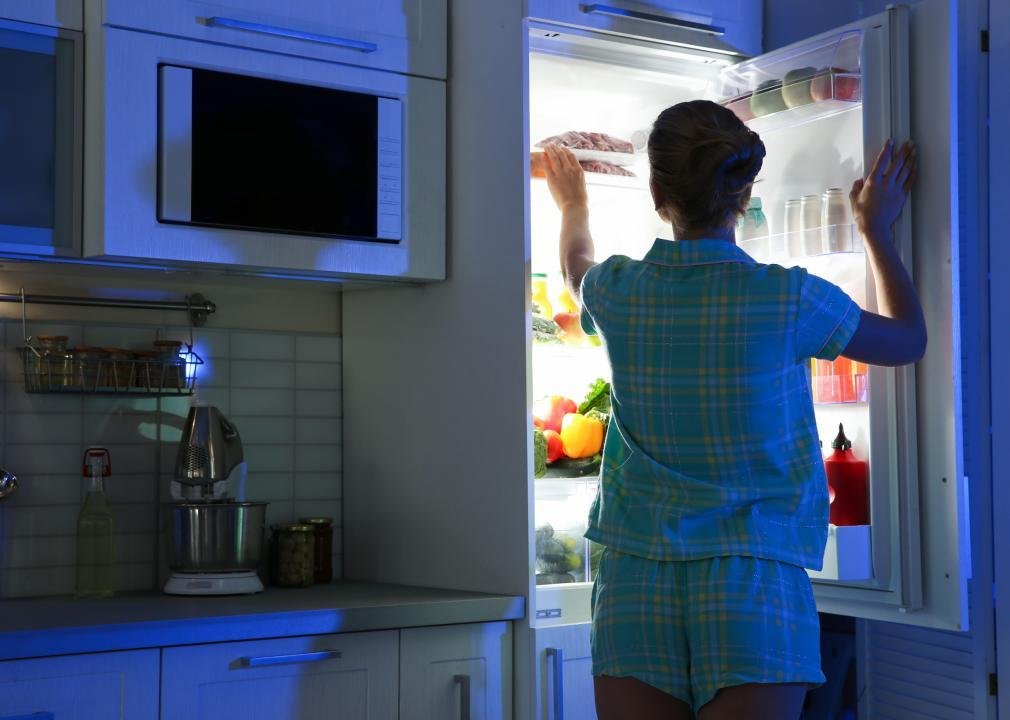
Avoid late-night snacks, caffeine, and alcohol
Even after six hours, half of the caffeine you consumed in a cup of coffee or energy drink remains in your system, according to the Cleveland Clinic, and it can take 10 hours for caffeine to clear your system completely. Caffeine consumed up to six hours before bed had significant disruptive effects on sleep, according to one 2013 study published in the Journal of Clinical Sleep Medicine.
Alcohol’s half-life, or the time it takes for just half of it to leave your bloodstream, is four to five hours. Both alcohol and caffeine act as stimulants and can negatively impact sleep when consumed too late in the afternoon or evening, especially for those with sleep disorders. Late-night snacks can also disrupt sleep; it is easy to confuse the need for sleep with hunger. Having a snack isn’t necessarily a bad thing, but be careful about the snack you choose. Smart snacks for before bedtime should be low in sugar, like cottage cheese and fruit or peanut butter on whole-grain toast.

Olena Yakobchuk // Shutterstock
Set up relaxing bedtime habits
One of the best ways to combat sleep difficulties is to get into habits that promote sleep. Setting an alarm 15 minutes before bedtime as a reminder can help people maintain good “sleep hygiene” and have a consistent bedtime. Taking a hot shower or bath or drinking a warm cup of milk or decaffeinated tea can help calm the body and mind down and allow sleep-producing hormones to kick in. Poor pre-bedtime habits can actually contribute to insomnia and other sleep disturbances. Establishing a consistent nighttime pre-bed routine is best. A 2015 study in Sleep found that a consistent bedtime routine improves sleep in young children. The study also supports instituting the routine with consistency and at a young age.

Natural light makes us better workers. Here's how
Natural light plays a big role in people’s lives, both psychologically and physiologically. A growing body of research underscores how natural lighting—or lack thereof—affects our health, cognition, and happiness […]

Written by S. Smithee
Natural light makes us better workers. Here's how
Natural light plays a big role in people’s lives, both psychologically and physiologically. A growing body of research underscores how natural lighting—or lack thereof—affects our health, cognition, and happiness.
For most of human history, sunlight, moonlight, and the glow of fire were the only sources of light available. With the advent of electricity in the 19th century and the rise of screens in recent decades, our relationship to natural light has changed drastically. Our bodies and brains have evolved to respond to sunlight in a variety of ways, many of which are disrupted by electric lighting driving away nighttime darkness and the omnipresent glare of screens replacing time under the sun.
Sunlight plays a role in our metabolism and affects our endocrine system. It sets the rhythms of our internal clocks, which influences metabolism and almost all other cellular processes. It alters our alertness and ability to fall asleep and stay asleep. Many workers are familiar with the sensation of missing the sun, especially if they work in buildings with no windows, poor natural lighting, or blinds or curtains that diminish the sun’s rays. Missing out on natural light impacts us in many ways, including our ability to work. What’s more, there’s no replacing real natural light: The qualities of sunlight cannot be substituted with synthetic lighting.
Here is a list of five key ways natural light makes us better workers based on scholarly articles and peer-reviewed research—such as the EVOLV Study. Read on to discover the hugely important role natural light plays, from our ability to make good decisions to getting a good night’s sleep, and learn about the steps you can take to increase the amount of natural light you receive each day to up your productivity.
Less natural light and more light emitted from screens results in eyestrain and other negative effects
Exposure to sunlight not only improves mood and sleep, it also reduces eyestrain. In today’s modern world, we are exposed to short wavelength blue light from computers and phones at all hours of the day, including in the evening when this light disrupts our internal clock and makes it harder to sleep. The unsurprising results of one study demonstrates decreased sleepiness when exposed to the blue light from screens during the body’s “biological night,” the time our bodies anticipate and are prepared for sleep.
Sitting near a window helps in two ways: 1) daylight exposes us to blue light when our body needs it for alertness during the day, and 2) views—especially long distance ones—reduce eyestrain by letting the muscles in the eye relax on a long-distance focal point. That’s why the American Optometric Association recommends the 20-20-20 rule: Every 20 minutes look in excess of 20 feet for at least 20 seconds. Yet some workers are likely familiar with the disadvantage of a window seat when the sun is directly in their eyes or the heat is uncomfortable. A study found that electrochromic glass from View Inc. allows workers to get both the benefit of natural light and views while reducing glare and heat.

A window to the outdoors improves mood and connects us to the world outside our offices
There’s a reason corner offices are status markers and seats near windows are preferred among office workers. Looking through windows is psychologically beneficial, bringing us into contact with the outside world as well as getting the natural lighting of sunshine in our eyes. Architecture studies of office and school buildings highlight the importance of allowing daylight in, which not only provides a lighting source but improves the mood of people in the building.
With the rise of working from home, workers should be mindful of the need to sit near windows, in addition to getting sun in the morning and afternoon. Taking walks, eating lunch outside, and taking work phone calls under the sun can result in a wide range of beneficial effects on our bodies and minds.
Vitamin D absorption is important for health—and most of us don’t get enough of it
Numerous studies over decades have demonstrated the importance of Vitamin D. It is present in very few foods (cod liver oil, fortified milk and cereal, uncooked white mushrooms grown in sunlight, and some fatty fish), making sunlight the most important source for Vitamin D production—by one study, it accounts for more than 90% for most people. Despite its importance, vitamin D deficiency is “an ignored epidemic.” One study found more than 1 billion people worldwide are vitamin D deficient or insufficient. Deficiency causes a range of issues, most notably poor calcium absorption, as the body can only take in calcium when there is vitamin D. Without enough calcium, bones become brittle and soft. Vitamin D also regulates some cellular functions and supports muscle function and immune health. More recently, a large multi-decade investigation of over 90,000 women found Vitamin D deficiency to be associated with colorectal cancer.
Vitamin D is one of the attributes that makes the light spectrum in sunlight different from electric lighting. Vitamin D can only be generated through our skin via sunlight—no artificial lighting does the same. That means exposure to natural light is critical. Going outside to get direct sunlight is the best way to boost Vitamin D. The author of the aforementioned study recommends spending 15 to 20 minutes every day in the sunshine, with 40% of the body exposed.
And sunscreen? Some have voiced concern that everyday application of sunscreen can hinder Vitamin D absorption through the skin. However, a meta-analysis found there is “little evidence that sunscreen decreases [vitamin D] concentration when used in real-life settings, suggesting that concerns about vitamin D should not negate skin cancer prevention advice.” The authors did acknowledge that further study is needed on high SPF sunscreen and its effect on Vitamin D.

Metabolism and the endocrine system are affected by natural light
In addition to vitamin D, natural light also affects our bodies through our vision system. Our eyes relay not just visual content to the brain, but also the color of light that it is perceiving. The brain then regulates the release of hormones associated with our circadian system. Sunlight—and when we get it—is key in synchronizing circadian rhythms, which in turn helps set blood circulation, metabolism, and hormone levels. This is why experts recommend getting sunlight in the morning: It sends the right signals to the brain, calibrating that internal clock and resulting in a better night’s sleep, among other benefits like lower levels of depression and stress—all factors that contribute to our ability to be productive during the day.
It’s also something that can’t be replicated with artificial lighting. Our brains are too sensitive to the differences. Our bodies can tell the difference between morning sunlight (which has a short wavelength spectrum) and afternoon sunlight (which has a longer wavelength), and the timing, color and intensity of light influence people’s bodies differently. Dr. Mariana Figueiro, who studied this phenomenon, says even sunlight through windows can help: “Brighter days make for better nights. Look out a window, seek light during the day, especially during the morning, go out during lunch time.”
Life with the coronavirus: How will the pandemic affect our workplaces?
Living with the coronavirus pandemic, we will never look at our workplaces in the same way […]
Rahul Bammi, Chief Business Officer
Life with the coronavirus: How will the pandemic affect our workplaces?
Living with the coronavirus pandemic, we will never look at our workplaces in the same way.
This virus has upended our lives. It seems as if we’ve entered a dark tunnel and we don’t know how long it will be until we come out on the other side. Shelter-in-place mandates have many of us appreciating, more than ever, the simple luxuries of eating out, shopping at the grocery store, and taking walks. We want to be together, but struggle to find a way. We’re finding that we crave the everyday interactions in our communities and at our workplaces.
Several experts predict things are going to get worse before they get better; however, I’m optimistic we will soon see light at the end of the tunnel. When we do, we will start to look at our workplaces in a new light.
We’ll prioritize human connection
Our collective shelter-in-place made one thing clear: Our homes are not our workplaces and our workplaces are not our homes. While our homes are places of relaxation, comfort and safety, the workplace has a specific purpose. It gives us a place to collaborate with our colleagues. It motivates, inspires, and energizes us. The workplace isn’t just a building where you show up, put on your noise canceling headset, and plug away day after day. It’s a place to co-create with others, build relationships and solve problems.
There are things about our workplaces that we didn’t appreciate until we lost them. Connecting with others is part of what makes work so fulfilling. After the coronavirus, we will appreciate and value human contact above all else.
We’ll bring nature to work
Many of us have been under shelter-in-place orders and cooped up indoors for weeks. When we are able to get outside even for short walks and feel the sunshine, we often feel an immediate sense of bliss. We realize just how gloomy — even depressing — our confinement has been and just how important a connection to nature is to our health and peace of mind.
These realizations — that simple things like natural light and fresh air can lift our spirits and promote contemplation — are supported by studies that show increased access to daylight and views of the outdoors are critical determinants of our health and wellness. More natural light and views can decrease heart rate and lower blood pressure, better regulate the circadian rhythm, and even positively impact our creativity.
We will want this connection to nature and to the outdoors when we return to our offices — whether by sitting in locations that give us more natural sunlight and views, or through biophilic elements that bring nature indoors.
We’ll place greater value on our health and wellness
This pandemic has reminded us of our vulnerabilities. Beyond the immediate consequence of washing our hands every hour, it’s reminded us of the need to take care of our bodies and minds — how we sleep, how we eat and how we exercise. We will be more mindful of our overall health and the need to live better.
This focus on health will carry over to our workplaces and will heighten our awareness of how buildings can affect our wellbeing. In the past, we thought of our workplaces as just that — places to work. We didn’t consider how they were affecting our health. And I’m not just talking about the spread of pathogens (although, we will certainly pay more attention to how often we wash our hands and what we touch in the communal kitchen).
I’m talking about the building as a whole. Americans today spend, on average, more than 90 percent of their time indoors. Over the last 50 years, we’ve replaced the sun’s light with artificial lamps, fresh air with HVAC, and the sound of the natural world with humming screens. We’ve created a new human environment, and it’s making us sick. Employees working in offices with poor air quality and an absence of natural light sufferheadaches, eyestrain, and drowsiness. They are less healthy, less happy, and less productive.
A recentsurveyof more than 1,600 professionals across North America found that, more than any other amenity, employees say they want a healthy work environment — with more natural light and views of the outdoors. And building developers and owners are responding by designing office spaces with better ventilation and improved access to natural light.
Our experience with the coronavirus will simply accelerate this movement. If this pandemic has made one thing clear, it’s that our health is crucial to our mental wellbeing and business success.
We’ll reduce the bad
We won’t just add good things to our buildings. We’ll remove the bad.
We’ll have enhanced cleaning procedures and more hand sanitizing stations. Buildings will eventually have automatic doors and voice activated elevators so we don’t touch door handles and buttons. We’ll reconsider every surface in our offices that has the potential to collect germs and pathogens. One of the biggest culprits here are blinds and shades as these are common traps for dust and pathogens. Studies in hospital rooms have found dangerous bacteria and viral pathogens on more than 90 percent of curtains and shades. Not only are they a pain to clean, but they also block natural light and views.
Smart windows make blinds and shades completely unnecessary by adjusting automatically in response to the sun and eliminating heat and glare. When we use smart windows and eliminate blinds, we let in more natural light, provide more views, and significantly improve health outcomes.
Current recommendations for the coronavirus include opening blinds and shades to let the sunshine in. But in the workplace of the 21st century, we’ll do something better: Get rid of them.
We’ll demand and expect our workplaces to be designed with our health in mind
It’s likely that most of us will want to come to work more than ever before. However, our experience with this pandemic will encourage us to care much more about our health and wellbeing at work. Smart employers will respond accordingly — by designing workplaces from the ground up with the health, wellness, and productivity of the people who live and work in them in mind.