
Your backstage pass
Going Dark – Night Mode Benefits People and Wildlife
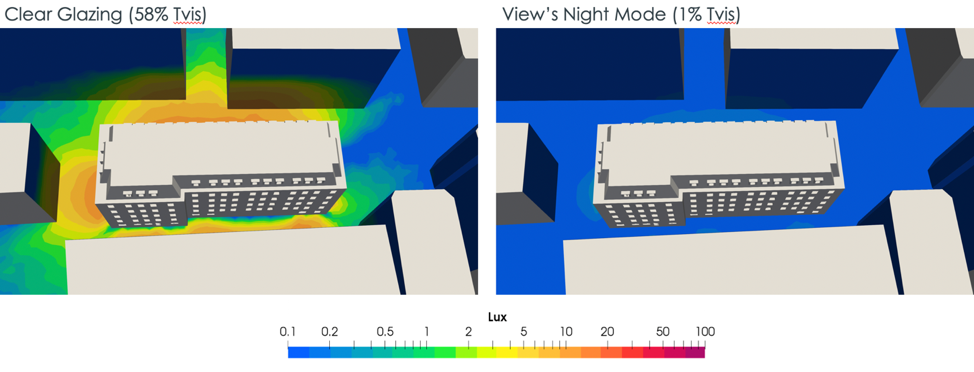
Recently View conducted a study in a major urban area to measure the impact of light pollution. What we found was light spillage from the property was reduced by 98% when View's smart windows were set to Tint 4 (the darkest tint) […]
View, Inc.
Designing Buildings With Smart Bird-Safe Windows
Today we are familiar with discussions around air, water, and land pollution, but artificial light is also a pollutant. In the not-so-distant past, societies could look up and see the stars in the night sky. Today, in many areas, light pollution blocks that view. The risks of light spillage are more significant than just seeing the stars - it can have severe consequences for people and wildlife.
Light pollution shows up in three significant ways:
Light trespass – light falling where it is not planned or needed
Skyglow – brightening of the night sky over populated areas
Glare – unnecessary brightness from buildings that can cause visual discomfort
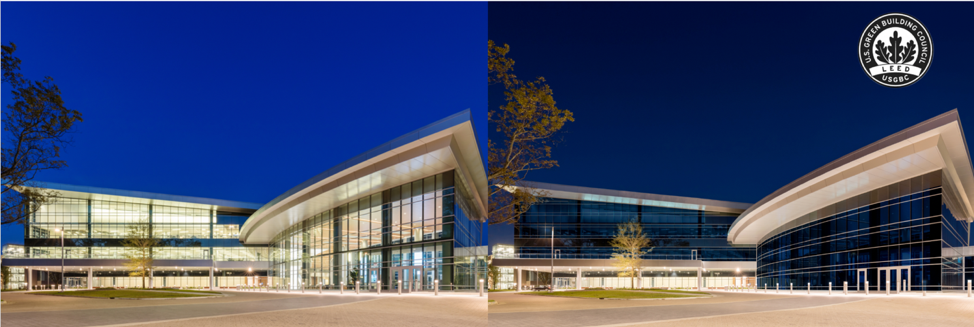
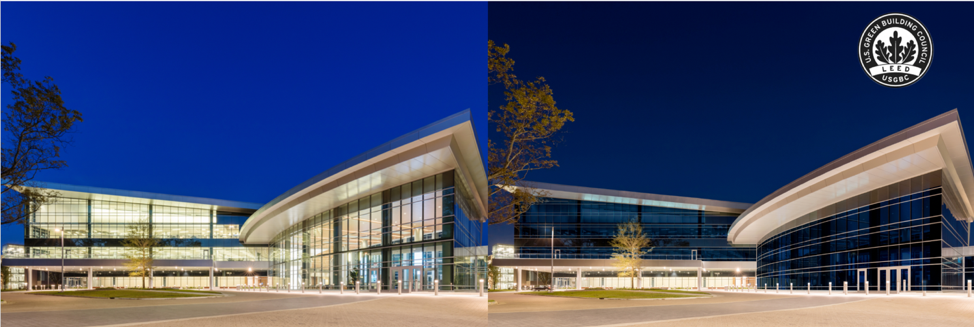
Recently View conducted a study in a major urban area to measure the impact of light pollution. What we found was light spillage from the property was reduced by 98% when View’s smart windows were set to Tint 4 (the darkest tint). Urban areas are beginning to put requirements around new buildings and light spillage. For example, West Hollywood, CA has governance that states: “Outdoor lighting shall be designed to prevent glare, light trespass, and sky glow as much as possible. Permanently installed lighting shall not blink, flash, or be of unusually high intensity or brightness.”
Exterior nighttime light spill before and after tinting.
Furthermore, residents in mixed-use areas find they sleep better when light pollution is reduced. “Night mode” in View’s smart windows also provides security for individuals working in buildings by providing a higher level of obscuration vs. the use of blinds or shades. During periods of daylights savings time changes, or in Northern climates, this is important for the safety of individuals in the building.
For wildlife, evening light spillage increases are a danger. During migration on foggy nights or when the cloud base is low, bright light sources can cause nocturnal birds to circle in confusion and collide with structures, each other, or even the ground. The Audubon society states, “Many birds, particularly songbirds, migrate at night, navigating by the moon and stars. Mostly flying at altitudes below 2,000 feet, and even lower on foggy and rainy nights, they often become disoriented by brightly lit windows in tall buildings.” View’s smart windows, when set to their darkest tint, can prevent collisions while still meeting the occupant and security needs for the building.
This capability for View’s dynamic windows to be controlled and tinted offers a significant advantage over traditional façade solutions during the night. During daylight hours, View Dynamic Glass lets in the optimal amount of natural light and preserves views while blocking unwanted glare and heat.
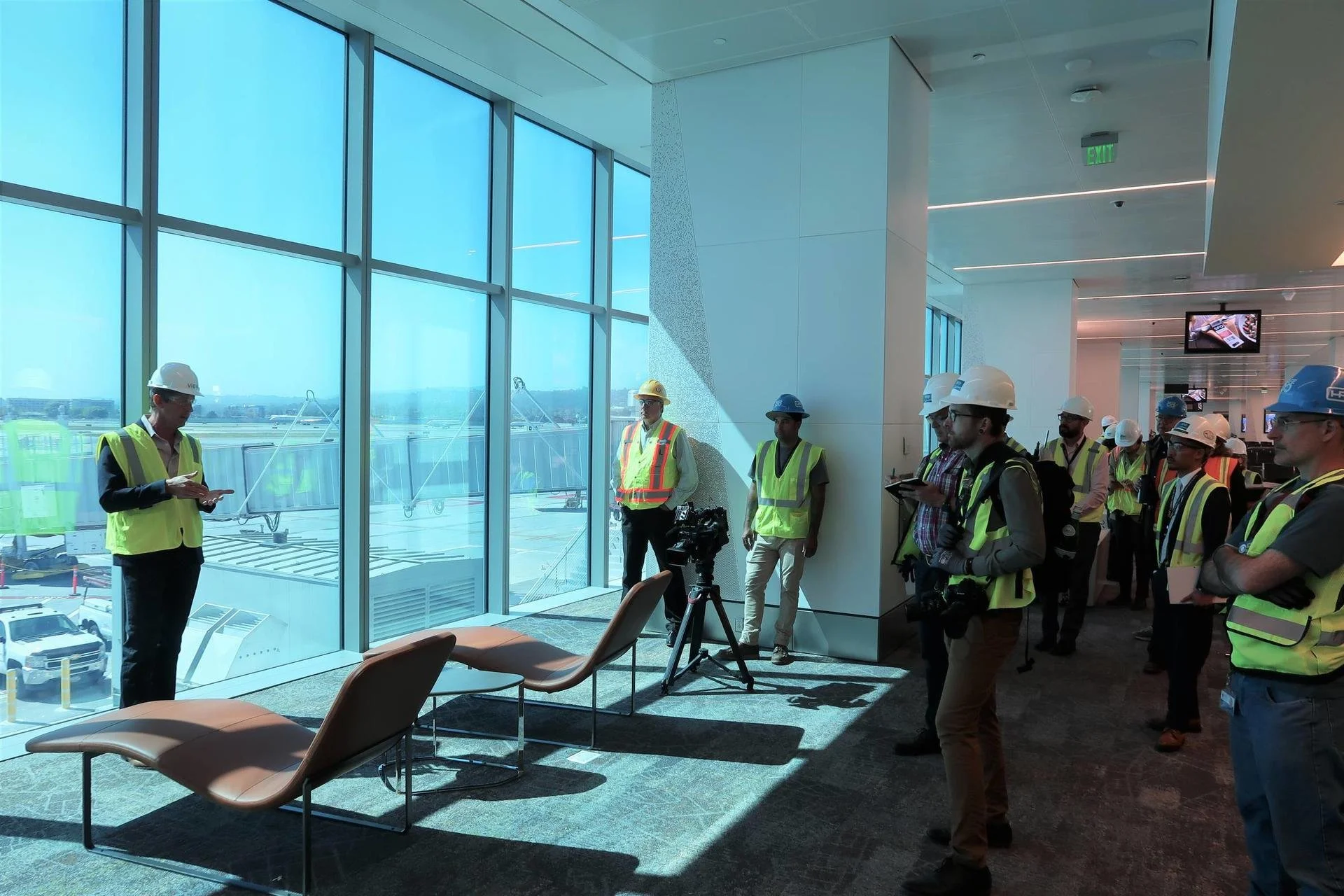
SFO Chooses View for Terminal 1 Renovation
San Francisco International Airport (SFO) has joined a large and growing list of leading airports rapidly adopting View Dynamic Glass […]
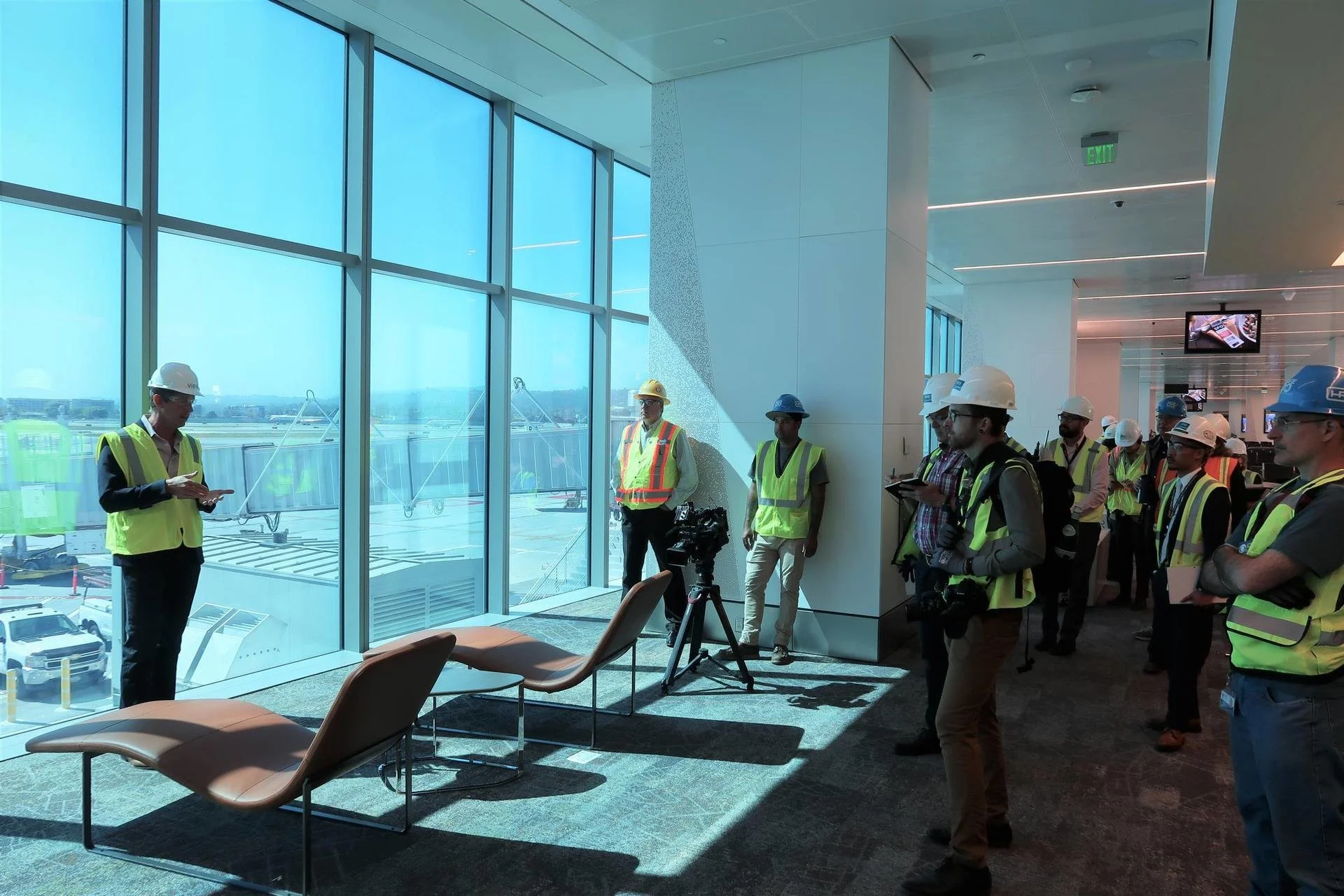
View, Inc.
SFO Chooses View for Terminal 1 Renovation
San Francisco International Airport (SFO) has joined a large and growing list of leading airports rapidly adopting View Dynamic Glass and setting a new standard in delightful passenger environments.
View’s smart windows are featured in the airport’s Harvey Milk Terminal 1 Redevelopment Program – Phase I opening to the public on July 23, 2019. The nine-gate, 224,660 - square foot addition will serve JetBlue and Southwest airlines.
The terminal’s design innovations are driven by analytics, technology, sustainability, and the passenger experience.
“One of the unique features of this facility is a discreet use of technology in a way that enhances the guest experience, makes people very comfortable and relaxed, but also helps us achieve some of our sustainability, environmental goals,” said Doug Yakel, SFO’s Public Information Officer during an exclusive media preview. “One of the most unique features is this programmable dynamic glass from a company called View.”
Aesthetically, passengers will take notice of the wide open and spacious feel of the terminal. High ceilings, architectural detail, and natural daylight intuitively guide guests towards the gate lounges - all surrounded by View Dynamic Glass.
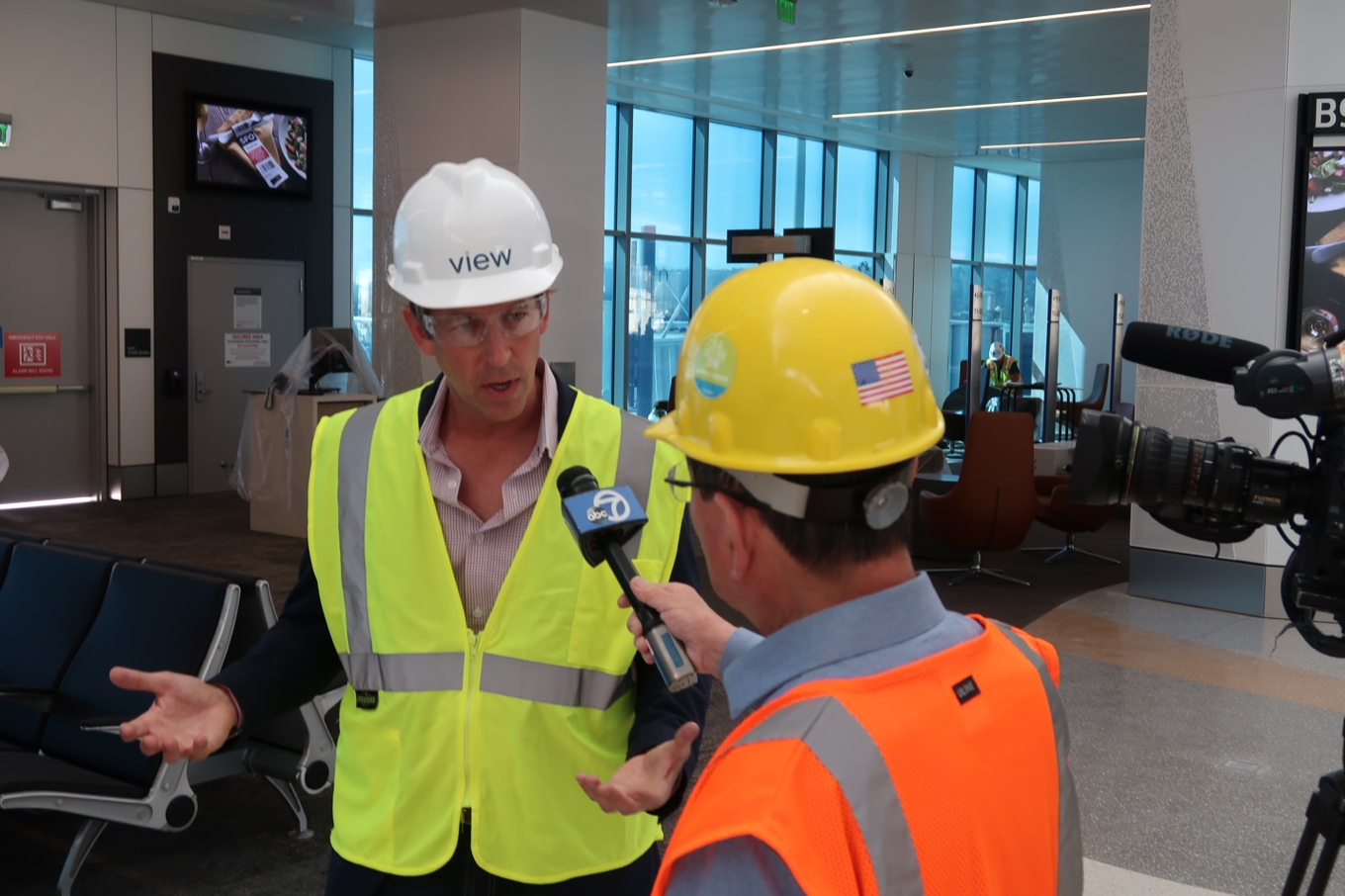
View CTO Robert Rozbicki interviewed by ABC TV News at SFO’s Media Preview
View Smart Windows reduce glare and unwanted heat within the terminal, providing a more comfortable environment for passengers and airport employees while also enabling SFO to reduce their carbon footprint.
Guests will pay special attention to the Harvey Milk dedication wall to learn about the terminal’s namesake. In addition, floor to ceiling windows provide extended views of the airport campus and beyond. Upon arrival, gate lounges serve as living rooms, warmly inviting adults and children to relax, work, and play.
These elements combined, some seen and unseen, are what make Harvey Milk Terminal 1 unlike any other. At 9 gates, passengers easily navigate through security into the marketplace corridor, showcasing popular Bay Area retail, food and beverage.
View Dynamic Glass has been installed at several airports to date, including Dallas Fort Worth International Airport (DFW), Boston Logan International Airport (BOS), Charlotte Douglas International (CLT), Memphis International (MEM) and Seattle-Tacoma International Airport (SEA).
Facts:
Construction: 2016 – July 2019
Opening: July 23, 2019
Airlines: Jet Blue | Southwest
Project Area (Square Feet): 224,660 SF
Design-Builder T1C: Hensel Phelps | Gensler / Kuth Ranieri
Design-Builder BAB: Austin Commercial & Webcor Builders JV | HKS/ Woods Bagot/ ED2 International/KYA/
Construction Manager: AECOM & CPM Associates, Inc. | WSP & AGS
Glazier: Architectural Glass and Aluminum (AGA)
LVE: Rosendin Electric | Redwood Electric Group
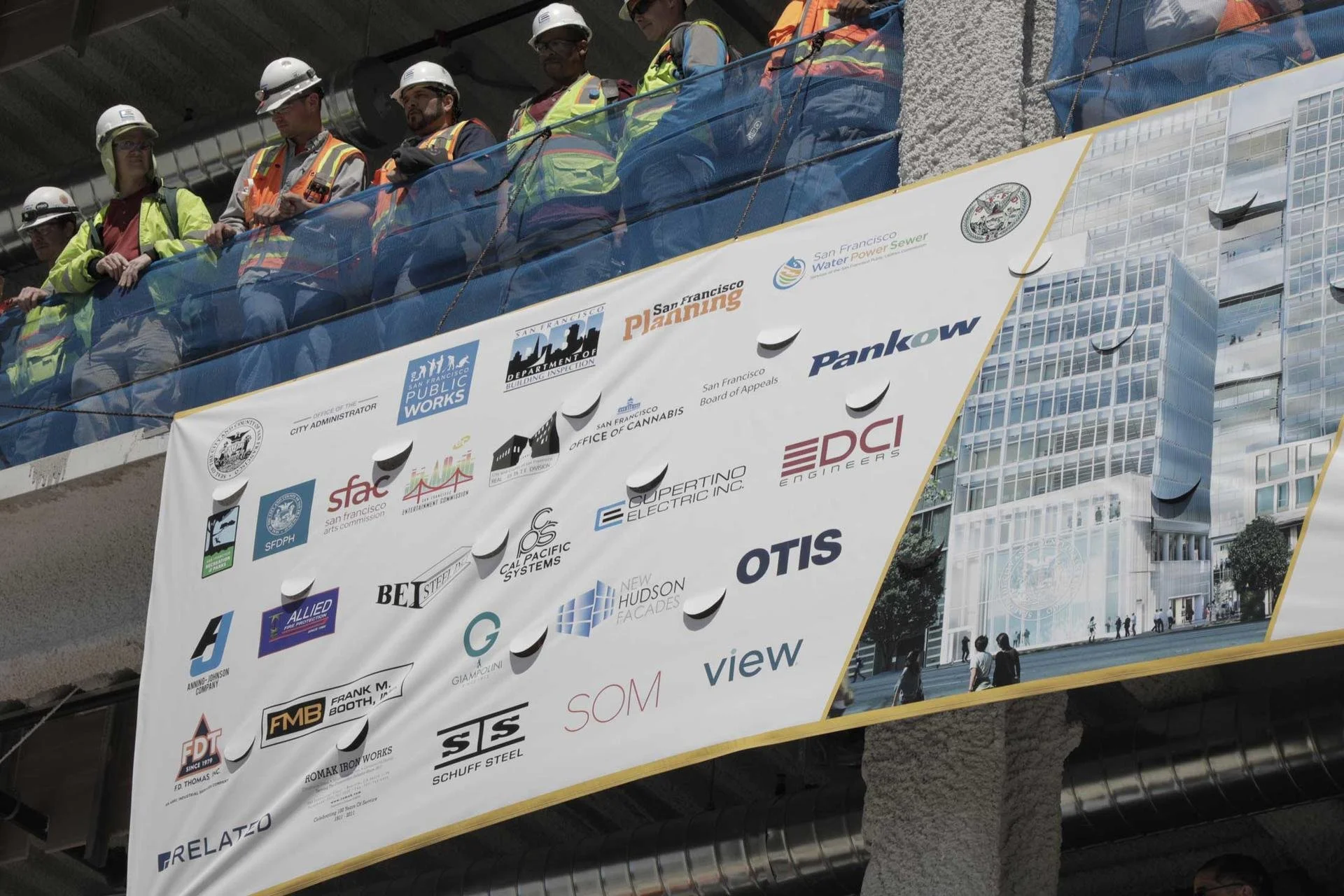
Related, SOM and City of San Francisco Choose View Smart Windows
By Jeanne Meister
Majority of North American workers report inadequate natural light, while nearly half suffer from poor air quality
View, Inc.
Related, SOM and City of San Francisco Choose View Smart Windows
Majority of North American workers report inadequate natural light, while nearly half suffer from poor air quality
By Jeanne Meister
In a newly released study by Future Workplace entitled, “The Workplace Wellness Study,” over 67% of the 1,601 North American employees surveyed said they are more productive in workplaces that promote a healthy environment. One-third said they lose at least an hour of productivity each day due to office environments that don’t support their daily health. Download a summary of the study.
Air quality was cited as the most positive influence on wellness, with only one in four reporting that their office air quality was suitable to do their best work. Almost half of all employees (44%) said poor air quality makes them feel sleepy during the workday, and 28% reported that poor air quality creates symptoms such as itchy, watery eyes or throat irritation. 37% of employees said these symptoms improve when they leave the building at the end of the day.
Comfortable lighting was the second most highly-rated wellness factor. Yet 60% of workers reported that their companies don’t provide the adequate level of light required for optimal job performance. In addition, access to natural light and outdoor views all outranked an on-site gym and a pet friendly workplace policy as a preferred amenity in the workplace.
These findings support a larger trend of the growing importance of employee well-being. According to Gallup’s most recent iteration of the State of the American Workplace, more than half of employees report better overall well-being as “very important” to them. In the same survey, work-life balance and overall well-being were determined to be the second most important factor when choosing to work for an organization. When employees are fulfilled in all aspects of their well-being, this leads to increased employee engagement and increases individual performance.
Additional highlights from the report include:
Employees want personal control of their workspace environment. Nearly half of employees (48%) want the ability to personalize their dedicated workplace environment from a phone app. Almost half want to use an app to personalize the temperature of their workspace while more than a third would like to personalize their overhead lighting, desk lighting and levels of natural light with an app. Workers ranked personalization of the workspace environment more highly than unlimited vacation.
Workplace temperature is never good enough. One third of employees said it was continuously too hot or too cold in their offices. Only 1 in 3 respondents (33%) thought that their office temperature was set to do their best work.
Poor office acoustics create distractions. Office privacy is a distraction for almost half (47%) of all office employees. 78% of workers are unhappy with their office acoustics to do their best work.
Attention to employee wellness factors impacts recruiting and the employee experience. More than two-thirds of employees said a work environment that supports and enhances their health and well-being would encourage them to accept a job offer or to stay at their current job.
The research shows that employer health and wellness efforts fall short despite company investments in on-site gyms, ergonomics and healthy food choices. It’s the invisible factors such as air quality and access to natural light that are often overlooked yet provide a significant influence on workplace wellness, employee productivity and the overall quality of the employee experience.
The notion that the creation of the workplace environment is solely a real estate concern is an outdated concept. Today, employers recognize that the workplace environment is now part of the overall employee experience equation and a key lever to attract, engage, and retain top talent.
5 guidelines to take action on workplace wellness
1. Adapt an employee-centric view of workplace wellness. Survey your workforce to understand the factors most important to them when it comes to workplace wellness.
2. Build a holistic workplace wellness plan. Real Estate and HR need to work together to create a shared vision and strategy for workplace wellness.
3. Re-examine your workplace wellness investments. Focus less on opt-in perks like an on-site-gyms and more on areas that affect every employee, like the workstation.
4. Build personalization into your workplace wellness strategy. Employees expect the ability to personalize their workplace environment to best suit their physical and emotional needs at work.
5. Monitor the connection between workplace wellness and employee satisfaction. Adapt a continuous improvement mindset as it relates to creating a workplace environment that mirrors an employee’s best consumer experience.

About Jeanne Meister
Jeanne Meister is Founding Partner of Future Workplace, an HR Executive Network and Research firm. She is the best-selling author of four books, two books on Corporate Universities and two books on the future of work. Her most recent book is, The Future Workplace: 10 Rules For Mastering Disruption in Recruiting and Engaging Employees. This book was awarded the Silver Axiom Best Business Book Award for Human Resources professionals in 2017 and most recently the receipt of the Bellwether award, by the Community College Futures Assembly.
Independent Financial Celebrates New HQ
Independent Financial has “raised the bar” for the city of McKinney, and the broader Dallas metroplex. […]
View, Inc.
Independent Financial Celebrates New HQ
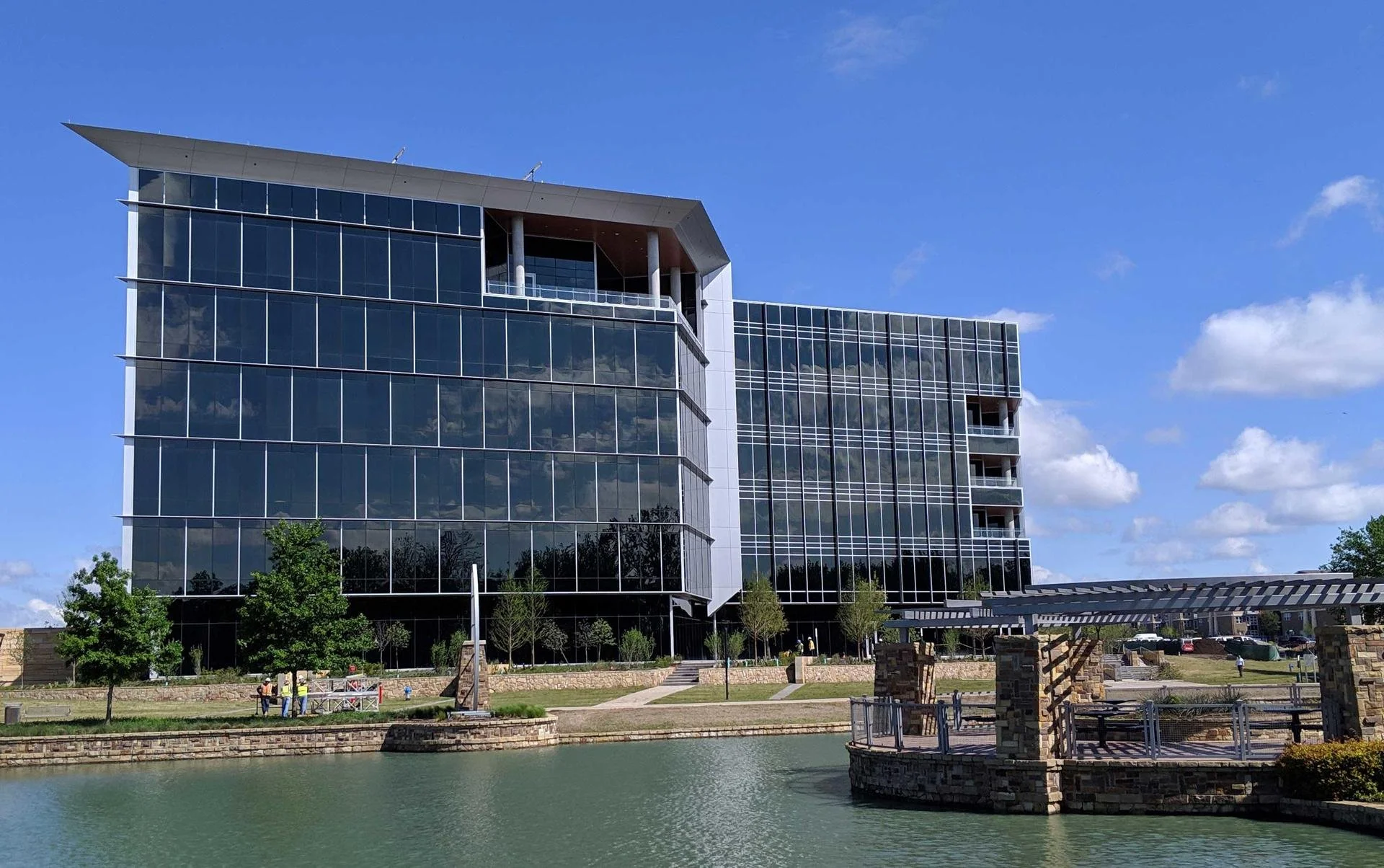
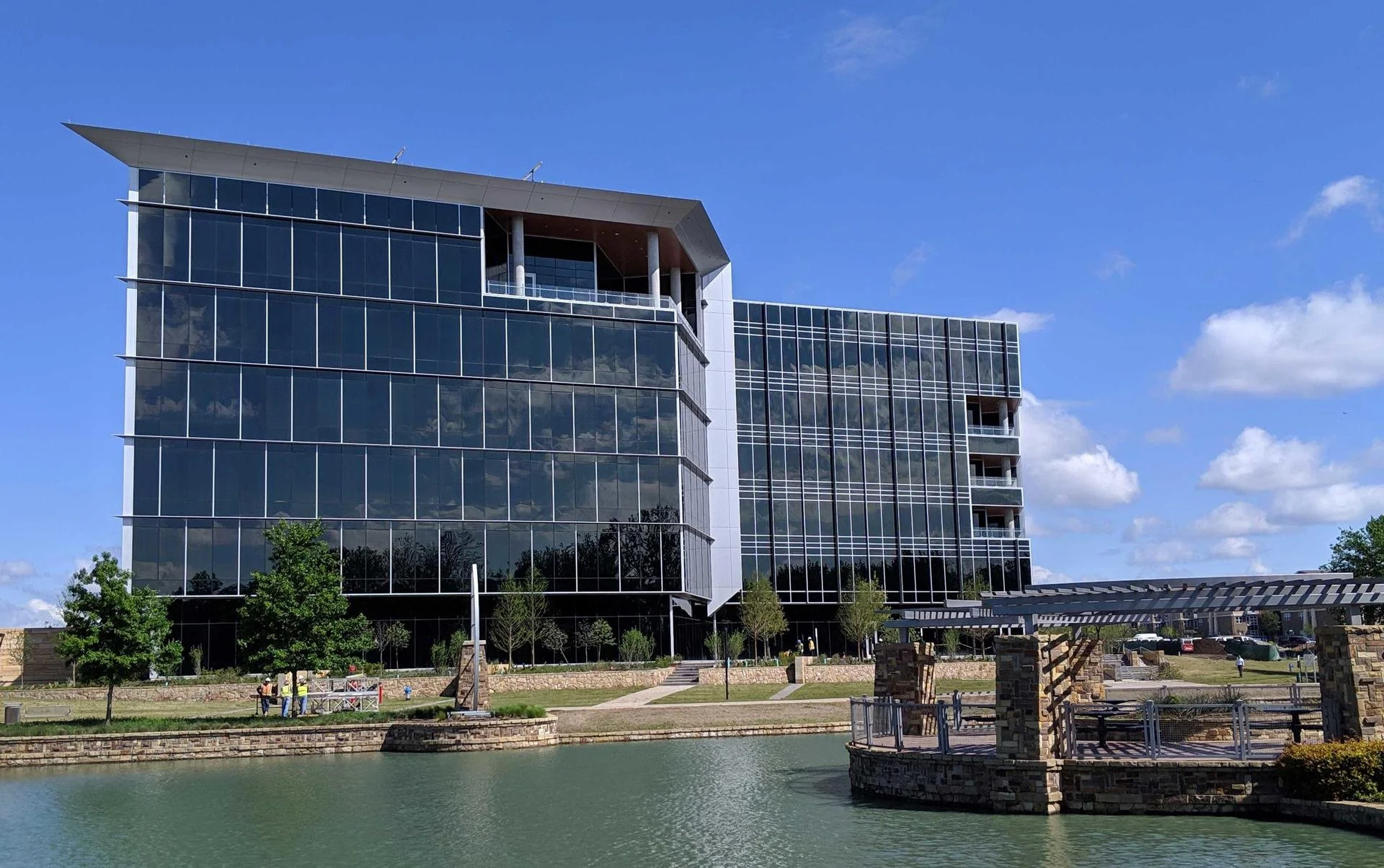
Independent Financial’s new six story building is in the new Craig Ranch development in McKinney, Texas. The CEO David Brooks, shared in his comments during the grand opening, that this new headquarters building embodies his vision to make the best possible work environment for employees – and every decision was influenced by this guiding principle. He stated that the View Dynamic Glass windows have had the biggest impact compared to any other component of the building. View Smart Windows, free from blinds or shades, provide sweeping floor-to-ceiling views for everybody in the building. They also allow an optimal amount of natural light into workspaces, without unwanted heat or glare.

Listening to the crowd touring the office spaces, it was hard not to hear the excitement of the employees and attendees. When asked what they loved most about the building, individuals most often pointed to the smart windows, and the natural light and views. According to the mayor of McKinney, George Fuller, Independent Financial has “raised the bar” for the city of McKinney, and the broader Dallas metroplex. Mr. Brooks shared with the crowd that when an investor saw the building, he remarked that he’d never realized that a building could so vastly energize a team of people.
Awarded in 2014 as one of the Healthiest Employers in both North and Central Texas, Independent Financial is one of the forerunners in understanding how great building environments improve the health, wellbeing, and productivity of the people inside. With approximately 1500 employees and a presence from the Gulf Coast of Texas to the Colorado Front Range, they know they need to compete for talent and feel this new HQ building will assist in that goal.
In Response to New York Mayor de Blasio’s Glass Building Ban
What Can We Learn from the Great Horse Manure Crisis of 1894? […]
Rao Mulpuri, CEO, View, Inc.
In Response to New York Mayor de Blasio’s Glass Building Ban
By Rao Mulpuri, CEO, View, Inc
What Can We Learn from the Great Horse Manure Crisis of 1894?
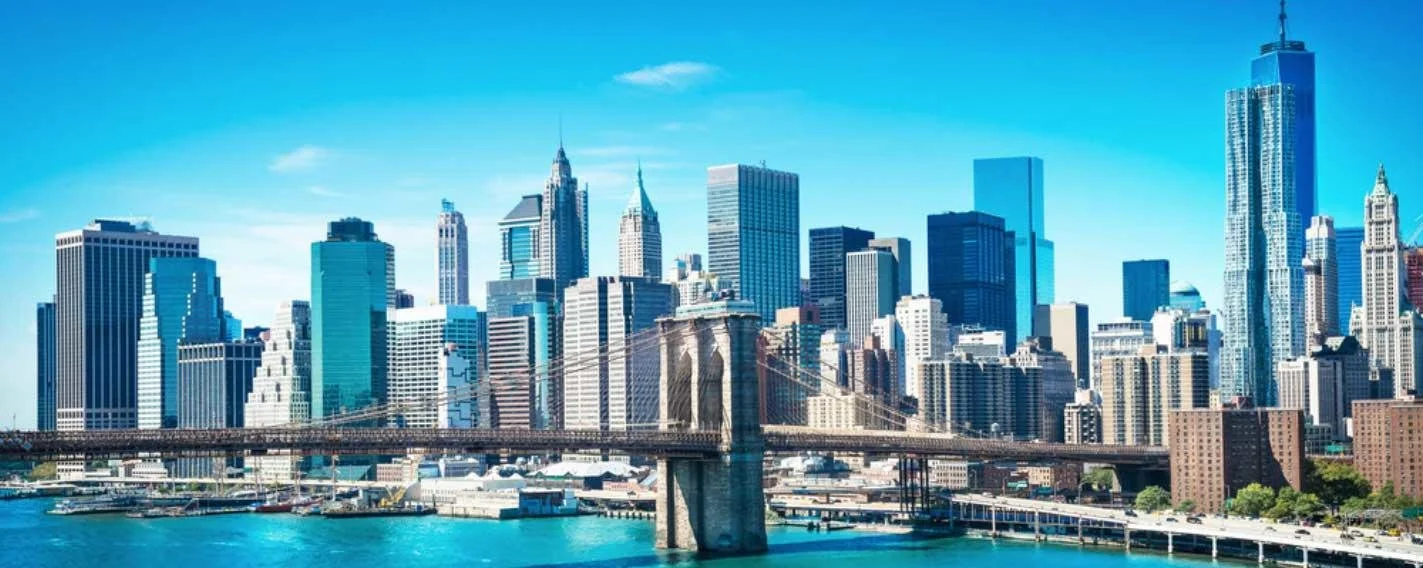
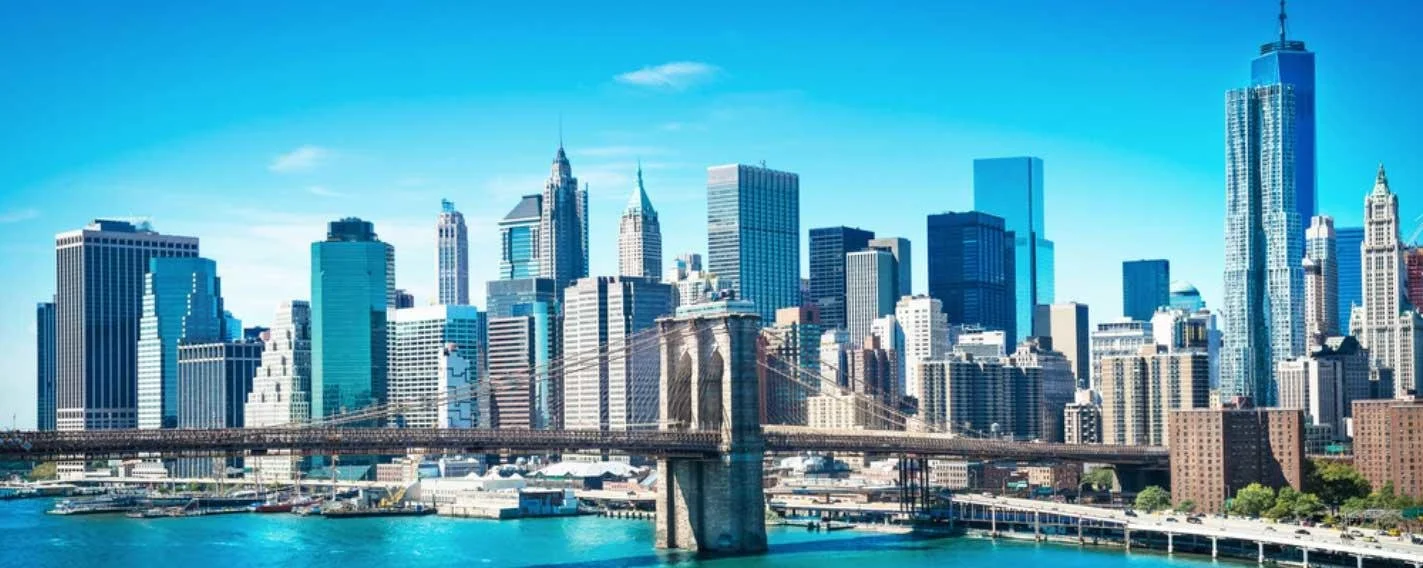
On Earth Day, New York City launched a plan to significantly curb buildings’ greenhouse gas emissions, specifically targeting the glass skyscrapers that have transformed the Manhattan skyline. The City enacted a law requiring large buildings to reduce their emissions or face millions of dollars in annual fines. This will drive renovations on a scale never before seen. And Mayor de Blasio wants to go even further; he said “We are going to introduce legislation to ban the glass and steel skyscrapers that have contributed so much to global warming. They have no place in our city or on our Earth anymore.”
I have some thoughts about this as the CEO of View, a technology company that is transforming buildings to improve people’s health and wellness, while simultaneously reducing energy consumption.

New York City, Morton Street, 1893
First, some history. In the late 1800s, many of the world’s great cities such as London and New York were experiencing a major crisis. New York City was home to more than 150,000 horses that pulled carriages and streetcars. Every year, the horses produced more than 100,000 tons of manure. It piled up in the streets, it stunk, and it became a major environmental and health crisis.
The issue led to the first ever International Urban Planning Conference in New York, but it disbanded without finding a solution. Meanwhile, inventors and entrepreneurs were building the automobile, which replaced horses completely, and solved the problem much faster and better than anyone imagined.
Now, to the current glass building crisis. We spend 90% of our time inside buildings. From a historical perspective, this is a relatively new thing. Humans used to be a completely outdoor species. This wasn’t always good for us. Sometimes, the outdoors were too hot or too cold. Sometimes, we were battered by rain and wind. Sometimes, animals tried to eat us. To protect ourselves, we created shelters.
Modern society has erected walls between humans and the outdoors. We’ve replaced the sun’s natural light with artificial lighting, the sound of the wind and the rustle of leaves with the hum of electricity and the tapping of keyboards. But we’re still the same species. When we get disconnected from the outdoors, we go crazy. There is a lot of science to prove this.
As a materials scientist, I find glass to be magical. It provides shelter and protection, but we can still see through it and connect to the outdoors. When we walk into a space with a lot of windows and daylight it just feels good. This is why today’s buildings use as much glass as possible.
I can appreciate that many environmentalists see glass as the enemy. Glass skyscrapers can be incredibly inefficient. These buildings trap heat like a greenhouse. And they use big air conditioning systems to pull all that heat out. The more glass you design with, the bigger this issue.
And the worst part about traditional glass is that people still aren’t connected to the outdoors because blinds block the views. In 2013, the Urban Green Council released a study showing that 59% of the window area in New York City is covered by blinds.
So where do we go from here? Just as we didn’t get to the car by making a better horse, incremental solutions such as smaller windows, fritted glass or motorized shades aren’t the real answer.
There’s a better way – windows that automatically change their tint, eliminate shades entirely while keeping floor to ceiling glass, and maintain views and connection 100% of the time. Smart glass works to transform both the energy consumption of buildings and the quality of life of the people that live and work inside them.
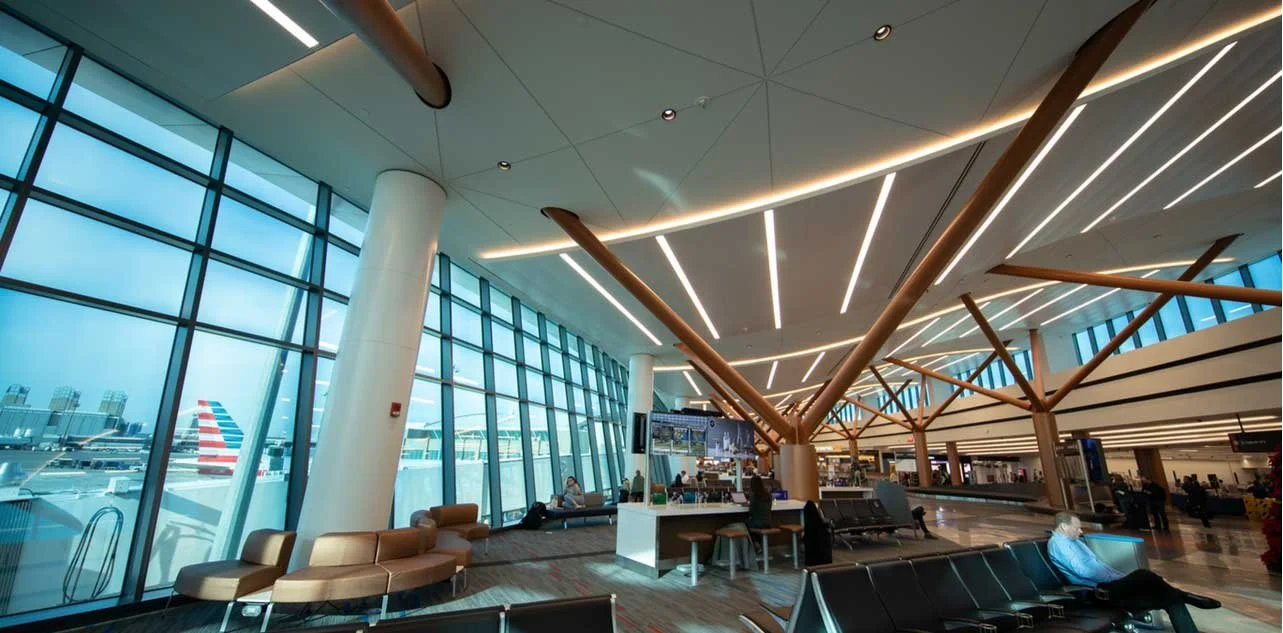
Boston Logan International Airport with View Smart Windows
Smart glass improves a building’s energy efficiency by up to 20% and helps downsize heating and cooling systems. Moreover, with smart glass, people can work comfortably while sitting close to the windows, increasing the tenant’s usable space, resulting in a significantly lower environmental footprint per person. From an environmental perspective, the most sustainable building is one that doesn’t get built in the first place. What if we can eliminate the need for one out of ten buildings?
A recent study by Alan Hedge, a professor in the Department of Design and Environmental Analysis at Cornell University, showed that smart glass reduces people’s eye strain by 51%, headaches by 63%, and drowsiness by 56% - dramatically increasing employee health and productivity.
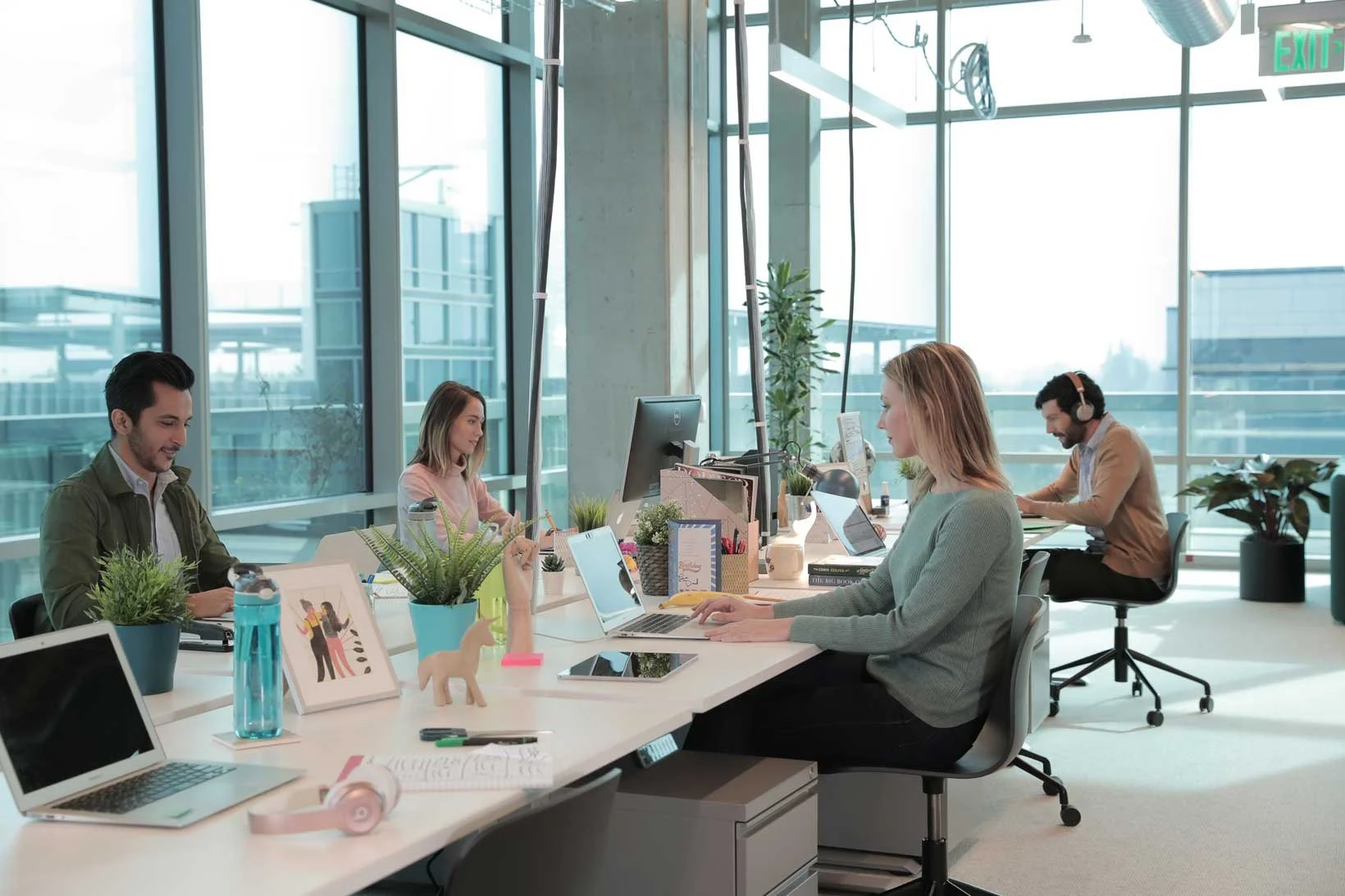
Facebook/WeWork buildings with View Smart Windows, Mountain View, CA
Ultimately, buildings are not pieces of art to look at from afar. They exist for people to inhabit, live better lives, and produce goods and services that serve the larger society. Instead of looking at the environmental footprint per square foot of the building, we should be looking at the environmental footprint per unit of output – the value humans are able to create.
Smart windows aren't just an idea. Over a decade of development and $2 billion of investment later, View Smart Windows are in 500 buildings totaling 50 million square feet of space, growing very rapidly. Just in New York, our smart windows are being installed in buildings owned by The Durst Organization, GFP Real Estate, Regeneron Pharmaceuticals in Tarrytown, Tompkins Financial in Ithaca, and the Delta Terminal at LaGuardia to name a few.
Too often, humans attribute change to a sense of loss. But we can drive change so that it works better for everyone. This has happened over and over again throughout human history.
We have a unique opportunity to improve people’s quality of life while also benefiting the environment. I would be happy to join the dialogue with the mayor and the real estate community about how we can achieve this ambitious goal.