

Your backstage pass
How Offices Are Turning Windows Into Walls
Recently, we had the opportunity for a creative experiment – we mounted cameras on a building to watch the windows of an occupied office building across the way. […]
Brian Lee – Manager, Product Marketing
Deepak Shivaprasad – Sr. Director, Product Marketing
How Offices Are Turning Windows Into Walls
Recently, we had the opportunity for a creative experiment – we mounted cameras on a building to watch the windows of an occupied office building. Building occupants were not informed of the study to eliminate the influence of behavioral changes on the experiment’s outcome. Only the top 3 floors of the building were occupied, but we wanted to see how often the shades were drawn on those floors. The building is in sunny Northern California and has expansive views of the San Francisco Bay. You would expect those windows to be popular - everyone loves windows and a view, right? Until….the heat and glare become too much. Then, down come the shades.
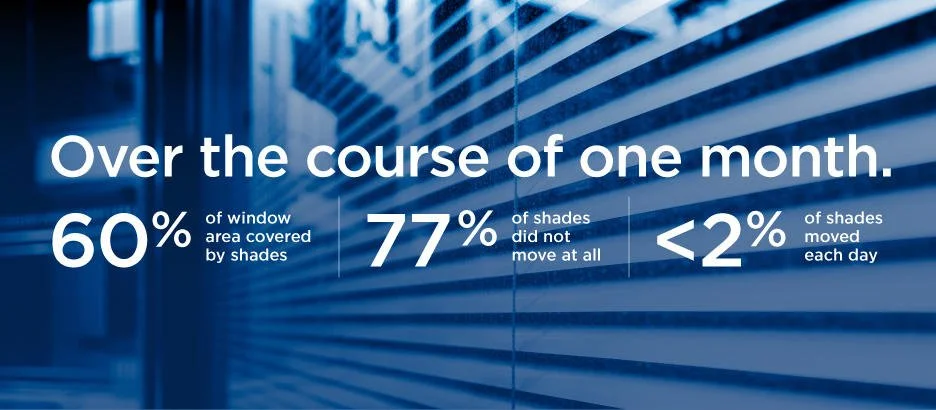
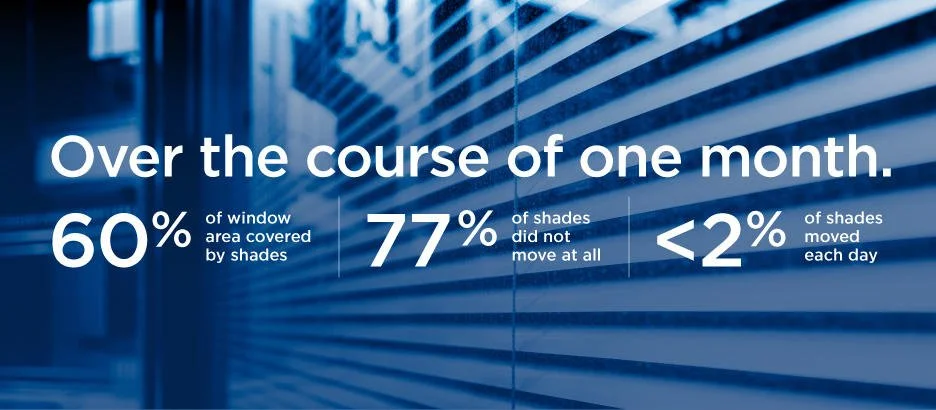
By using time-lapse images taken every 15 minutes and measuring the change in window coverage on the top three floors for a month, here is what we found:
· 60% of the windows were covered by shades.
· 77% of the shades never moved at all.
· Less than 2% of the shades were adjusted daily (on average).
Wow! Once the heat and glare is in the building, people drop the shades – and once they are down, they continue to stay down essentially creating another wall in the office. Nearly 2/3 of the views and natural light are removed with fewer people getting the benefit of the green space and sunlight just outside their office.
Why do we invest in windows if this is the behavior? Because not everyone knows about dynamic glass. Here at View, our mission is to create delightful human environments. Our glass automatically changes tint during the day to control glare, eliminate heat, and optimize daylight in order to make the space visually and thermally comfortable. No shades are needed. Read more about our technology here.

View Salutes America's Top 50 Glaziers
View salutes the top 50 glazing contractors of 2018 as recently ranked and named by USGlass Magazine. Of the 50, View has worked on projects with 22 of these craftspeople, often on multiple jobs. […]

Todd Gray, View’s Director of Glazing
View Salutes America's Top 50 Glaziers
View salutes the top 50 glazing contractors of 2018 as recently ranked and named by USGlass Magazine. Of the 50, View has worked on projects with 22 of these craftspeople, often on multiple jobs. Of the top 10 glaziers, View has worked with 7.
Glaziers are often the unsung heroes of building projects - scaling heights, braving frigid temperatures or blistering sun and giving it their all to provide the best possible experience.
To be a good glazier you need:
· Balance.
To minimize the risk of falling, glaziers need a good sense of balance while working on ladders and scaffolding.
· Attention to detail.
Glaziers must work to very tight tolerances to ensure the system is built correctly.
· Physical stamina.
Glaziers must be on their feet and move heavy pieces of glass most of the day. They need to be able to hold glass in place until it can be fully secured.
· Physical strength.
Glaziers must often lift heavy pieces of glass for hanging. Physical strength, therefore, is important for the occupation.
Glaziers are known in real estate circles for their camaraderie. Safety comes first. They always look out for others. It’s great to see them get some well-deserved recognition.
When View works with glaziers, we try to make the experience as easy and seamless as possible for them. They’ve got enough to deal with already.
We give the glaziers a dedicated project manager who is available 24 hours a day throughout the project. We come to their shops and do hands on training with them. We walk the glaziers step by step through the whole process - from bidding to project completion.
To see a roll call of the top 50 glaziers visit this edition of USGlass Magazine.

New Research - Dynamic Glass & The Airport Passenger Experience
Earlier this year, we launched the first step of an ambitious human factors research initiative to help us better quantify how dynamic glass impacts productivity, health and wellness in the workplace. […]

Brandon Tinianov - VP, Industry Strategy at View, Inc.
New Research - Dynamic Glass & The Airport Passenger Experience
Earlier this year, we launched the first step of an ambitious human factors research initiative to help us better quantify how dynamic glass impacts productivity, health and wellness in the workplace.
The study found that optimizing the amount of natural light in an office significantly improves health and wellness among workers, leading to gains in productivity and a reduction in the symptoms associated with extended computer work.
Today, we’re sharing the results of our second research study on the impact of natural light on occupant comfort. Instead of limiting ourselves to offices, we studied one of the most hectic environments in modern society – the airport. Our goal was to determine if dynamic glass and improved natural light could enhance passenger experience and comfort in a quantifiable way.
We all know that tug of anxiety that you feel when entering an airport. First, there’s the security line to traverse. Then there’s the time it takes to make your way to your terminal and gate. On top of that there’s the poor acoustics and the inevitable glare of the sun that makes for an uncomfortable wait before your flight. We firmly believe that airports don’t need to increase stress and fatigue.
We’ve partnered with Dallas Fort Worth (DFW) Airport, and an independent aviation market research group to contrast the experiences of passengers in airport gates with traditional windows to passengers in airport gates with intelligent dynamic glass.
Key findings of the study include:
· Seating with a view matters.
Passengers prioritize access to natural light and views of the airfield ahead of proximity restrooms and televisions and even electrical outlets. With dynamic glass installed in fully operational boarding area, 84 percent of passengers sought a seat closest to a window. When asked, passengers preferred the light quality of the dynamic glass 3 to 1 over conventional glass.
· Dynamic Glass increases passenger comfort by keeping the heat out.
Even with moderate outdoor temperatures of 55F, infrared imaging showed dynamic glass reduced surface temperatures up to 15 degrees on seats, carpets, passenger clothing and skin compared to the gate with conventional glass. This improvement in thermal comfort promotes greater passenger delight and enables reduced use of HVAC systems for cooling.
· Passenger comfort translates to longer dwell times.
Survey results found that passengers seated next to dynamic glass stayed 83 percent longer than passengers seated next to conventional glass. Passengers were better able to use devices like smartphones, laptops and tablets without glare or discomfort.
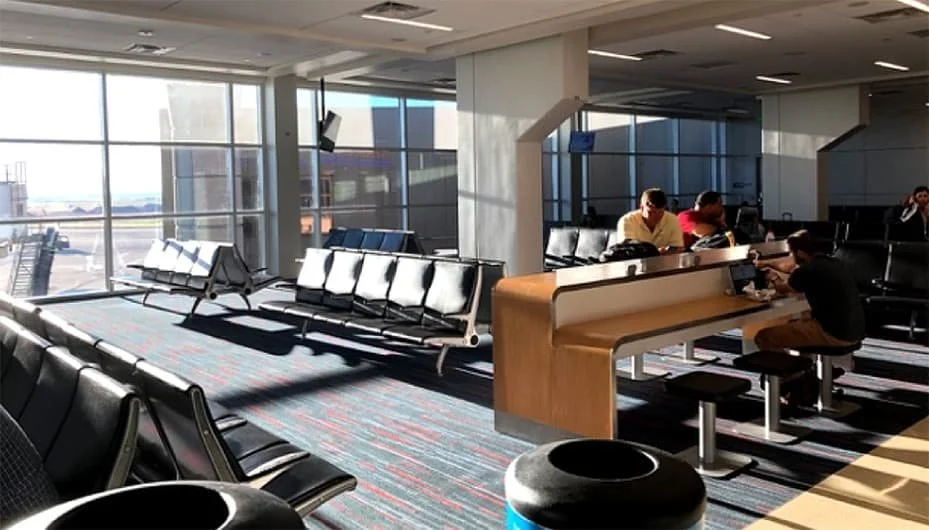
Without View Dynamic Glass (GATE A25: Conventional Glass)

With View Dynamic Glass (GATE A28)
· Improved comfort drives revenue.
In addition to the installation of dynamic glass at an active gate, it was also installed in one of the airport’s busiest restaurants, the Twisted Root. Following the installation, patron and employee comfort significantly increased, leading to additional revenue. In fact, the restaurant saw a 102 percent year-over-year increase in concession sales over a six month period, compared to the same 6 months the year before.
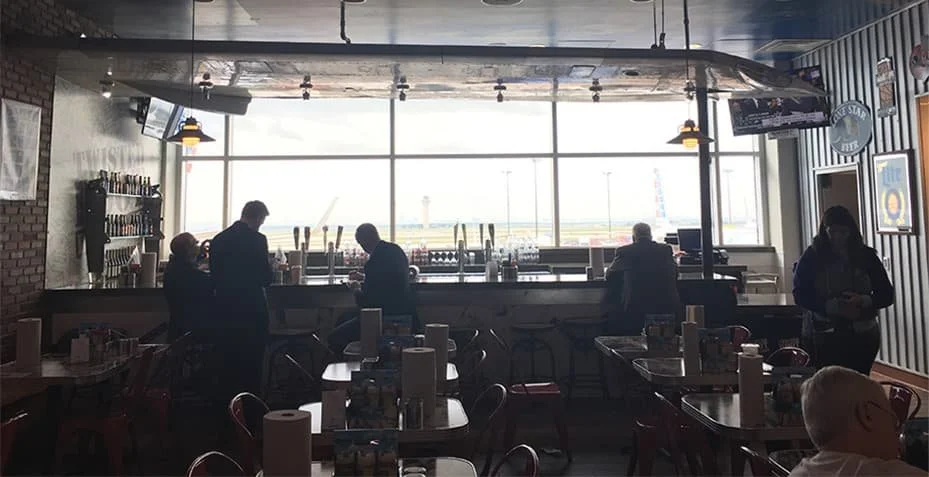
BEFORE: Conventional Glass at the Restaurant
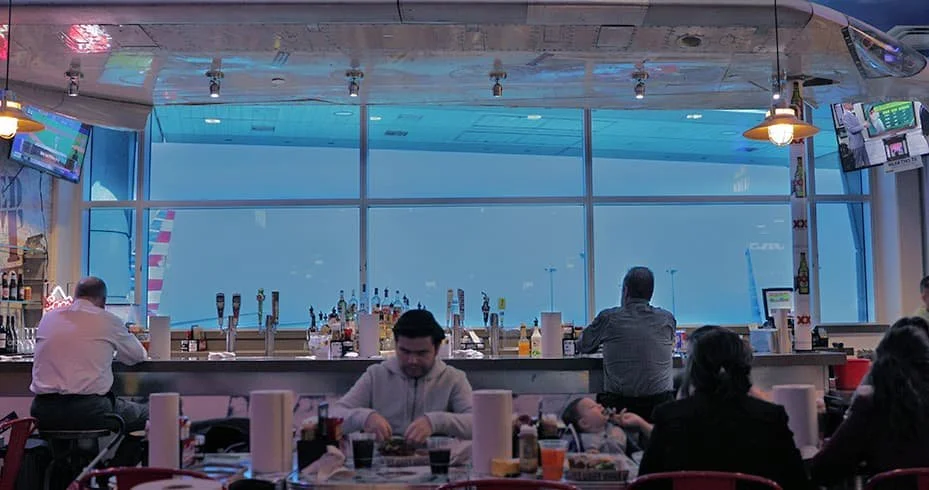
AFTER: With View Dynamic Glass
As you can imagine, we’re encouraged by these findings and believe they validate the already intuitive value dynamic glass provides in the airport passenger experience.
View has installed dynamic glass at several U.S. airports including: Boston Logan International Airport (BOS), Charlotte-Douglas International Airport (CLT), San Francisco International Airport (SFO), and Seattle-Tacoma International Airport (SEA).
There is a lot more to unpack from this study, so be sure to read the full report and stay tuned for more human factors research from View and leading researchers coming soon.
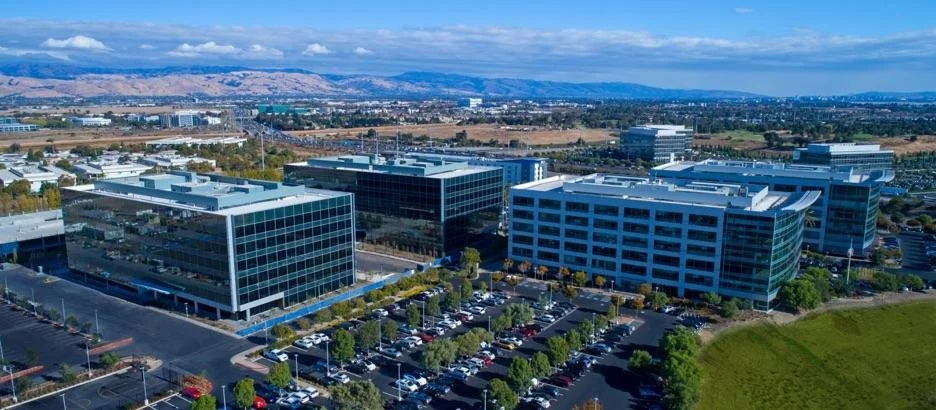
Hewlett Packard Enterprise Is the Latest Tenant to Join America Center in San Jose
USAA Real Estate Company’s America Center II, developed by SteelWave in San Jose, CA is about to get a new tenant. Hewlett Packard Enterprise announced yesterday they are moving their headquarters to the 65-acre site in San Jose. This was a change from previous discussions they would be moving to Santa Clara. […]
View, Inc.
Hewlett Packard Enterprise Is the Latest Tenant to Join America Center in San Jose
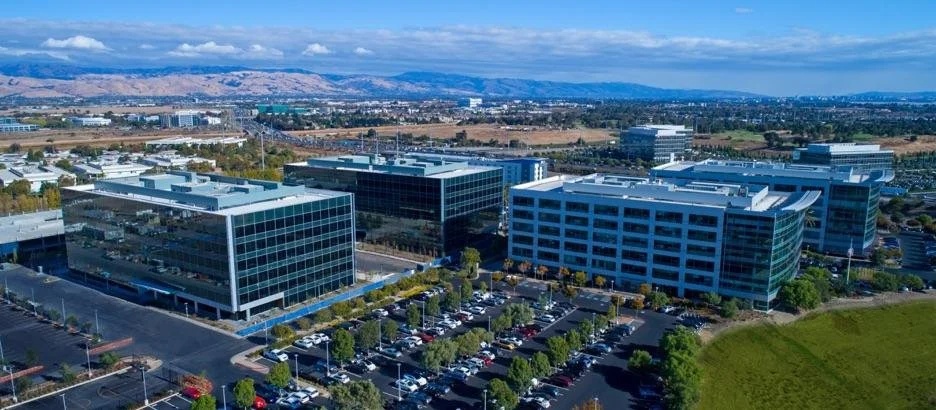
USAA Real Estate Company’s America Center II, developed by SteelWave in San Jose, CA is about to get a new tenant. Hewlett Packard Enterprise announced yesterday they are moving their headquarters to the 65-acre site in San Jose. This was a change from previous discussions they would be moving to Santa Clara.
View Glass is a partner at the America Center II, where occupants will find an eco-friendly and worker-friendly environment. The campus is surrounded by open space, walking and biking trails, and is near San Francisco Bay. The building is LEED Gold certified and has View Dynamic Glass windows to provide natural, glare-free, and thermally consistent light to the tenants of the building. The site focuses on the health and wellness of its tenants by also featuring a café, a yoga studio, a fitness area, and a rooftop putting green.
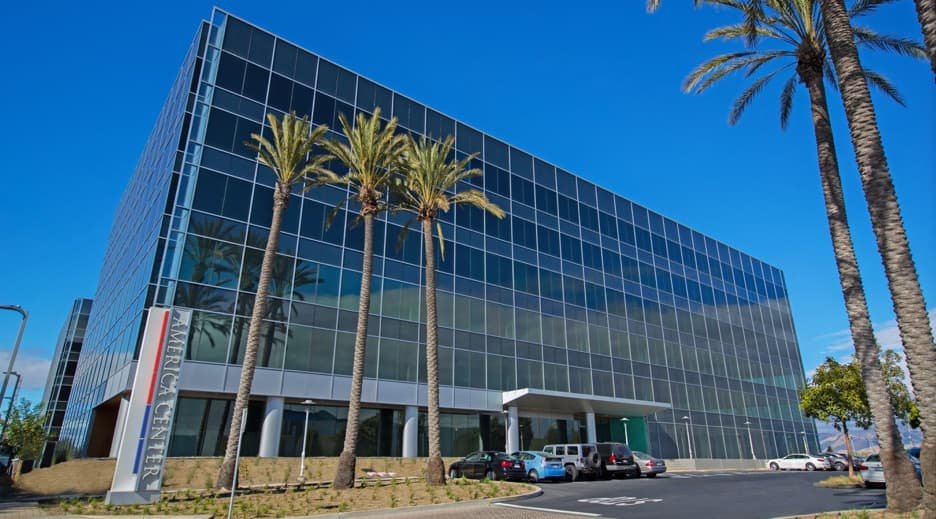
A recent study has shown that building built with quality optimized natural light increases productivity and reduces worker fatigue, eyestrain, and other health issues.

Why Your Office Is Making You Sleepy
According to many recent estimates, Americans spend more than 90% of their time indoors. Meanwhile, a rapidly growing body of scientific research suggests that inadequate lighting in the workplace interferes with the quality of life, causing health problems, drowsiness, mood swings, and reduced productivity. […]

Cameron Craig, Storyteller, View, Inc.
Why Your Office Is Making You Sleepy
According to many recent estimates, Americans spend more than 90% of their time indoors. Meanwhile, a rapidly growing body of scientific research suggests that inadequate lighting in the workplace interferes with the quality of life, causing health problems, drowsiness, mood swings, and reduced productivity.
Every lifeform on the planet has its own internal clock. The subtle interaction between the amount of light available and brain centers dictates the rhythm of hormonal secretion and their interaction. For example, inadequate lighting patterns can interfere with growth hormone (GH) secretion which in adults has the predominant role in speeding up healing and restoration processes throughout the body.
What makes ideal lighting conditions?
Photo credit StockSnap
Exposure to inadequate working or living conditions over time causes serious health problems. Doctors sometimes refer to this phenomenon as Sick Buildings Syndrome. According to research, the leading culprit of office workers’ health woes is poor lighting and it has a clear connection to eye pain [1]. Another study published in 2011 by Kholasezadeh showed a strong correlation between poor lighting and fatigue, headache, depression, tiredness, general discomfort, and loss in productivity [2].
How bad is bad lighting?
When it comes to light, the mere presence of it does not mean it’s adequate. Quite often, it takes a while for building occupants to notice something is wrong in their working environment. They may notice symptoms such as drowsiness, headaches, or depression but won’t necessarily attribute them to poor lighting conditions. Meanwhile, the mistakes made while suffering through these symptoms can cost companies significant amounts of money, and more importantly, the health and even lives of their employees.
The Solution
Achieving optimal lighting is much more challenging than merely turning on a few more light bulbs or using blinds. Dr. Alan Hedge is one of the most cited ergonomists in the world. His entire work is focused on answering one (seemingly) simple question: How to design a perfect working environment that will maximize workers' comfort and productivity? Over the past three decades, he has published more than 250 scientific articles and wrote over 50 book chapters on the subject of the working environment. Currently, Dr. Hedge is a professor in the Department of Design and Environmental Analysis, Cornell University.
The best medicine for the office is the right amount of natural light

Photo credit bruce mars
During the Fall of 2017, Dr. Hedge compared two groups of workers: those who work in offices with traditional windows and those who worked in offices with self-tinting, dynamic, or “smart windows.” Professor Hedge had full autonomy over all aspects of research, particularly the survey design and data analysis. Workers were surveyed about a sense of wellness, happiness, work-related performance, and overall experience in their working environment. To clarify, “smart windows” tune the amount of light they let in based on outside conditions to ensure that people inside the building always have the optimal light conditions. On bright sunny days, smart windows tint more while on cloudy days they are tintless, always ensuring that the indoor light levels are optimal and there is no glare.
The Results
Computer Vision Syndrome
Sub-optimal lighting for more than 3 hours a day causes Computer Vision Syndrome symptoms: double or blurred vision and tension headaches. In the offices with optimized lighting conditions, the incidence of Computer Vision Syndrome was significantly reduced.
Workers included in the study reported a 51% drop in the eyestrain and 63% drop in the incidence of headaches.
Increased productivity
The productivity of the workers in the offices with smart windows (optimal lighting conditions) increased for the equivalent of $100,000/year for every 100 workers- that’s $2 million of additional value over the course of the expected smart window’s lifetime.
The Bottom Line
Humans spend way too much time indoors in sub-optimal lighting conditions which can cause serious health issues such as depression, fatigue, malaise, drowsiness, eye strain, headaches, skin dryness, general productivity, and loss in comfort.
Photo credit Madan Babu
Despite their best intentions, companies are unwittingly detracting from their employees’ health and performance by limiting their access to natural light.
As companies increasingly look to empower their employees to work better and be healthier, it is clear that placing them in office spaces with the optimal amount of natural light should be one of their first considerations.
These findings are a wake-up call to every executive who wants to maximize the wellness and productivity of their workforce.
If you are working in an office with sub-optimal natural light and you feel tired, speak up to management and suggest they look into solutions like View Dynamic Glass. Many companies have employee suggestion programs that make it easy to do this. And until a better solution is in place, take a break and walk outside to absorb natural light – it’s medicine for your well-being.
References:
[1] Jafari, Mohammad Javad; Khajevandi, Ali Asghar; Mousavi Najarkola, Seyed Ali; Yekaninejad, Mir Saeed; Pourhoseingholi, Mohammad Amin; Omidi, Leila; Kalantary, Saba (2015-01-01). “Association of Sick Building Syndrome with Indoor Air Parameters”. Tanaffos. 14 (1): 55–62
[2] Kholasezadeh G, Mirmohammadi Meybodi S, Mehrparvar A, Tafti F, Abedinzadeh M, Nourani Yazdi F. Assessment of sick building syndrome among office workers in Shahid Sadoughi University of medical sciences in 2008. Iran Occupational Health. 2011; 8( 1): 70– 6.